
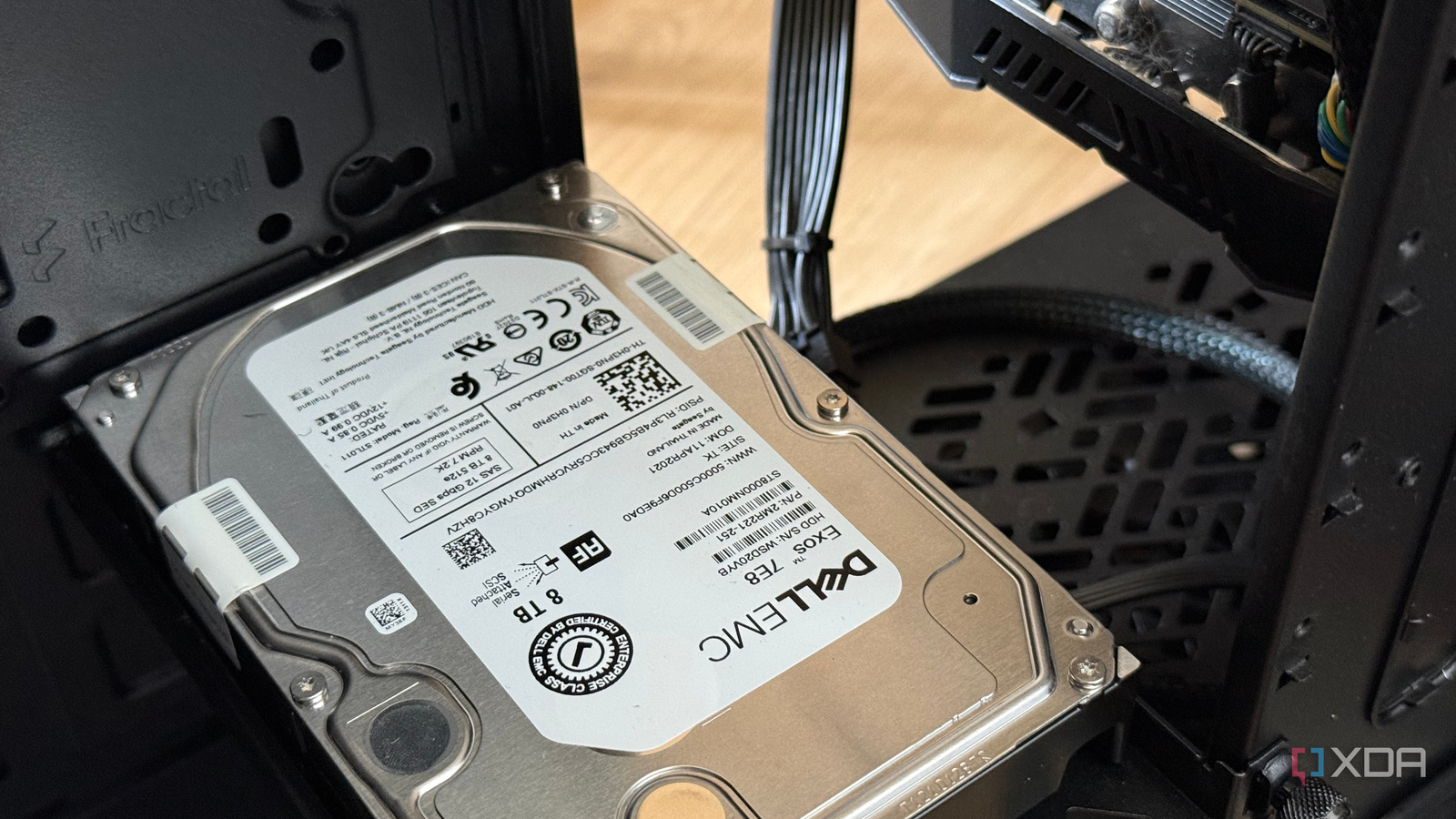
Published Aug 6, 2026, 10:00 AM EDT His love of PCs and their components was born out of trying to squeeze every ounce of performance out of the family computer. Tinkering with his own build at age 10 turned into building PCs for friends and family, fostering a passion that would ultimately take shape as a career path. Besides being the first call for tech support for those close to him, Ty is a computer science student, with his focus being cloud computing and networking. He also competed in semi-pro Counter-Strike for 8 years, making him intimately familiar with everything to do with peripherals. The hesitation that most might initially have around buying used hardware is definitely understandable, especially in the enterprise space. It's easy to assume that these components are run in more arduous environments for longer periods of time, and thus, trusting the pre-owned enterprise market is a hefty gamble over paying the premium for a brand-new consumer drive. The truth is, that rationalization made little sense before, and it makes even less sense now as the cost of storage has ballooned. I have two Seagate Exos 7E8 8TB SAS drives that currently power my primary NAS, and both of them were pulled from a live Dell enterprise server. Before storage costs started to rise, I opted for used enterprise for the value and staunch reliability requirements that these drives have to meet to leave the factory, and now that we're in the midst of an HDD price boom, I can't imagine considering another approach to buying NAS drives. New drives used to make sense Now, it's hard to stomach It was easy to make a case for buying new previously, especially for those who aren't looking for a hobby project. You paid a modest premium over a drive that was pulled from a data center, and you got real perks for that premium, usually in the form of a multi-year manufacturer warranty, which is more-or-less a guarantee that you'll get a working drive for the cost of your purchase. That premium has shot up significantly, and now, the case isn't so clear. Nearline capacity has been absorbed by hyperscale buyers on multi-year contracts, and the effect on retail pricing has been substantial and sustained. The cost of a terabyte has shot up very significantly, and that has put typical NAS-sized drives out of reach financially for some, or at the very least hard to justify. There's no end in sight at this time, either. These manufacturers are tied up contractually for the forseeable future, so for most intents and purposes, this is the new normal for retail drives. The good news is, the second-hand and recertified market is still quite strong. Prices have definitely increased from pre-AI levels, but in terms of per-terabyte cost, there are deals to be had. A used enterprise drive isn't a black box You'll be given enough information to work with Hard drive lifespan generally follows a bathtub curve, with the Y-axis being failure rates and the X-axis being time. The front end of the curve is premature deaths or complete failures to launch, and the end of the X-axis are drives that have reached the end of their expected usable lifespan. New drives are an unknown quantity—while you will get a working drive by going through the proper warranty channels, you're at the start of that curve, and your drive is actually more likely to fail in those first hours of operation. A data center drive that was pulled from a live system has already cleared that window, and it'll show you in the SMART data. My first drive reports 4,113 hours of accumulated power-on time. Roughly 1,445 of those are mine, which puts about 2,668 hours on it before it arrived. Zero grown defects during certification, zero blocks reassigned during format, zero new blocks reassigned, and a defect list with nothing in it. It has consumed 2,050 of its rated 50,000 start-stop cycles and 2,211 of its rated 600,000 load-unload cycles, and for being manufactured in 2021, that all checks out. The second drive was purchased in the same order, but has a bit of a different story judging by the data. Same model, same manufacturing week, presumably even the same shipment, but it shows 4,577 accumulated hours, meaning roughly 3,131 before I got it, so it saw more runtime than its sibling. But it went through 46 start-stop cycles in its prior life against the first drive's 2,050, and 223 load-unload cycles against 2,211. One of these drives lived in something that got power-cycled constantly and the other essentially never stopped spinning. The second has logged two corrected verify errors and zero uncorrected ones, which means the error correction is working as intended. You give up warranty coverage along with assured authenticity Fraudulent listings are becoming a real issue. Used drives have a very clear downside, and that's the aforementioned lack of warranty. A new Exos 7E8 ships with a five-year limited warranty from Seagate, and consumer drives are in a similar boat. A manufacturer-recertified drive from a reputable reseller like ServerPartDeals typically carries two years, and their own documentation is explicit that recertified units are tested and approved by the original manufacturer but do not come with a manufacturer warranty. And, if you go the eBay route, you're limited to the money-back guarantee that is usually only offered within days of purchase. A warranty can be a good safety net for the drive itself, but it doesn't replace your data, and there's arguably an even bigger pitfall with buying enterprise gear right now. Beginning in January 2025, buyers started finding Seagate Exos drives sold as new whose SMART parameters had been reset to conceal somewhere between 15,000 and 50,000 hours of prior operation. More than 200 reports surfaced across Germany, Switzerland, Austria, the UK, Japan, and the US, and investigators traced the supply to Chinese Chia mining operations winding down. The good news is that this scam really only works if you're expecting a new drive to show up, but the hard truth is that there isn't a way to ensure your drive isn't reporting false data. There are claims that you can compare the SMART powered-on hours to the FARM log, but the latter can also be altered by the nefarious party, so there's no real way to tell what your drive has been through. This is the risk you run when you buy off of eBay or another marketplace where the drives are a relatively unknown quantity. It's not the safe choice, but it's the best value play I'm not going to tell you that a used enterprise drive is the best of all possible worlds, but it is the best value for storage currently. The cost that comes with that extra value comes in the form of you taking on the verification work, shorter warranty, and due diligence of the seller in question. I personally won't buy drives that haven't been either manufacturer recertified, or recertified by a trusted seller.
I'm still buying used enterprise HDDs for my NAS, and new drives make less sense to me now than they already did
Full Article
Original Source
Read the full article at Xda-developers →KhanList aggregates and links to publicly available news content. We do not host full articles from third-party sources. Always verify important information with original sources.