
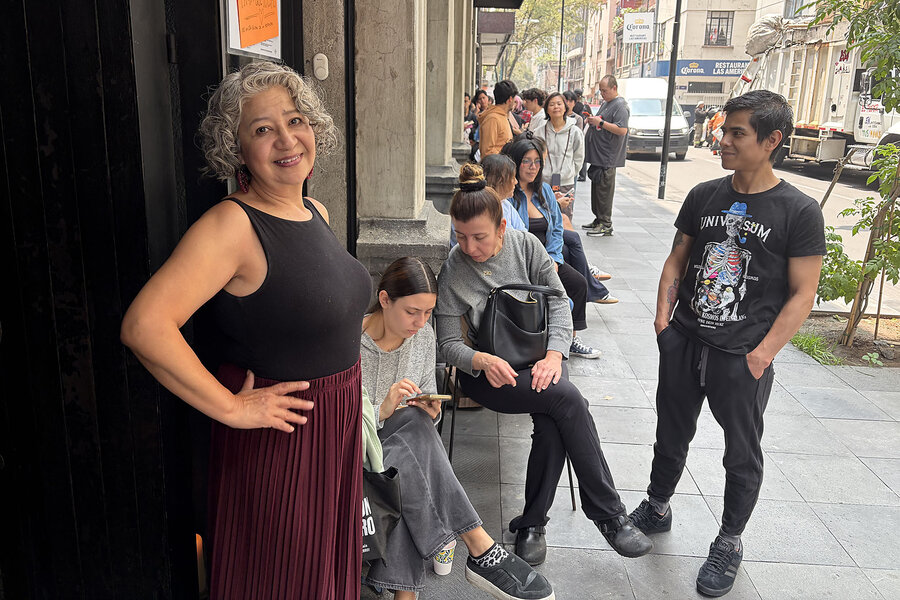
Eva Olvera Mendieta was first in line. She had risen before dawn, traveled two hours via bus and metro, and by 8 a.m. was bundled up outside the front door of Masala y Maíz, a restaurant in Mexico City. There, she waited four more hours for a chance to try the restaurant’s renowned mix of Mexican, Indian, and East African flavors.Ms. Olvera Mendieta, who earns a modest income from making and selling face creams, typically could not afford to eat at a Michelin-starred restaurant like this one, where average prices hover around $25 a plate. But on Paga Lo Que Puedas (Pay What You Can) day, a growing, global hospitality initiative first started at this restaurant, financial barriers to a high-end meal are lowered. Patrons who might not otherwise have come are invited to take a seat.“It was marvelous! I took photos of everything,” Ms. Olvera Mendieta raved on her way out after paying 500 pesos (about $30) for two small plates and a dessert. “They gave me an opportunity, and welcomed me with heart and empathy.” Why We Wrote This A global initiative started by a restaurant in Mexico City has expanded to more than 100 restaurants in 14 countries, with diners at high-end establishments invited to pay what they can afford. Chefs say the effort reconnects them with their purpose of care and hospitality. Masala y Maíz, co-founded by chefs Norma Listman and Saqib Keval in 2017, has been hosting such pay-what-you-can events since 2020, when many people were struggling to make ends meet and many restaurants were closing. They wanted to open their doors and offer the same professional hospitality and farm-fresh menu to anyone who came in. Chefs Norma Listman and Saqib Keval at their restaurant Masala y Maíz, in Mexico City, Aug. 26, 2026. The pair first started hosting “pay what you can” events during the pandemic. This year, they shared best practices and guidance with some 110 restaurants in 14 countries worldwide. “When we opened Masala y Maíz, we wanted it to be super community-based,” says Mr. Keval. While hosting an event that could fail to cover its operating costs might seem like a high-risk move, it has had the opposite effect. The restaurant has never lost money on a Pay What You Can day, says Mr. Keval. “We’ve always at least broken even. And the tips for our staff have been the same or better than on a regular day,” he says.Restaurants have long played a vital role in neighborhoods where people can gather to share stories and experiences. But rising costs and a reluctance to return to social spaces after the pandemic have hit restaurants hard in an already challenging industry. But through pay-what-you-can models, restaurateurs with a civic passion are finding creative ways to preserve both their pride in culinary artistry and care for their staff and community. Some offer pop-up events and meals with discounted prices, while others are more extreme. Modern Times in Minneapolis removed prices from its menu after unrest from Immigration and Customs Enforcement arrests and shootings this year roiled the city.Ms. Listman and Mr. Keval saw an opportunity to grow their own model. After expanding the initiative to other restaurants in Mexico last year, they spent months creating marketing materials for any restaurant interested in participating in Pay What You Can day on Aug. 26. This year, 110 restaurants across 14 countries joined the effort.“What unites all these restaurants that signed up,” Mr. Keval says, is that they all believe “restaurants should be a tool for building and supporting community.”One first-timer is Comfort Kitchen in Dorchester, a Boston neighborhood. Situated in a renovated, historic streetcar station, the high-end restaurant that opened in 2023 specializes in flavors and ingredients from the African diaspora, spanning Asia to the Americas.Colorful prayer flags and string lights lined the outdoor patio where co-founder Biplaw Rai welcomed the event’s first guests and handed out a survey to capture their thoughts. Kendra Nordin Beato/The Christian Science Monitor Biplaw Rai, co-founder of Comfort Kitchen in Boston, sits at a counter on the restaurant’s patio on Aug. 26, 2026. This is the first year Comfort Kitchen is participating in Pay What You Can day. “We want our food, our service, to be approachable by people from all walks of life. We understand that dining out is a luxury, not everyone can afford to do it,” he says. “We want our food, our service, to be approachable by people from all walks of life. We understand that dining out is a luxury, not everyone can afford to do it,” says Mr. Rai. He hopes to learn which pricing model interests guests and whether they would be willing to pay more so that other guests could afford a meal out. “My ultimate goal would be, if today works really well for all parties involved, we want to do this on a regular basis.”For many, it was their first time at the restaurant.Emmanuel Woldegebriel, who is currently unemployed, was one of the first people through the door. “It’s been such a long time since I’ve had a warm cooked meal,” he says, his table-for-one filled with empty dishes. With Eritrean roots, he especially enjoyed the African flavors. “It’s quality ingredients, quality food, made with care. I’m so grateful,” he says. Kendra Nordin Beato/The Christian Science Monitor Diners enjoy a meal at Comfort Kitchen in Boston on Pay What You Can day, Aug. 26, 2026. The restaurant specializes in flavors and ingredients from the African diaspora. In Mexico City, Mr. Keval walks the restaurant floor, shaking hands, accepting gifts, and learning where his diners hail from. It’s not entirely different from a typical day at work – except for some final bills that charge $0 and the constant buzz of incoming messages from other participating restaurants. Chefs from India to Cuba to Turkey share updates about hourslong lines stretching for blocks and police shutting down roads for crowd control.The typical Masala y Maíz clientele is largely foreign, says restaurant manager Carlo Magno. On Pay What You Can days, he estimates that 95% of diners are nationals, which brings him joy. “We’ve been awarded Michelin stars, prizes, but we want this experience to be available to everyone. There’s a gap that doesn’t always allow for that.”Jesus Arroyo is finishing up lunch with his fiancee, Leticia Porto, and her teenage daughter. This is Mr. Arroyo’s second experience dining at a “sophisticated restaurant,” he says. Last year, he went to the cozy Expendio de Maíz Sin Nombre and “was moved to tears” with each dish, he recalls, tearing up once again at the memory.“We love eating at home, but there’s something special about eating in a place like this and with people you love,” says Ms. Porto, a domestic worker, describing the care she felt even while standing in line to get in. Employees brought out chairs and offered the crowd warm drinks.A server arrives with two desserts – a pineapple-and-mint sorbet and a chai tres leches cake – and Ms. Porto pauses as he describes the ingredients in detail, down to the lime shavings garnishing the dish. “Buen provecho (enjoy),” he says, excusing himself from the table with a broad smile.“Spectacular,” Ms. Porto whispers, picking up her spoon to dig in.
‘I’m so grateful.’ Diners relish high-end food on Pay What You Can day.
Full Article
Original Source
Read the full article at Csmonitor →KhanList aggregates and links to publicly available news content. We do not host full articles from third-party sources. Always verify important information with original sources.