
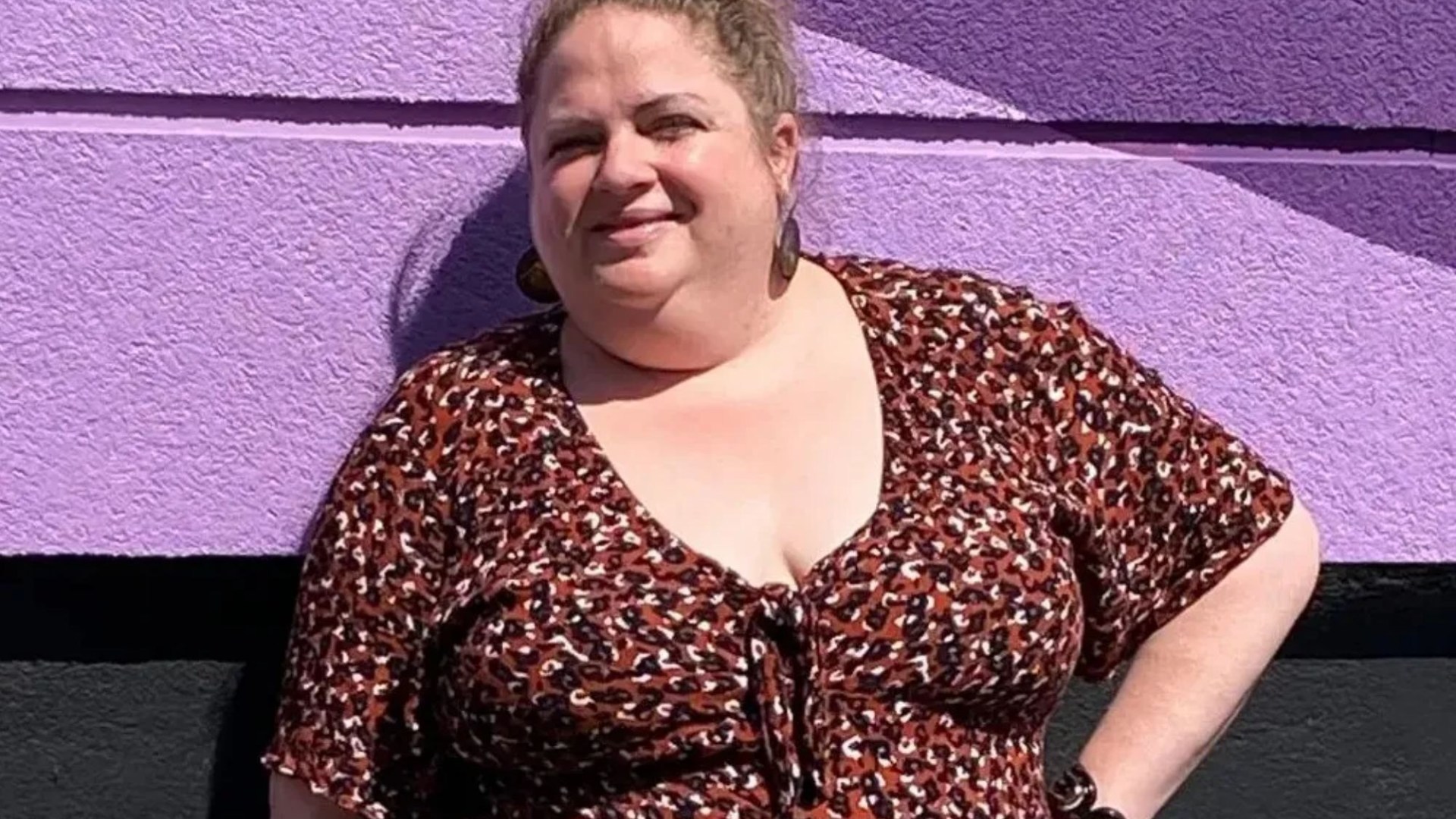
HAVING a coffee with friends, Katie Manasse felt her heart sink as the chat turned to GLP-1 medication – and who around the table was considering using the jabs. “I have friends of all shapes and sizes, but this particular group were all plus-size, and something we’d bonded over was our mutual acceptance of our bodies. Mel Ciavucco worries that fat jabs will worsen disordered eating in users Credit: supplied by Mel Ciavucco Mel, 43, has had some angry reactions from people when saying she’s ruled out GLP-1s Credit: supplied by Mel Ciavucco “Hearing that some were already using the jabs, and others were under pressure to, I felt sad,” admits Katie, 40, from the north-east. “Now, even the most resolute of women are wobbling in their certainty that they don’t need to change their body. The pressure is enormous.” According to a recent survey, 1.6 million people in the UK have used medications like Mounjaro and Wegovy to lose weight, with that figure expected to soar with the recent introduction of tablet versions. However, little attention has been paid to people like Katie, who is a size 22. Theoretically, they’re potential candidates for the jabs, but have no plans to use them – and say they’re facing criticism, judgement and coercion to jab. It’s a concern voiced by high-profile plus-size women, including model and activist Ashley Graham, who recently said: “There was a pendulum that swung that was so ‘body acceptance, positivity, everybody be who they want to be’. “And now it’s going back this whole opposite way, and that feels like a smack in the face to the women who have felt like they finally had a voice.” Meanwhile, plus-size American influencer Alex Aspasia, who has more than 1.5 million social media followers, has spoken out about the pressure jabs are placing on bigger women to be thin, saying: “It teaches women that ‘natural’ isn’t enough and that beauty is always something you have to buy, inject or fix.” UK body-positive influencer Mollie Quirk, who has 54k followers on her Instagram account @Molliemunroquirk, has been subjected to vicious comments, including: “It’s Ozempic time. . . Not a pretty sight,” and “Get on the jabs. . . You’re glamourising poor health.” Social psychologist Dr Angela Meadows, who specialises in discrimination relating to body weight and size, agrees we’re witnessing a head-on collision between the body-acceptance movement and GLP-1 culture, with plus-size people caught in the middle. “If you belong to a group that has a low value in the eyes of society and you can leave it, most people will try to go. “We’re seeing that with the numbers of people turning to weight-loss medication, which has offered them a route out of this ‘fat’ group,” explains Angela. “However, there are also those who don’t want to leave the group. They’ve accepted who they are, they don’t believe their bodies are a ‘problem’ to be ‘fixed’ and they’re digging deep to stay positive. “Even for those people, however, this ‘Ozempic era’ is a very difficult one to live in. It’s making it harder than ever to be bigger.” Mum-of-one Katie’s journey to body acceptance has not been a straightforward one, and much of her reluctance to join the jabbers is rooted in struggles in her past. “Naturally a size 14 by my early 20s, I was a classic yo-yo dieter for years, oscillating between sizes 12 and 16. Like so many women, it was the norm to me to always be losing weight, regaining, gaining more and then starting over,” says Katie, an executive and ADHD coach. “It genuinely never occurred to me to just accept the body I was in.” Katie Manasse, 40, is also refusing to use fat jabs and today she doesn’t weigh herself Credit: KatieLee The explosion of weight-loss meds has been very hard, and has fuelled fatphobia and the abuse of plus-size people, says Katie Credit: supplied by Katie Manasse She says that period of her life came to be characterised by disordered eating. “My entire relationship with food was based around seeing it as ‘good’ or ‘bad’. I’d restrict calories or exercise manically so that I’d ‘earned’ a certain meal,” she says. “After having my son in 2017, I’d walk for miles every day, scared about not shifting the baby weight. It wasn’t a healthy mindset.” Katie says the shift from yo-yo dieter to plus-size woman was a gradual one, influenced by a number of factors. “I learned about anti-diet culture – a whole movement that promotes body acceptance and freedom from weight stigma. It was like a light bulb going on, realising there was an alternative mindset to the one I’d grown up with. “It planted a seed that just grew – why am I doing this, constantly battling and feeling like I am failing to reach some body ideal? “I stopped dieting, I stopped weighing myself, I just let my body ‘be’ for the first time in years. I still liked being active, enjoying swimming, yoga and Pilates, but it was about looking after myself, not trying to reach a certain size,” she explains. “I also had therapy about my disordered thoughts and attitudes around food and exercise. It helped me realise how entrenched they’d been and also how to think simply about what my body wanted and needed. Some plus-size women who are candidates for the jabs but have no plans to use them say they’re facing criticism and judgement Credit: Getty Images for Chromat It feels like a smack in the face to the women who have felt like they finally had a voice, says plus-size advocate Ashley Graham on GLP-1s Credit: Patrick McMullan via Getty Image “The rise of the body-positivity movement was also very helpful, with role models and messaging about all body sizes being acceptable,” she adds. Today, Katie doesn’t weigh herself. “It’s not always easy to be a plus-size woman. Everything from finding nice clothes that fit well, to plane seat belts that are too small. . . There are constant reminders that we’re existing in a world we don’t always fit in with. “But the explosion of weight-loss meds has been very hard, and has fuelled fatphobia and the abuse of plus-size people. “It’s always existed, but now jab culture is amplifying that hatred. I’ve been on the receiving end of comments that I’m “disgusting” and “who’d sleep with that?”. Recently, a friend was called a “fat c**t” on a bus. It’s deeply hurtful and frightening. “I’ve had fleeting thoughts about using jabs, even though I know it would be a bad idea to try anything that allowed me to restrict what I ate. Psychologically, I believe they could be very damaging for me, and losing weight just isn’t worth that risk.” Katie says she has, on numerous occasions, been asked by friends and acquaintances if she’s going to try GLP-1s. “It’s always a firm ‘no’, and I explain that not only do I not have any desire to change my body, but also with my history of disordered eating, it wouldn’t be sensible. “Even when I’m not asked outright, I’m wondering: ‘Is that person thinking I’m wrong not to?’ “It’s triggered this sense of paranoia about what people think of me for rejecting this ‘solution’ to the problem, as they see it, of my weight.” Angela describes this as “anticipatory stigma”, which exists alongside verbalised judgements towards plus-size people. “Being asked if you are going to jab, being told you should, being given ‘helpful’ information about them. . . Anything that suggests you don’t belong in society as you are, those are micro-aggressions,” she explains. “The cumulative effect of those is psychologically and physically damaging. And even just expecting those comments and worrying about receiving them places people in a state of hyper-vigilance and stress, which has a long-term impact on health, too.” Mel Ciavucco, 43, is an eating disorders counsellor and, personally and professionally, she’s witnessing the demonising of bigger people for not jabbing. Mel was in her late-20s when she began to accept her now-size-20 body. “I’ve always been bigger and I come from an Italian family, where love is shown through food. As young as eight years old, I experienced restrictive thoughts and behaviours around food, and into my 20s I would restrict, binge, and then feel guilty. “My attitude to food was always ‘all or nothing’, and because I believed my self-worth was tied to my body weight, it was at rock-bottom. My unhappiness with my body had such a negative impact on my confidence and my belief in what I could achieve in life,” says Mel, who lives in Bristol with her partner. She credits going travelling for a number of years in her 20s, alongside a slow shift in mindset, with beginning to accept her body as it is. “I spent time in countries like Australia, where I had to push myself out of my comfort zone and wear swimwear, and I also just realised I was never going to be thin. It wasn’t attainable for me, so why was I always trying to control my weight and living with negative thoughts about it?” she says. “Returning to the UK in my early-30s, I had some therapy, not specifically about body image, but it came up and how much I’d tied my self-esteem to it for so long. “It was after that when I started my training as a counsellor, working with people with eating disorders and disordered eating, wanting to help others find that peace and acceptance that I had finally found.” Mel describes her attitude to her body these days as being “good enough”. “I don’t believe anyone loves their body all the time, but my daily aim is knowing my value in the world is not linked to my dress size.” Having reached this point, she then faced the arrival of GLP-1 culture. So, what impact has it had on Mel personally, and what is she observing from her sessions with clients? “Like most plus-size people I know, I’ve been asked whether I am going to take these drugs, and when I say no, there’s an unspoken, ‘But why wouldn’t you?’ left hanging in the air. It can be uncomfortable. “I’ve also had some angry reactions with people insisting that the drugs saved their life, and it’s wrong of me to rule out using them. My response is that I don’t judge any individual taking them, but I don’t like this culture that encourages thinness at any cost,” says Mel. “There’s a concept called “the good fatty”, and that’s someone who is trying to do something about their weight. It makes them a more acceptable fat person. Now, if you’re not on GLP-1s, you’re a “bad fatty” because you’re rejecting this help. Societally, we equate weight with health, and the marketing of these drugs is focusing on that, too. So not taking them is seen as irresponsible and selfish, not caring about our health and becoming a burden on the NHS. When actually, there is no guarantee of health at any size. “Both personally, and as a counsellor, I’ve asked myself whether people are questioning the choices of bigger people who are not shrinking in the way so many are. It’s difficult to have thoughts like that.” As a counsellor, Mel has concerns that fat jabs will create or worsen disordered eating in users, and that people may feel coerced into using them when they don’t actually want to. “The pressure to conform is so great. Someone said to me recently: ‘The body-positivity movement is dead’. And while I don’t agree we are there yet, increasingly women like me feel like society wants us eradicated.” Katie also remains resolute that the jabs are not for her, but admits it’s hard to hold firm as their popularity and influence only increases. “The acceptance and positivity around bigger bodies that had been achieved is definitely being weakened, and it feels harder than ever to be a plus-size woman. “But I don’t want to give in and return to my days of being consumed by a desire to change my body,” adds Katie. “These drugs are going nowhere – but nor are women like me. We are not a problem to be solved.”
I’m plus-sized & WON’T be going on skinny jabs, I love my body but people say I’m a ‘bad fatty’ for not ‘getting help’
Full Article
Original Source
Read the full article at Thesun →KhanList aggregates and links to publicly available news content. We do not host full articles from third-party sources. Always verify important information with original sources.