
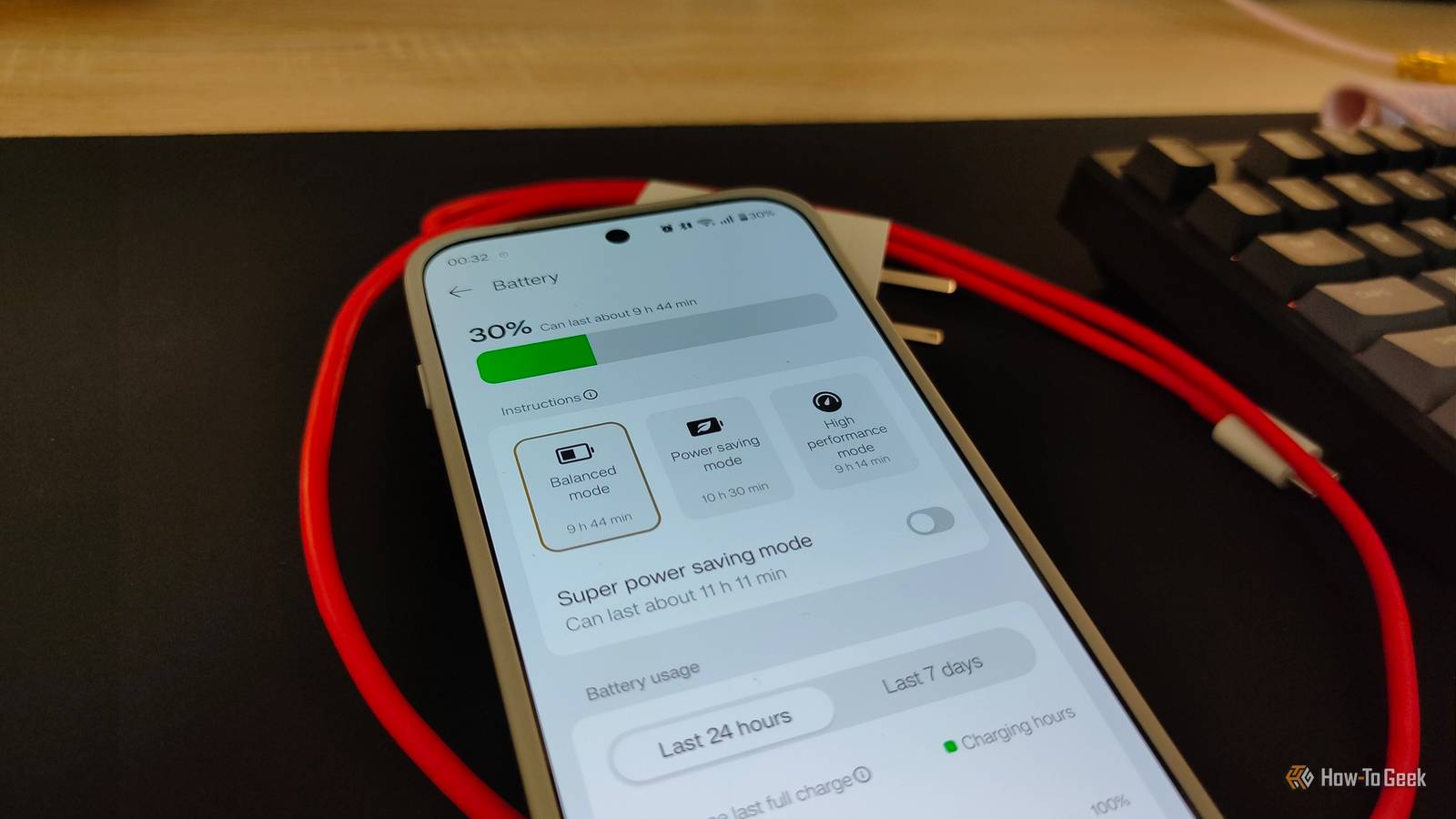
Published Aug 25, 2026, 1:45 PM EDT Ismar is a Senior Author at How-To Geek. He previously worked as a writer, editor, and general manager at a content agency before joining the team in 2023. He began his writing career in 2021 after completing a BA in English Language and Literature. Beyond How-To Geek, Ismar has contributed to Red Stag Fulfillment and Authority Hacker. He has also worked on various SEO projects to help clients improve their search visibility. Ismar has been around Windows PCs since the age of three, so friends and family naturally chose him as the resident tech support. His projects often involve tinkering, such as disassembling mechanical keyboards and gaming mice to mod his beloved gear. He also enjoys pushing hardware to the max through overclocking while staying on a reasonable budget. An avid gamer, Ismar has logged thousands of hours across various genres, including first-person shooters, RPGs, racing games, and roguelites. When he is not at his desk, he is probably exploring other people’s phones to discover their quirks and features or experimenting with the latest AI tools. In his free time, Ismar enjoys spending time with his wife, working out at the gym, playing guitar and bass, cooking gourmet meals, and traveling. Above all else, he’s a proud cat owner. Not too long ago, seeing only 30% battery left on your status bar meant your phone was basically as good as dead. In fact, that's still a reality for many people with fairly new phones. However, ever since I upgraded to a phone with a silicon-carbon battery, I've been leaving the house with a third of my battery left without a hint of anxiety. Let me explain why. 30% is the new 50% with a battery this big Silicon-carbon batteries have changed the game You've likely heard about silicon-carbon batteries and their impressive capabilities by now, but in case you haven't, allow me to introduce you to this new tech. A silicon-carbon battery is relatively similar to a traditional lithium-ion battery in its construction and operation, but it adds a small percentage of silicon to the anode. Since silicon can hold roughly 10 times more lithium ions than graphite, it can achieve a significant bump in capacity without increasing the battery's physical size. My OnePlus 15 has this special new kind of battery. It uses a surprisingly high amount of silicon (15%) in the anode, giving the phone a massive 7,300 mAh battery capacity. For context, the latest Samsung Galaxy S26 Ultra only has a 5,000 mAh battery, while the smaller Galaxy S26 gets just 4,300 mAh. If we do some napkin math, this means my OnePlus 15's battery is 46% larger than the one found in the S26 Ultra and an impressive 70% larger than the regular S26's. This is where that massive capacity really changes how I think about the battery percentage. When my OnePlus 15 drops to 30%, it still has 2,190 mAh of capacity left, which is roughly half the capacity of the regular S26. If you were heading out for a few hours and had a brand-new Samsung Galaxy S26 at 50% charge, you probably wouldn't even think to charge it. That's the exact same case for me, except I feel completely safe leaving with my phone at 30% or even less. I know that I can easily squeeze out 3 hours of screen-on time at that percentage, even if I use my phone for heavier tasks like navigation, music, and Android Auto. It's wild to think that I used to look for a charger when my old phone dropped to 30%, but on a new phone equipped with a silicon-carbon battery, I feel like I still have plenty of battery left. Battery saver makes that last 30% last much longer than I expected A sacrifice that's often worth making Credit: Lucas Gouveia / Justin Duino / How-To Geek Aside from hardware, software features have also made batteries in Android phones last longer than ever before. OnePlus is notorious for aggressively killing unnecessary background processes, which helps massively with battery life, but turning on Power Saving Mode takes things a step further. If I'm heading out for a while and plan to use my phone a lot, I swipe down and switch to Power Saving mode straight from the Quick Settings. This does a few things: it reduces the maximum brightness, slows down the processor, drops the refresh rate, and more, helping me stretch that 30% by quite a bit. All of my most-used apps still work and sync in the background just fine, and apart from the reduced refresh rate, I can barely notice the difference when using the phone as I normally do. This is a testament to the Snapdragon 8 Elite Gen 5 processor. It's so overkill for the apps I typically use that it's really hard for me to tell when it's running in Power Saving Mode. If my phone is empty, a quick top-up before I head out is enough Fast chargers are a massive game-changer Credit: Joe Fedewa / How-To Geek Although being at 30% still means I have plenty of juice left in the tank to head out, it's not always enough to last me if I'm heading out for 10 hours or longer without making some compromises and adjusting my habits. Thankfully, my phone came with a massive 120W quick charger that takes that battery anxiety right out. If my phone is at 30% or less, even a super short 10-minute session on the charger is all it takes to nearly double that percentage. Quick charging has completely changed how I use my phone. Overnight charging to have the phone ready in the morning is a foreign concept to me. I can just plug the phone into the wall, have breakfast, get ready, and by the time I'm done, the phone will be close to the 80% sweet spot that I always aim for when charging to keep the battery in top shape. Aside from the super-fast wall charger, one of the best things I've bought recently is an Anker 167.5W fast charger for my car. While my phone can only draw up to 55W over USB-C PD, the peak wattage doesn't actually matter all that much when it comes to topping up. It's completely removed any trace of battery anxiety for me. This is the first phone where I've never killed the battery Silicon-carbon batteries have completely transformed how I think about my phone. Even when I don't have much charge left, I feel safe heading out and can even charge other people's devices through reverse wireless charging if their phone is completely dead. I know I'll still have enough capacity left to call or message someone. And if my battery ever does get dangerously low, quick charging is there to save me. Just a few minutes on the wall adapter or car charger is all it takes to get several more hours of battery life. Between the massive battery and ridiculously fast charging, I've completely stopped worrying about my phone dying.
I'm not afraid to leave the house with 30% battery anymore—here's how my new Android phone makes it work
Full Article
Original Source
Read the full article at Howtogeek →KhanList aggregates and links to publicly available news content. We do not host full articles from third-party sources. Always verify important information with original sources.