
Secure rooms in the US Capitol are cavernous compared to the White House Situation Room. They are designed for full committees or larger gatherings, not intimate discussions. On Nov. 20, 2024, Jake Sullivan and I had gone to one of those rooms to brief our successors two weeks after Donald Trump resoundingly defeated Kamala Harris. Sullivan was Biden’s national security advisor. His named successor was Mike Waltz, a congressman from Florida. I was Biden’s lead on the Middle East and a chief negotiator on talks to free hostages held by Hamas in Gaza in exchange for a ceasefire with Israel. My named successor was Steve Witkoff — a real-estate tycoon and Trump’s best friend. Shortly after the election, I had called Jared Kushner, Trump’s son-in-law and former Middle East hand. My message was that we had a chance to secure a Gaza deal so long as we could be seen as working together without any daylight between the incoming and outgoing teams. That was a tall order given the polarization in Washington, but it was the only chance we had — and for the first time in months, circumstances trended in our favor. The hostage talks had collapsed in August, when shortly after Biden, together with the leaders of Egypt and Qatar, presented a new proposal endorsed by Israel, Hamas terrorists murdered six hostages in a tunnel under Rafah, a city in southern Gaza. One of those hostages was Hersh Goldberg-Polin, an American who had been grievously wounded and lost an arm in Hamas’s attacks at the Nova music festival on Oct. 7, 2023, before being taken captive. Following the collapse of the negotiations, Israel had won a string of military victories. It started on Sept. 17, 2024, with an operation that exploded thousands of beepers carried by Hezbollah militants in Lebanon. I first heard about what became known as Operation Grim Beeper from a contact in Mossad, Israel’s external intelligence service, who told me, “We just blew the dicks off Hezbollah.” In many cases, that was not metaphorical. Hezbollah, like Hamas, a terrorist group backed by Iran, had made the fateful decision to join in the Hamas attack on Israel. On Oct. 8, 2023, it began firing daily rocket barrages into northern Israel, eventually displacing nearly 80,000 people. Israel had been prepared to forgo an operation against Hezbollah if there was a hostage deal. But with no deal in sight, Israel soon followed the beeper operation with a ground assault into the Hezbollah strongholds of southern Lebanon. By the end of September, Hezbollah’s leader, Hassan Nasrallah, was dead, together with most of his senior lieutenants, buried in an underground Beirut compound. On Oct. 1, following Nasrallah’s death, Iran made its own foolish — and fateful — decision to launch another massive ballistic missile attack against Israel, following on a failed attack it had launched months earlier. This time, Iran launched nearly two hundred missiles at once, exceeding its earlier salvo. In the Situation Room that afternoon, as interceptors destroyed incoming missiles at the edge of outer space, we received reports of a direct hit on a college dormitory in Tel Aviv. I was seated just across from Harris, less than five weeks from Election Day. She mouthed, “Oh, shit.” We knew that if Iran inflicted significant Israeli casualties, the Israelis were prepared to launch a massive counterattack into Iran. Fortunately, that report, like many first reports, was wrong. Only remnants of a destroyed missile struck the building, causing little damage. The attack was mostly defeated, dismaying the Iranians, who had believed their larger salvo of missiles would be successful. About two weeks later, on Oct. 16, Israeli forces killed Hamas’s leader, Yahya Sinwar. He was found in Rafah, not far from where Hersh and five other hostages had been shot to death in a tunnel. Sinwar’s death removed a major obstacle to a deal — him — and allowed the Israelis to be more flexible on some terms now that the mastermind of the Oct. 7 attacks could no longer reclaim power. For Israel, it was akin to the United States military killing Osama bin Laden after 9/11. Finally, on Oct. 26, Israel conducted stealth air attacks against Iran, targeting and destroying many of its strategic air defense systems. We worked closely with the Israelis on this counterattack, walking the Israelis back from a more aggressive response. Biden told Netanyahu that we would deploy more air defenses to Israel and received assurance from Netanyahu in return that Israel’s response would focus on Iran’s own air defense batteries. The aim was to change the balance of power without triggering a wider war. We messaged Iran’s leaders afterward that their country was now wide open to air attacks should Israel (or the United States) choose to launch them. With Russia bogged down in Ukraine, Iran could not soon replace the destroyed air defense batteries, most of which were Russian and had proved ineffective against Israel’s capabilities. Iran never responded to Israel’s counterattack. With the tables turned on Iran, Sinwar dead, and Hezbollah’s leadership decimated, we predicted that Hezbollah would soon accept a ceasefire deal with Israel. That would be the moment to return to the Gaza deal — picking up where we had left off in August. My case to Kushner was straightforward. If Israel and Hamas knew that Trump would implement the deal on the table, we had a chance to close it before he took office. But if not, we would lose the best chance we had had since the war began. It was time to seize the moment, and the only way to do that was by working together. Kushner fully agreed. He told me that he would not be joining the new administration but said my successor on the Middle East was someone close to Trump, a pragmatic problem-solver who would want to work with me to the extent appropriate. He did not mention Witkoff, whose name emerged days later as Trump’s likely Middle East envoy. Biden invited Trump to the Oval on Nov. 13, 2024, mostly for a one-on-one. When the cameras came in briefly, Biden promised a smooth transition. “Politics is tough,” Trump said. “And it’s in many cases not a very nice world, but it is a nice world today, and I appreciate very much a transition that is so smooth, it’ll be as smooth as it can get.” I saw Biden afterward. Unlike many Democrats at the time who saw the election as an existential disaster, Biden — at least with me — was focused on working with the incoming team wherever we could. That was especially so on the hostage crisis. According to Biden, the two presidents agreed to coordinate, setting the stage for my meeting with Sullivan, Waltz, and Witkoff seven days later. In the secure room at the Capitol, Sullivan snapped open a document pouch and arrayed briefing materials in front of him, including maps of the region and background on Iran’s nuclear program. We sat alone at a large table, waiting for Trump’s team to arrive. Waltz entered, followed by Witkoff. The former was a retired military officer with perfect hair and rod-straight posture. The latter was a brash real estate developer known for carrying a pistol in a sock through the alleys and streets of New York, where he built a multibillion-dollar empire. Both exhibited a lighthearted manner, something that I had lost handling the Gaza crisis, where tens of thousands had died, over one hundred hostages remained in tunnels underground and the region stood on the brink of an all-out war. The meeting began awkwardly, the four of us standing at the corner of the large table in the oversize room, introducing ourselves by titles. Waltz took his seat, and we followed. “Trump told us to solve everything, that’s our mission,” Witkoff said, laughing. “Solve it!” Waltz added. Senator JD Vance, the incoming vice president, popped in unexpectedly. We stood. He asked what we were talking about, and when we said the Middle East, he told us that was his cue to leave. (Run as fast as you can, I thought.) Vance, Waltz, and Witkoff discussed recent calls they’d each had with Trump, comparing notes on what they had heard — apparently different things. The calls had come at all hours, and Waltz asked both men whether Trump ever slept. Witkoff answered, “I’ve known him for forty years, the answer is — no, not very much.” “Force of nature,” Waltz remarked. Witkoff explained that he had been Trump’s real-estate attorney before branching out on his own. “I’ve had success, but there’s only one Trump,” he told us. Vance came around the table to shake my hand, and Sullivan’s. He said he wanted to work with us during the transition period, which seemed sincere, and then left the room. With a map on the table, Sullivan walked through what had changed in the Middle East since the hostage talks collapsed in August. It was head-spinning even for those of us who had been living and breathing the issues every day since then. For Witkoff, I recounted my difficult experience on the hostage talks, and explained why we might now, finally, have a shot. Of course, for that to happen we had to be seen — by both Hamas and Israel — as working together, as both parties would demand to know Trump’s views. “The only reason I’m here is to save lives,” Witkoff said. “It’s the most noble thing anyone can do with their life, to save another life. So, I’m all in, count on it.” He asked what we needed from him, and from Trump. I took out the text. Every detail of a carefully negotiated agreement — from the extent of Israel’s redeployment during a ceasefire, to the timing and sequence of hostages and prisoner exchanges, to the minute-by-minute details on delivery of humanitarian assistance with the guns silent — was reflected in a package of texts that had been hammered over months shuttling between Doha, Jerusalem, and Cairo. The outstanding issue was agreement from Hamas on the hostages to come out during the first stage of the ceasefire, a category that included women, the elderly, and the sick or wounded, something the group still had never seriously engaged on. There would not be a hostage deal, I explained, without an agreed list of the hostages to be released. Witkoff claimed that he knew most of the leaders in the Middle East from his real-estate business, and he asked whether we’d be comfortable with his traveling to the region to reengage and to preview his new role. Sullivan said that would be fine, so long as he was not negotiating, and kept in close contact with me before and afterward. Witkoff wrote down his number, and we agreed to speak regularly from that moment forward. For the remainder of the briefing, we discussed Iran. With Trump entering office and Iran now vulnerable to direct attack, the Israelis believed Tehran might race to enrich uranium to weapons grade — the precursor for a nuclear bomb. Throughout the crisis, since Oct. 7, Iran had been enriching uranium to 60% grade, a step away from the 90% required for a bomb. It was the only country in the world without a weapons program to do so. The previous week, Sullivan had convened the Principals Committee to war-game the scenario of Iran enriching to weapons grade. Participants were unanimous that if we saw such indications, we’d recommend a US military strike against Iran’s nuclear facilities, including its deeply buried facility at Fordow. The operation had been rehearsed over the past year should the president — or a future president — need it. We dispatched a message to Iran’s leaders warning them not to think about escalating their nuclear program. Witkoff raised his hands. “Trump says I’ve got Iran, but maybe I don’t want it. Are you f**king kidding with all of this?” Finally, Saudi Arabia. We reviewed a package of agreements that we had completed on a deal for normalization between Israel and Saudi Arabia, before the Oct. 7 crisis. I explained that the deal might be possible over Trump’s term, so long as Gaza could be settled. Netanyahu’s hard-right coalition government made everything more difficult, but it might not outlast Israel’s next election in 2026. (These elections are now scheduled for later this month.) Witkoff came around to my side of the table. He extended his hand: “I’m here to save lives. I don’t give one shit about politics. If we save one life, we save the world.” The table was now set for that, I assured him.
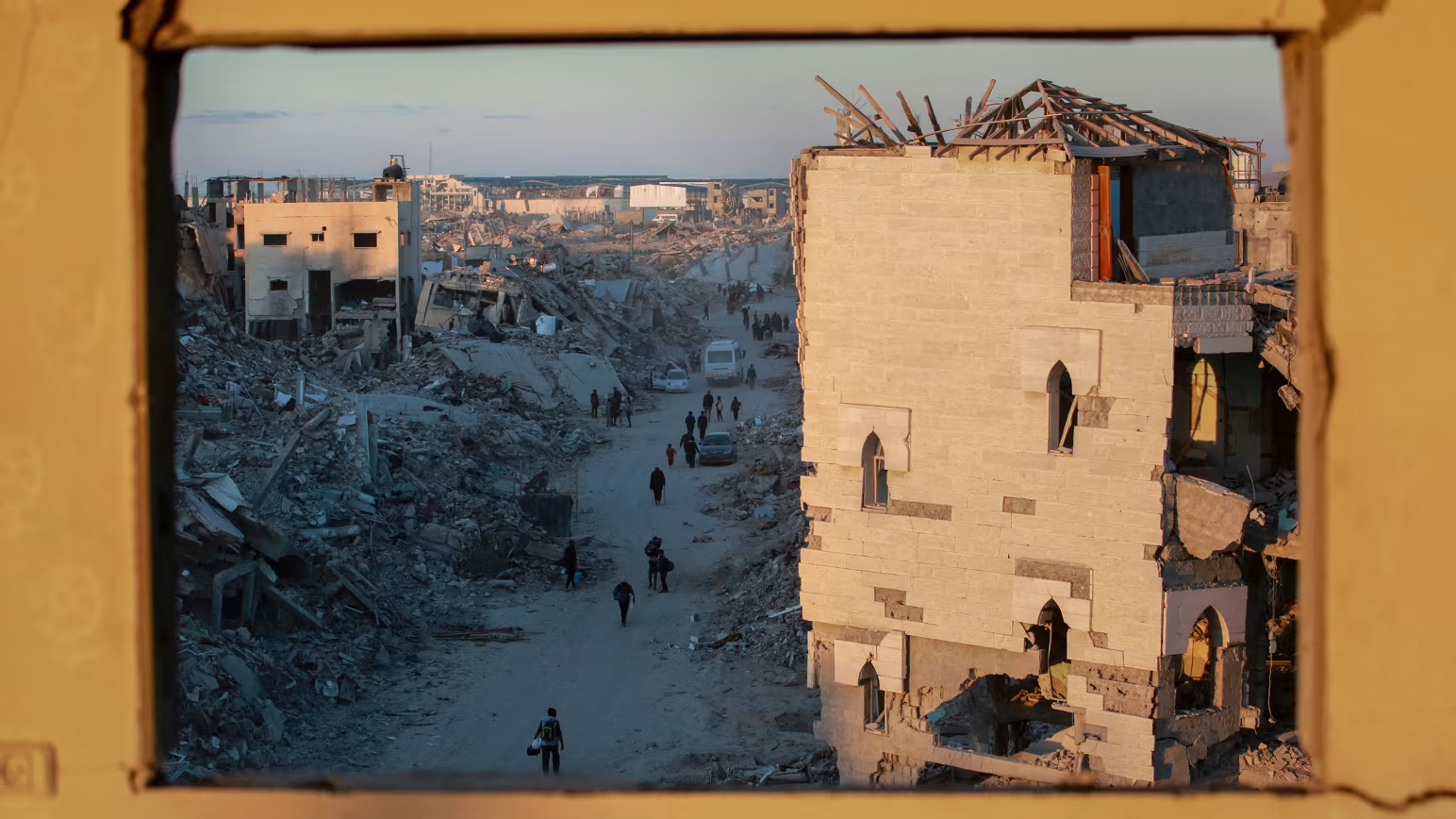
‘I’m here to save lives’: Inside the unlikely Biden-Trump partnership to secure a Gaza ceasefire
Full Article
Original Source
Read the full article at Egyptindependent →KhanList aggregates and links to publicly available news content. We do not host full articles from third-party sources. Always verify important information with original sources.