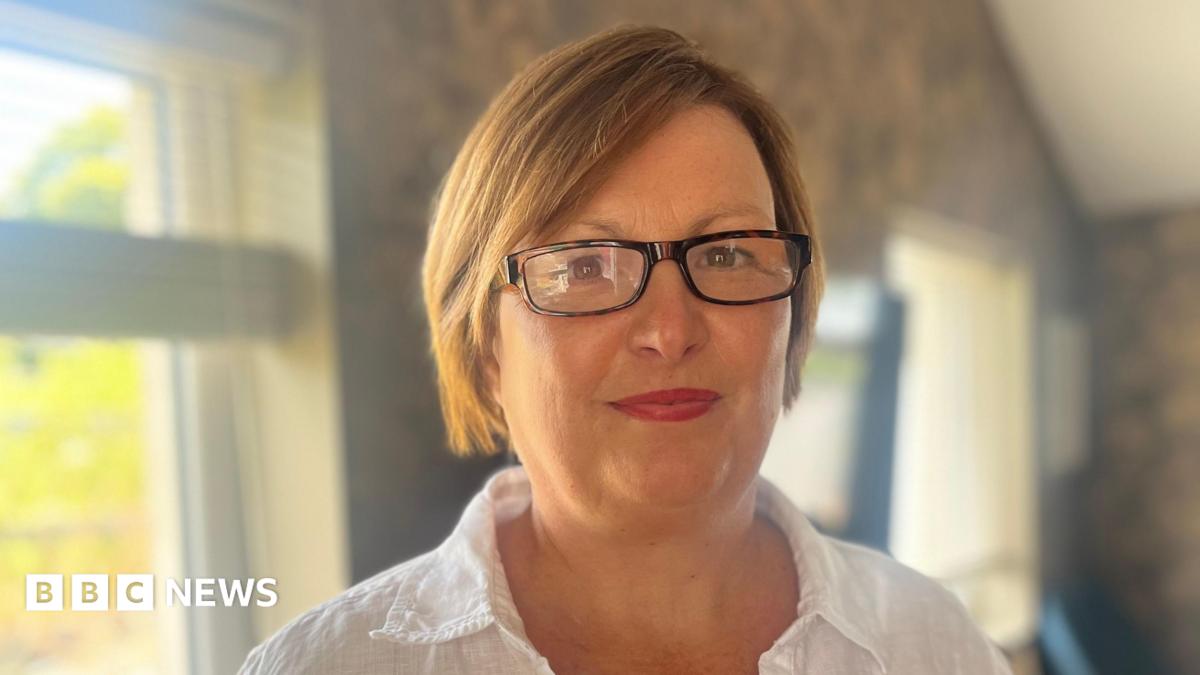
It's been a decade of treatments, trials and many tears for Lynette McHendry – but also hope and resilience.Diagnosed with an aggressive form of breast cancer 10 years ago, aged 37, she has defied the odds to face down a disease that made her feel "invisible", while also fighting for access to the treatment that ultimately saved her life, but was not available to her in Northern Ireland.Ten years ago, a stage four cancer diagnosis may have felt like a "death sentence," but Lynette's story also points towards the advancements in treatment and drugs, which she believes will allow more women to live longer with the disease."I am fortunate to have survived a stage four diagnosis when so many of my friends and patients I met along the way didn't make it," she said.One of those friends was Julie Ann Lillis, who died in 2023.She, Lynette and Anne McBrien were part of a group called Beaconbridge which called for a special audit of how many women in Northern Ireland were living with stage four breast cancer.Confused and dissatisfied with local treatment plans, Lynette sought a second opinion from The Royal Marsden Hospital in London which recommended genetic testing and platinum chemotherapy – something not offered on the NHS at home.At a key stage in her treatment, genetic testing confirmed Lynette was also BRCA1 positive. That determined specific treatment options."Back then a diagnosis of inflammatory triple negative breast cancer was like being handed a death sentence," Lynette said. "I was at a disadvantage living in Northern Ireland as women like me did not have access to treatment such as platinum-based chemotherapy and PARP inhibitors which are particularly relevant for BRCA gene-mutated cancers," she said. "I soon learned that women across the UK were receiving treatments I had not been offered, and Northern Ireland was behind the times," she added. "Having two young boys give me the drive and the fight to stand outside the box and scream and shout to go in a different direction and seek second opinions outside of Northern Ireland and move hospitals three times before I got a consultant who listened." In the past 10 years the drugs have increasingly been made available to more cancer patients in Northern Ireland.Wanting to share her knowledge, Lynette spoke to other women, joined patient forums, attended BRCA research meetings, met scientists, and began raising money for research.She has also published her story – described as "remarkable" by oncologists and other cancer survivors – in a book.As Lynette describes in her book, Unbroken, knowledge is power and talking to other patients encouraged her to have tailored platinum chemotherapy and to come off the drug tamoxifen - which was not suitable for her. Her personalised treatment plan included PARP inhibitors.Her story doesn't finish after breast cancer. Six months after finishing that treatment the cancer found its way to her brain, and she had two separate craniotomies (brain surgeries).There were more bumps including sepsis, targeted stereotactic radiotherapy on brain lesions and partial paralysis -- but in 2018 a scan revealed she had No Evidence of Active Disease (NEAD) - a status which she has maintained."I am in remission and the message I want to spread it is possible to live with cancer," Lynette said. For Lynette, there is hope."Women are better educated, there are better treatments available so women are no longer invisible - the future is looking better." For Prof McIntosh there are also many reasons to be positive."I think the combination of earlier diagnosis, personalised treatments and more treatment options being available mean the outcomes are going to continue to improve for our patients over the next few decades and that will transform the outcomes for patients with breast cancer at all stages," Prof McIntosh said.He said that data is used in research at Queen's University Belfast and the Ulster University which affects cancer treatment across the world."All cancer research through the NI cancer trials network allows us to deliver clinical trials and clinical studies which looks at new drugs, radiotherapy, chemotherapy in cancer patients and specifically to see what works for what patients. I think it is fair to say that in the past decade NI has made and continues to make a significant and active contribution to cancer research worldwide."
'I'm fortunate I survived a stage 4 diagnosis when so many didn't make it'
Full Article
Original Source
Read the full article at Bbc →KhanList aggregates and links to publicly available news content. We do not host full articles from third-party sources. Always verify important information with original sources.