
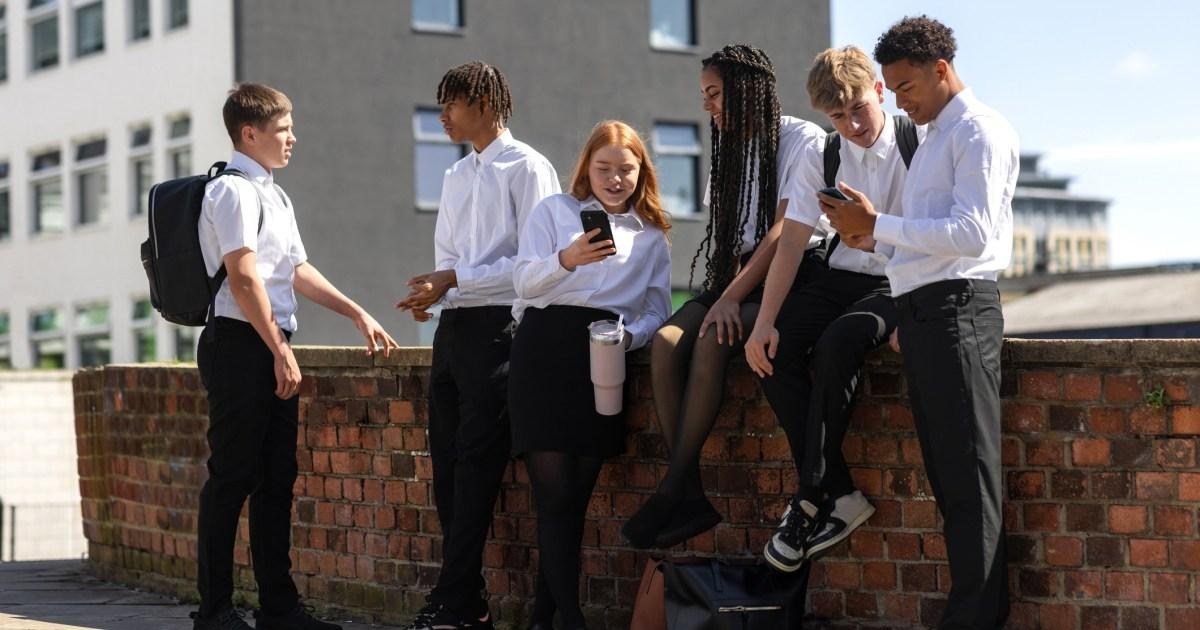
You will find it is disproportionately filled with the most vulnerable children (Picture: Getty Images) I read today that the number of pupils placed in internal exclusion in English secondary schools has increased almost three-fold in as many years. When figures like this dominate the headlines, I can’t help but feel as though we are supposed to imagine evil teachers wagging their fingers at petulant teenagers who don’t know how to follow rules. But as a teacher of over a decade I can tell you that is not the case. The rise in exclusions – just like many other issues such as the increase in persistent absence – isn’t down to a generation of gentle-parented kids or teachers excluding pupils for the fun of it. It’s down to one thing and one thing only. A tragically under-funded system. For anyone who is unfamiliar, internal exclusion means that students are excluded from lessons and breaks, such as lunch, but are still kept on site rather than being sent home. In my own decade as a teacher, I’ve seen the entire spectrum (Picture: Getty Images/Maskot) This might be for something like using a phone in school and refusing to hand it over when confiscated, persistent and serious disruption of learning or hiding in the toilets instead of turning up for class. What constitutes internal exclusion can vary widely from school to school – in my own decade as a teacher, I’ve seen the entire spectrum. There are isolation booths where children are forced to stare at a blank wall all day and complete work sent up by their teachers in total silence, all the way to plush rooms kitted out with sofas and fluffy cushions where kids can decompress and talk through their feelings with designated counselors. But while this differs from school to school, one thing remains the same throughout. You will find it is disproportionately filled with the most vulnerable children – the poorest, those with special educational needs, those with undiagnosed neurodivergence, those grappling with issues like insecure housing, poverty, mental health crises. The skyrocketing rates of internal exclusion are a symptom of a system that is failing (Picture: Getty Images) The data speaks for itself. More than one in five disadvantaged pupils were removed from lessons at least once in 2025/26 compared to just one in ten non-disadvantaged pupils. 18% of students with an education, health and care plan (meaning they have an identified special educational need) removed from class at least once in 2025/26. The skyrocketing rates of internal exclusion are a symptom of a system that is failing under the weight of a decade and a half of deliberate underfunding. It’s what happens to the most disadvantaged when you obliterate youth clubs, neglect youth mental health services, fail to adequately support young people during or after the pandemic, allow social media corporations to profit and refuse year on year to provide schools with the funding they need to manage in this increasingly complex context. Schools with neither the expertise, nor resources, or manpower to actually address the root cause of the issue (Picture: Getty Images) Then to top it all off, underpay teachers so they either leave in droves or struggle through with too much work and too little pay. In my career, I have seen young people who are facing home circumstances horrific enough to bring a grown adult to their knees. But they still come to school. As schools with neither the expertise, nor resources, or manpower to actually address the root cause of the issue, all too often what happens is that we are forced to stick an already-peeling plaster on the symptom instead. That’s not to say that wealthier kids exert perfect behaviour at all times. But the system has been obliterated to such a point that only the children of parents with the time, knowledge and resources to access specialist support (often privately paid for) manage to stay above water. What do you think is the primary reason for the increase in school exclusions? Underfunding of the educational systemCheck Lack of support for vulnerable childrenCheck Behavioral changes among studentsCheck Issues with teacher training and resourcesCheck Sign up to Metro's Puzzles Newsletter and get your favourite puzzles sent directly to you every day! I’ve seen kids put in internal exclusion for violence when really what they need is immediate mental health support to help them through, for example, the loss of a family member. Likewise, kids have been excluded for point-blank refusing to engage with all members of staff because what they need is an outlet to cope with the imminent eviction from their home or deportation of a parent. Though we certainly try, teachers aren’t specialist case workers in these fields and so without any way to address the root cause, all we can do is deal with the failure to engage. Internal exclusions don’t happen because teachers don’t care about the underlying problems, or because schools are failing in their duty. Rather, it’s the opposite. At the moment, teachers like myself are struggling to get through exam content due to bigger class sizes and more workload – there isn’t time to intervene before that struggling student gets into the fight in the playground. Internal exclusions don’t happen because teachers don’t care (Picture: Getty Images) The fact is, it’s easy to blame school leaders or teachers for the rise in exclusions – or to assume it means this generation is more wayward than any before it. But schools have become de-facto youth hubs, improvising makeshift solutions to systemic problems manufactured in policy decisions over a decade ago, like austerity – whilst also trying to teach algebra and poetry. If schools are going to be a one-stop shop for everything a child might need to succeed in life, from health support to life skills as well as qualifications, then we need funding. We cannot expect it to work without an actual genuine commitment to pay teachers enough and reverse the recruitment crisis. It’s easy to blame unruly kids or ruthless schools for these figures – but this is the inevitable consequence of the government’s own successive failures. It’s time we put the blame where it belongs. Do you have a story you’d like to share? Get in touch by emailing Ross.Mccafferty@metro.co.uk. Share your views in the comments below. Arrow MORE: Internet introjection is the worrying phenomenon every parent should know about Arrow MORE: Hidden health risk to children from the hottest summer on record Arrow MORE: Boy, 16, sentenced for stabbing teacher in head after asking about homework Puzzles Newsletter Get your favourite puzzles when they are ready to play on the website sent directly to you every day and track your daily streak!
I’m a teacher – pupils in exclusion breaks my heart
Full Article
Original Source
Read the full article at Metro →KhanList aggregates and links to publicly available news content. We do not host full articles from third-party sources. Always verify important information with original sources.