
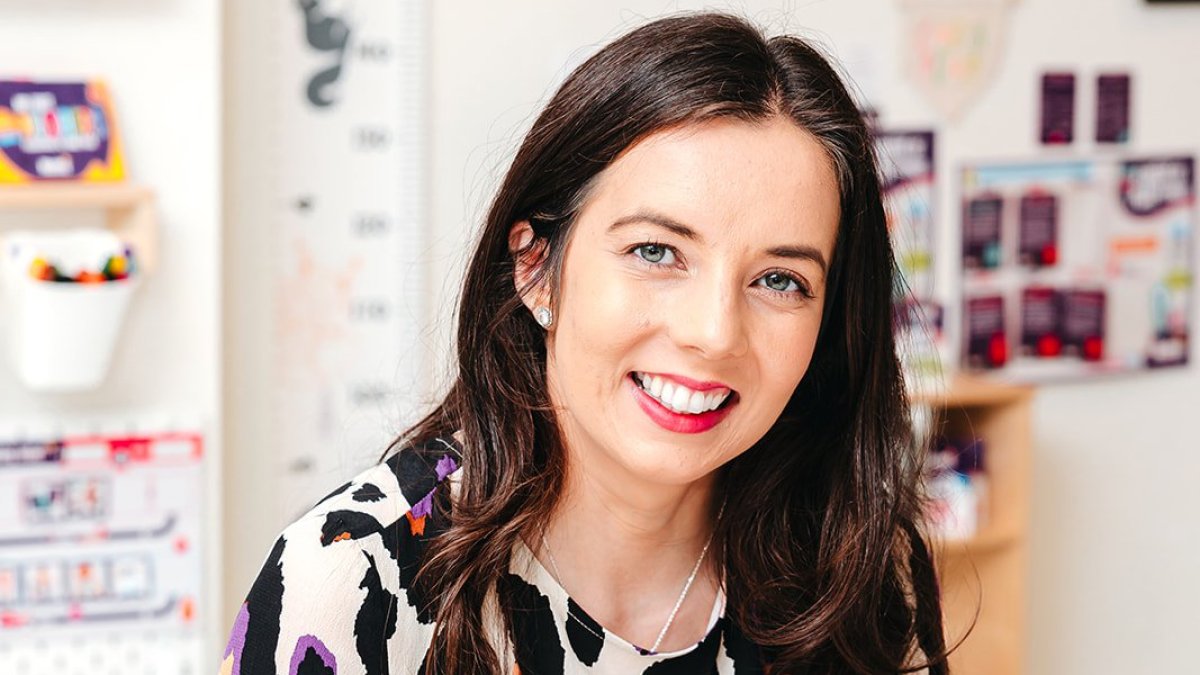
Ruth Lue-Quee believes education is in her blood – she is the third generation of teachers in her family. But now she has lost faith in the system, left the profession and sends her own children to private schools. “My grandma was a headteacher in a state school. My mum was a teacher in a state school. I became a deputy headteacher in a state primary aged 27. It was all I ever wanted to do and all I ever wanted to be. I studied a bachelors of education and I remember my mum saying: ‘If you do a BEd, it’s not like an English degree where you can do lots of different things. It qualifies you to be a teacher,’ and I wanted that. Teaching is a vocation, I gave it my all and it took over my life,” she says. “I loved it. But during the time I was a teacher, things changed.” She says changes to the school system started in 2014 when then-education secretary Michael Gove introduced the new curriculum. “Teaching became less for the children and more to tick boxes for somebody who’s never taught in a classroom and doesn’t understand the value of relationships and nurture and how children learn,” she believes. She found that assessments became a major primary school focus. Shorts “We’ve obviously had SATs for a very long time, and everybody knows the stats are purely for the school. But we now have the reception baseline, done on screen, that children do in the first few weeks of school,” she explains. “That means the teacher is taken away from important, quality time getting to know the children and developing relationships [to administer the tests]. It’s basically not looked at again until the child leaves Year 6 to measure the school. It has nothing to do with the children.” She also recognised that teachers were racing to cover things earlier. “The new curriculum brought everything forward a year, so what they used to learn in Year 2 became Year 1. The wording was around high standards and raising attainment. But actually, it meant teachers had to push children through a curriculum much quicker than needed. It became about coverage: asking ‘Have I taught that?’ rather than giving time to make sure children had really grasped things. If children enjoyed something, we used to be able to go off on a tangent and pick up on their interests, but that became squeezed out.” For Lue-Quee, now 35, who lives in West Midlands and has two children, the changes felt especially pronounced as her school became an academy. “The individuality we had, knowing our children and how our school worked, got wiped away,” she believes. She says the headteacher lost all power to make decisions beneficial for the children. “The school was in a really socio-economically deprived area. You needed to professionally love those kids to get the best out of them. We knew what those kids needed,” she explains. “My background and everything that I stand for is play-based learning. I used to have a play-based classroom in Key Stage 1 so children could create, explore, develop and learn. The role play areas got stripped because it wasn’t Trust policy – every child had to sit still at their desk.” Children in her Year 1 and 2 classes covered a huge developmental range. “I would have children with so much potential, but developmentally some were working at the age of a three-year-old and others working at the age of a seven-year-old, and there was this expectation that they all had to achieve the same.” She says autonomy was lost when the school became part of an Academy, many of which have, she says, “this disillusioned view of education with a focus on worksheets and sitting still”. She was promoted from assistant head to deputy head. “My career was going well, but in my heart I’d come in every day and think: ‘This isn’t right. This isn’t what I agree with.’ That tension was a lot to carry. I felt the school system was failing children. There are incredible, amazing teachers and some amazing, incredible schools. But the system doesn’t work. It’s so underfunded that I used to buy glue because otherwise children wouldn’t get a chance to stick things at school,” she says. ‘The beauty of the independent sector is you can choose a school that’s right for your children. It’s not a postcode lottery’ says Lue-Quee (Photo: Lucy Rebecca Photography) When Lue-Quee finished maternity leave six years ago, her request to reduce her hours from five days a week to four days was turned down. So she handed in her resignation. “It felt huge. I didn’t know what I was going to do. I felt strongly I still deserved my position,” she remembers. “But now I see it as a blessing in disguise because then I was out of the system.” She is one of many teachers leaving the profession. This week, a Department for Education survey found that almost half were considering leaving over the next five years. Lue-Quee turned to campaigning for play-based learning for all children to be made statutory to the end of Key Stage 1, when children are seven. She points to evidence showing that play strengthens conceptual understanding more effectively than direct, formal instruction, and helps children develop self-regulation, resilience and emotional intelligence. Her petition went to Parliament this January. “I’ve helped many schools implement a play-based approach into Key Stage 1 and helped parents understand the questions they should be asking and how to make changes within their child’s school,” she says. She’s also set up a company, My Mummy Teacher, which helps parents with play-based learning at home and consults in schools wanting more play-based learning in their classrooms. Since she left the Academy where she was deputy, the Trust has introduced a policy to promote flexible working. But when Lue-Quee’s son reached school age she realised she still felt disenchanted with the system of needless testing. She signed her son up to state school and then, at the last minute, couldn’t bring herself to send him and began ringing local independent schools. “I felt like I was throwing him into the lion’s den. “The beauty of the independent sector is you can choose a school that’s right for your children. It’s not a postcode lottery. I didn’t want my son to do the Year 1 phonics screening test. He would have passed with flying colours – reading is one of his absolute favourite things. But I didn’t want my child to be taught to pass a test and learn to read ‘alien words’ [the test checks children can read made-up words phonetically]. It’s focusing on the wrong thing. I wanted him to be taught a love of learning and a love of reading,” she says. She sends her son to a private school where classes are capped at 20 students in each class, paying £12,600 a year, plus uniform. “He’s lucky – they have a specialist teacher for languages, a sports specialist, and a music room. That’s what I wish every child had,” she says. Her three-year-old daughter will join when she turns school age too. I wonder what her family thinks. “My mum completely supports and understands my decision. I think every teacher finds it disappointing what’s happening in schools,” she tells me. Ruth Lue-Quee is founder of My Mummy Teacher which advocates for play-based learning
I’m a state deputy headteacher – here’s why I sent my children to private schools
Full Article
Original Source
Read the full article at Inews →KhanList aggregates and links to publicly available news content. We do not host full articles from third-party sources. Always verify important information with original sources.