
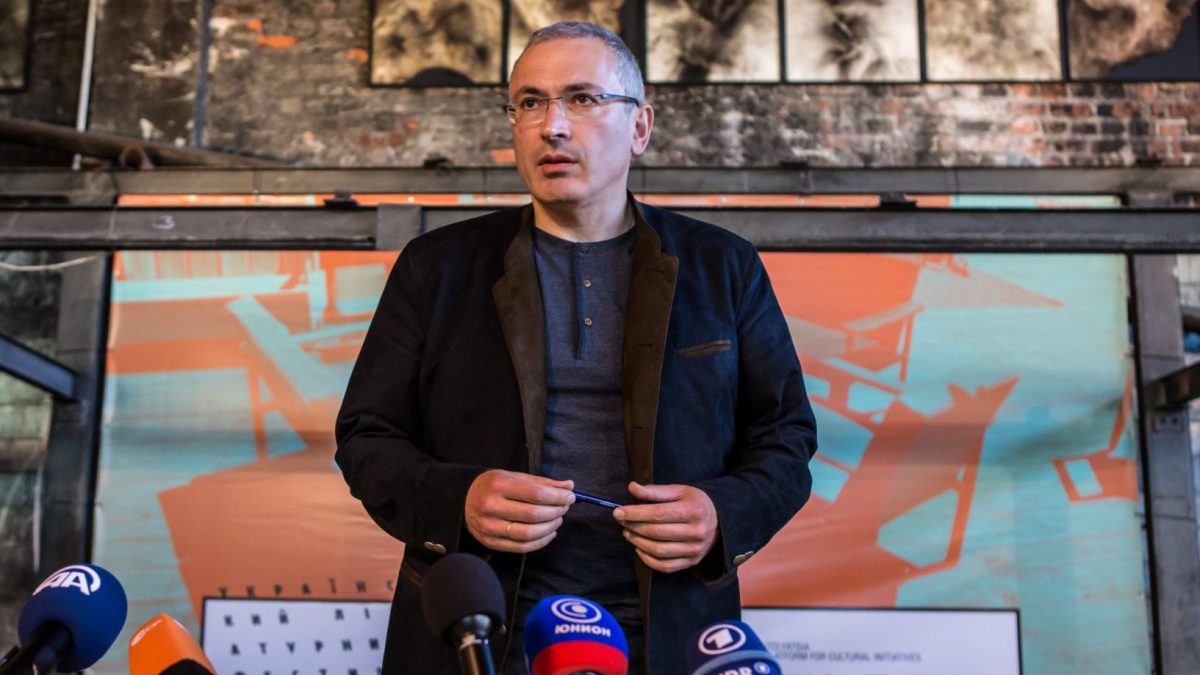
By Sunday evening, the Russian authorities will almost certainly proclaim another resounding victory for Vladimir Putin’s United Russia party. The vote on 18–20 September lacks the defining feature of a real election: uncertainty about the outcome. Political competition has been curtailed in advance, and the only registered party openly calling for a ceasefire in Ukraine has been removed from the national party-list ballot. But we should not mistake this vote for a non-event. The campaign has already exposed what the official percentages are designed to conceal: the Kremlin is increasingly afraid not of losing an election, but of any visible alternative emerging at all. Shorts There is also a more practical reason to watch the new State Duma. It is being elected for five years — under normal circumstances, until 2031 — which means its term will extend beyond Putin’s current presidential term, due to end in 2030. Whatever happens then — another re-election, a managed transfer of power or a succession crisis — Russia will face it with these same MPs in place. This does not mean the Duma will suddenly become an independent parliament. But in personalist regimes, institutions and officials that seem purely decorative while the leader is alive take on real significance when the leader’s own future becomes uncertain. Bureaucrats seek new patrons, hidden coalitions come out into the open, and yesterday’s conspicuous displays of loyalty are quickly redirected. No one can predict how such a transition will unfold. That is precisely why the elite sees it as essential to shut out any political force beyond its control before that moment comes. The most revealing episode of this campaign has been the U-turn over the only remaining anti-war party, Yabloko. On 29 July, the Central Election Commission registered the party’s national list of candidates. Yet on 10 August, the Supreme Court revoked that registration following a legal challenge by the pro-Kremlin Rodina party. A week later, the ruling was upheld on appeal. Khodorkovsky after giving evidence to the Commons Foreign Affairs Committee in 2022. Russia’s democratic and anti-war opposition abroad has come together ahead of parliamentary elections in the country, he says (Photo: Isabel Infantes/AFP) The formal grounds included breaches of campaign finance rules and copyright infringements involving photographs, song lyrics and images from films. The court’s ruling lists these complaints in detail. But the political outcome is simple: a party campaigning for a ceasefire and negotiations has disappeared from the national ballot. Some of its candidates have managed to remain in the race in single-member constituencies, but voters can no longer back the party’s list. In a July survey by ExtremeScan – an independent polling company that tracks Russian and Ukrainian public sentiment on the Ukraine War – 4 per cent of all respondents and 6 per cent of those who had decided how to vote chose Yabloko. In early September, after the party had been excluded, 18 per cent of respondents in a preliminary poll of 800 people said that if Yabloko were on the ballot, they would most probably vote for it. The conclusion is clear. Support for Yabloko was not confined to the familiar 2 per cent the Kremlin had come to expect. Anti-war discontent had found a legal political identity and a rallying point. For an authoritarian system, the danger is not an isolated disgruntled voter, but the possibility that disgruntled voters will find one another. By excluding Yabloko, the authorities solved an immediate procedural problem, but turned the party into a symbol in the process. Had it been barred from the outset, the public reaction would probably have been weaker. Instead, the Kremlin has shown that it regards even a tightly constrained, peaceful alternative operating within the system as an unacceptable risk. Russia’s democratic and anti-war opposition abroad has come together. The Russian Anti-War Committee, which I co-founded, chose not to dictate whether or not people should vote, support a particular candidate or choose another form of protest. But we agreed on a common principle: where people stand on the war must matter more than differences over party or tactics. After years of internal feuding, even this was a significant step. The state’s response showed just how politically charged this issue had become. On 31 August, Russia’s Foreign Intelligence Service — an agency with nothing whatsoever to do with running elections — accused European governments and the Russian opposition abroad of planning to disrupt the vote, call for a boycott and campaign for the results not to be recognised. The very fact that foreign intelligence had entered the debate over a parliamentary election speaks volumes – the Kremlin increasingly treats elections as an operation to secure the regime, rather than an exercise in political competition. At the same time, representatives of far-right parties in the European Parliament tried to derail discussions about the illegitimacy of Russia’s elections. Approval ratings for Vladimir Putin have been falling with the impact of the war with Ukraine hitting the pockets of ordinary Russians (Photo: Alexander Zemlianichenko/AP) This nervousness has not come out of nowhere. According to the Levada Centre, Putin’s approval rating remains high, but fell from 87 per cent in September 2025 to 76 per cent in August 2026. Some 59 per cent of respondents favour moving to peace talks; 61 per cent say the war has affected them or their families in one way or another. This does not automatically mean support for peace on Ukraine’s terms. But it does contradict the picture of a society unreservedly committed to endless war. Economic pressure is also becoming harder to ignore. The latest finance ministry figures put the federal budget deficit for January–August at 5.8trn roubles (£51bn) or 2.5 per cent of GDP. That is roughly one and a half times the 3.8trn rouble deficit budgeted for the entire year, although the ministry attributes part of the gap to spending being brought forward. Over the summer, the war reached still further into everyday life. Drone attacks on oil refineries and storage depots, petrol shortages and restrictions on mobile internet access were no longer isolated local incidents. In Levada’s August survey, 65 per cent of respondents said they had encountered fuel shortages or petrol stations that were not operating – almost a third said this had seriously disrupted their lives. On the battlefield, Russia has still failed to achieve a strategic breakthrough – a costly war is producing only limited territorial changes. Meanwhile, Western countries have begun moving beyond sanctions lists to actual enforcement. In June, British Royal Marines detained the tanker Smyrtos, part of Russia’s “shadow fleet”, in the English Channel. It was the first such UK-led operation and was carried out in close co-ordination with France. Intercepting one tanker will not stop a fleet of hundreds of vessels, but it shows that they can no longer take their impunity for granted. The wider strategic outcome is worse still for Putin. A war launched to expand Moscow’s influence has brought Finland and Sweden into Nato, hastened Ukraine’s estrangement from Russia and done serious damage to the appeal of Russia, its language and its culture. Putin promised to expand the “Russian world”. Instead, he has turned it from a source of cultural attraction into a symbol of political coercion. These elections were meant to confirm that there is no alternative whatsoever. The official results will no doubt be presented in exactly those terms. But the campaign has already told a different political story. The Kremlin can remove a party from the ballot and announce whatever percentages it wants. It cannot erase the demand for negotiations and an end to the war — and it cannot indefinitely postpone the question of what comes after one-man rule. The more insistently the regime claims there is no alternative, the more clearly it reveals how much it fears one emerging. Mikhail Khodorkovsky is the founder of the New Eurasian Strategies Centre and co-founder of the The Russian Anti-War Committee
I’m a Russian dissident in London. Putin’s ‘election’ is exposing his greatest fear
Full Article
Original Source
Read the full article at Inews →KhanList aggregates and links to publicly available news content. We do not host full articles from third-party sources. Always verify important information with original sources.