
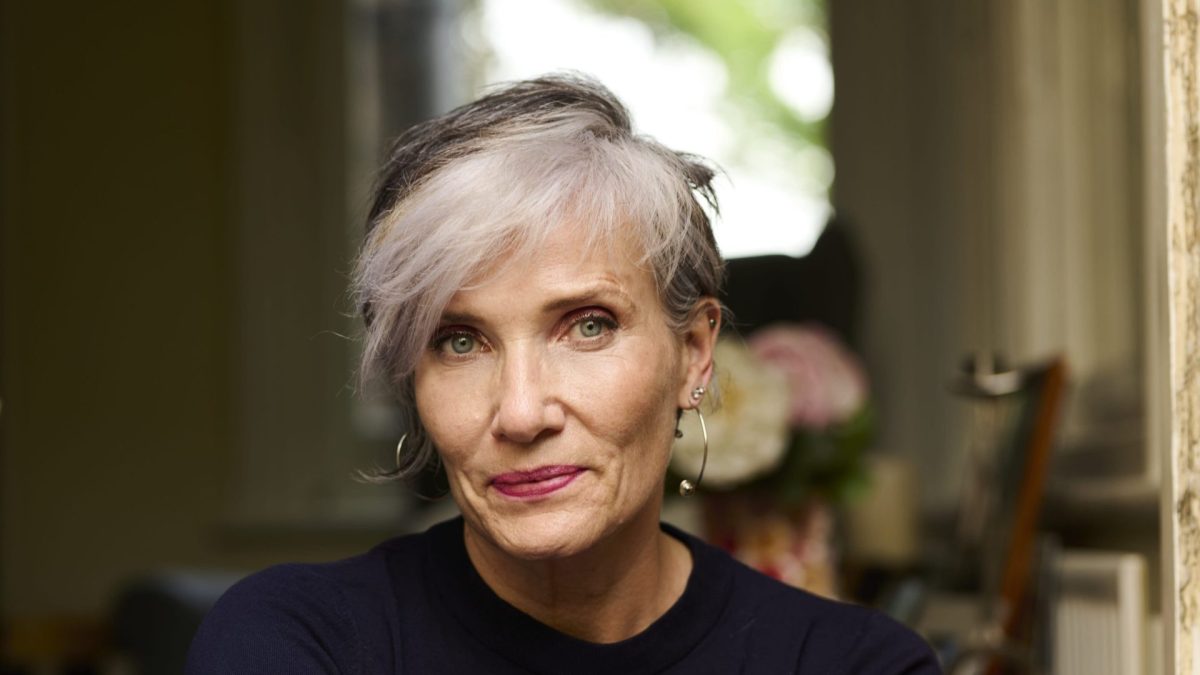
In over 35 years of experience, clinical psychologist Tanya Byron has become increasingly worried about how people are self-diagnosing mental health conditions, and giving themselves (and others) labels without any professional input. Pain, grief, and stress are feelings, and while they might be very uncomfortable, they do not always automatically need to be medicated or diagnosed. In her new book You Are Not a Diagnosis, she warns that not every bad feeling is depression, not every feeling of worry is anxiety, and just because you find yourself easily distracted does not necessarily mean you have ADHD. “ADHD is historically undiagnosed, but there is also an awful lot of hijacking of it now, too,” she tells The i Paper. Professor Byron is about to turn 60. “I’ve been doing this job for a long time, and I’m concerned that there is so much information presented online by people who are not professionally trained, and what they’re saying is not correct. At the moment, the realities of the economy, property and employment are grim, and there is a lot of worry around, and when we feel anxious or uncertain, we reach for explanations. That’s where a lot of this trend for self-diagnosis is coming from. People latch onto the things they find. It’s at best unhelpful and at worst really dangerous,” she says. Shorts The bleakness people feel about the state of the world, plus the pressure on NHS mental health services, has made for a perfect storm. “There’s a crisis in terms of how long it takes to see a therapist,” says Byron, “so no wonder people go online and find out on their own. They [are given] a label, there’s an influencer, a celebrity, someone who is saying, ‘hey, me too…’, and that can be so seductive.” Conversely, when she started her career, Byron says, “any talk of mental health was shrouded in stigma and shame”. “Now it’s too far in the other direction and it’s being talked about in ways that are really unhelpful. Not only is a flippant, misinformed self-diagnosis bad for the person, it’s also bad for people who have real diagnoses, whose very difficult conditions are cheapened and undermined.” So, in a world of TikTok and AI self-diagnosis, how can you work out what your feelings mean or are telling you? And what do you do if a loved one declares they have a condition, but you have your doubts? Here’s what Byron advises. Ask ‘why’, not ‘what’ Instead of saying “what’s wrong with me?”, the first question needs to be “why am I feeling this way?”. The same goes for a loved one. If we start with “what”, then we’re going to have to give it a label, aren’t we? But if we look at why these feelings are there, whether you’ve felt this way before, have you dealt with this before, then you might better understand what’s going on. Are you depressed? Or are you in fact just very sad? Depression is a clinical condition, and it is really an absence of feeling; it’s a coping mechanism. It’s a way that someone switches off and goes, “right, I’m checking out of this”, so they withdraw and stop eating well, stop sleeping well, stop self-caring- that’s depression. Depression is not a pair of shoes you take off the shelf one day and think, “I’ll wear that today, I feel so depressed today”. No, you don’t, you feel really sad. And you can seek help for that sadness. Think first about why you feel sad, what is causing this sadness, where it’s coming from. At the same time, I’m not criticising people who mistake sadness for depression, because it’s easy to do. I’ve got all these years of training, and I have done it. When I was broken by grief and in shock after my dad collapsed and died unexpectedly at 67, I decided I was depressed and wanted medical treatment to ease the pain. In fact, in time, I realised that I wasn’t depressed, I was in deep, profound grief. And what I needed was someone to sit with me and hold those feelings, and ask me the right questions in order for me to realise this feeling that I had, which made me feel I couldn’t get through the day, was actually normal. I didn’t want it to be normal, because it was so horrible. My mum died recently so I’m going through it all again, but now I know to seek support from my husband and children, and knowing this grief doesn’t make it easier, but it does make me respect the feeling. On the other hand, I’ve also had postnatal depression, and I went on medication and it absolutely worked for me. In that case, diagnosis and medication was entirely appropriate, because that was a serious mental health condition, with a professional diagnosis. Talk, talk, talk When you’ve thought about why you feel a certain way, think about who you have around who can support you, or who can help find sources of support like bereavement groups. Find a space to talk to others, to really talk and slow down and not rush to label each other, not judge, and show kindness. We used to live in a world of therapeutic conversation, in libraries and offices and youth clubs, and we’d normalise difficult experiences by sharing them. We’ve lost a lot of that, now, but there are still spaces like that to be found, and people who will listen. Suspect a loved one has self-diagnosed incorrectly? Don’t instantly dismiss them A friend or relative may be saying, “I can’t concentrate, I can’t focus, I feel really teary all the time, I think I might have ADHD, or I think I might have depression”. They may be labelling and medicalising their feelings in a way that is incorrect, and not actually helpful for them, but the feelings are there. So ask them more about how they feel, what it is they’re struggling with, and try to understand what could explain those struggles. Life can be really difficult sometimes, or sleep has been impaired, or there is an unhappy relationship, or family. These are really important issues, but they’re not necessarily mental health diagnoses. It’s about sitting with someone, listening, and asking questions. Without rushing to fix it all, or to tear down their diagnosis. They might just be looking for support, and this label they’ve given themselves is how they’re coping. Even if it’s wrong. Beware of getting sucked into online communities A young woman came to me who thought she had a borderline personality disorder, and had found an online community, and she’d subsequently found an identity. That identity was holding her at the time, so I wasn’t going to sit there and rip it away. I found a way to challenge it and help her think about it differently. She didn’t have a borderline personality disorder, and my concern was that by labelling her in that way, she would just become so entrenched in that idea that she’d grow into that identity. In the end, instead of her really understanding what it was, we found ways to help her address the feelings, and get support, and learn to be ok with some of the bits of herself she didn’t like. We are human, and flawed, and we have to learn to accept ourselves and manage ourselves as best we can. Step back and consider your use of language We “hijack” words like “trauma” and “triggered” all the time in daily life. For example, seeing your ex-boyfriend on the street and feeling stressed and upset is not you being triggered. Walk into a women’s refuge, and then you’ll really understand what those words like triggered and trauma mean for people in there. Or spend time with someone with obsessive compulsive disorder (OCD) and then you’ll know you’re not “a bit OCD” just because you like your pens kept neatly. These are not fun identity quirks, they’re serious conditions, and the reality is that there are plenty of people out there self-diagnosising with mental health conditions that they simply do not have. I have a patient who was suffering from a significant anxiety condition, and they don’t talk about their anxiety with their friends anymore, because everyone’s saying they’ve got anxiety. They don’t want to sit there educating people, justifying their condition. So she just keeps quiet about it. So, for the sake of people living with conditions like this, and for the sake of your own mental health, be careful with language. Using it correctly might help you, or a loved one, work out why you’re feeling the way you are, without the noise of misused, “therapy” speak. Self-diagnosis can just leave us trapped, with no understanding of our actual feelings.
I’m a psychologist – not every worry is anxiety. Here’s how to tell the difference
Full Article
Original Source
Read the full article at Inews →KhanList aggregates and links to publicly available news content. We do not host full articles from third-party sources. Always verify important information with original sources.