
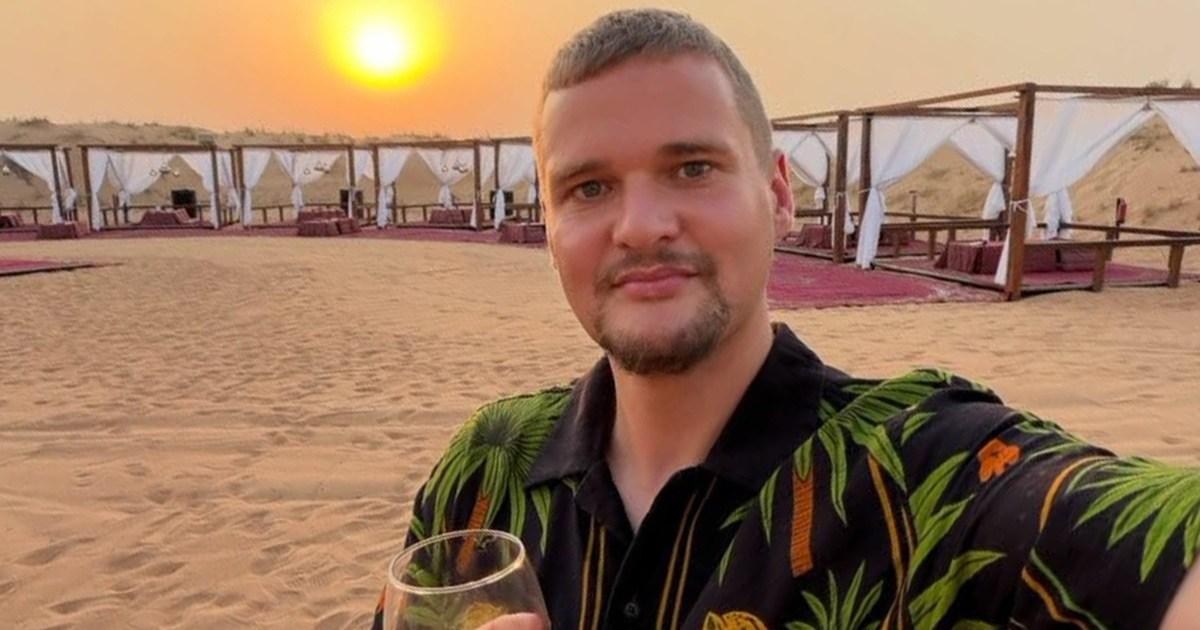
Samuel grew up in Walsall and left school aged 16 (Picture: Samuel Leeds) Welcome back to Me and My Money, where we take a peek into the nation’s wallets and bank accounts. This week we’re chatting to Samuel Leeds, 35, property investor and founder of Samuel Leeds Academy, boasting 505,000 followers on Instagram and over 600,000 subscribers on YouTube. Originally from Walsall, West Midlands, he now lives in Dubai with his wife, Amanda, and their four children. After buying his first property aged 17, he was a millionaire by 21, with his businesses reaching £100 million in revenue earlier this year. Here’s what he’s learned along the way. Tell us about your relationship with money growing up I’m from humble beginnings. We moved around a fair bit when I was young. My parents separated when I was seven, and my mum raised us working as a mobile hairdresser. My dad was a gardener, but when I was about 13, he decided to become a magician. I ended up working for him on market stalls and at children’s parties, which is where I learned that money comes from turning up and doing something people will pay for, rather than from asking. I was also selling magic tricks to other kids at school. My mum got called in because the teachers thought I was dealing drugs. She had to explain her son was actually running a small business in card tricks, which I don’t think improved their opinion of me much. Ready to start your homebuying journey? You can access completely fee-free mortgage advice with London & Country (L&C) Mortgages, a partner of Metro. Customers benefit from: – Award winning service from the UK’s leading mortgage broker – Expert advisors on hand 7 days a week – Access to 1000s of mortgage deals from across the market Unlike many mortgage brokers, L&C won’t charge you a fee for their advice. Find out how much you could borrow online Mortgage service provided by London & Country Mortgages (L&C), which is authorised and regulated by the Financial Conduct Authority (registered number: 143002). The FCA does not regulate most Buy to Let mortgages. Your home or property may be repossessed if you do not keep up repayments on your mortgage. His inspiration came from Rich Dad Poor Dad by Robert Kiyosaki (Picture: Samuel Leeds) I left school at 16 without bothering to sit most of my exams. After that I did whatever paid; paper rounds, cleaning tables at a snooker club for £6 an hour, and plastering on building sites (alongside helping my dad). Doing these multiple jobs at once, I was earning on average £25 a day. Ask Metro Use AI to go deeper into the stories you care about – powered by Metro and trusted publications. Then I read Rich Dad Poor Dad by Robert Kiyosaki, and it reframed the whole thing for me. I’d been trading hours for money — and there are only so many hours, whereas assets work whether you turn up or not. My Christian faith has also shaped my viewpoint in this respect. I’ve never seen money as the point of anything. It’s a tool, and I think if you get that the wrong way round it will make you miserable, no matter how much of it you have. How did you get started in property investment? I bought my first house in 2009 for £100,000. It was 100% financed by the bank, because I’d negotiated it 20% below market value. I was 17 and couldn’t legally put it in my name, so my stepdad Tim went on the deeds so I could get it done. He didn’t put in a penny, but he lent his name, and I’m still grateful for it. After that I mostly used purchase lease options, which is essentially buy now, pay later for property. You agree a price and a timeframe, take the property on, rent it out and manage it, and buy at the end of the term. It’s how someone with no capital can control property. Samuel shares advice for property investment on his popular YouTube channel (Picture: Samuel Leeds) Because this was just after the 2008 crash lots of sellers couldn’t sell, and were in negative equity. By 20, I had seven. I generally buy properties where I believe there is strong potential for growth. Letting agents manage the day-to-day duties and advise me on the appropriate market rent. How did your career progress from there? From there, I began sourcing deals for other people and charging a fee. Deal sourcing — finding a good property investment, negotiating the deal, analysing the figures and introducing it to an investor — was the fast money. The sourcing fee is usually between £3,000 and £5,000 per deal, and my company Deal Connect currently sells around 25 property deals every month. I started creating YouTube content in 2014 (my channel now has around 650,000 subscribers) before starting my education business in 2016. A few years later came Samuel Leeds Finance, which lends my own money to investors, and built the property portfolio to include hotels. In total, I have around 60 employees now, mostly remote. Samuel's monthly money diary Income: £100,000 Outgoings Rent: £45,833.33 (£550,000 annually paid up front at the start of the year) Charitable giving: £20,000 Utilities: £6,000 Travelling: £20,000 Food and drink: £5,000 Amanda’s ‘no questions asked’ money: £2,000 What are your monthly incomings and outgoings? I pay myself £100,000 per month, but I don’t use any money from YouTube, social media or my training business to live on or to spend; that gets reinvested back into the business. I live off of the rental income across the portfolio, the hotels, and returns from Samuel Leeds Finance, and take out equity through my portfolio as and when it appreciates. The first thing that goes out every month is what I give away to help people and causes I care about. I budget £20,000 per month for that. As a Christian, I believe it’s biblical to tithe 10% of your income, and I also give through my company and my charity, Samuel Leeds Foundation. I’ve built schools in Uganda with over 2,000 pupils currently, as well as a 64-bed hospital. I also house people strugging with homelessness in Walsall in my properties for free, which is organised through my local church connections. Next is housing. I rent in Dubai and it isn’t cheap, paying £550,000 up front for the year. I also maintain a few other homes for personal use. We regularly visit Zimbabwe and Thailand as second homes. The cost for the utilities to run our personal home is £6,000 per month, but the swimming pool, hot tub and sprinkler system seems to be a big part of that. Amanda gets £2,000 a month ‘no questions asked’ spending money (Picture: Samuel Leeds) Then, we allocate £20,000 per month to travelling. With a family of six it gets expensive, especially as we usually bring our live-in maid. We always fly the kids economy unless flying private. We budget £5,000 per month for grocery shopping, food and drink, but fun money is less than people expect. The outfit I’m wearing today, for example, including the ring and the shoes, cost under £100. Then, Amanda has £2,000 a month that we call her ‘no questions asked money’ which goes into a separate bank I don’t see. She spends it on whatever she likes and I don’t ask. I don’t save out of my income the way most people do, because my income is the return from my investments. The business profits go straight back into property and lending rather than into a personal savings account, so the saving happens before the money ever reaches me. What’s your response to those who criticise you online? I get a fair amount of hate, and a lot of it comes down to threethings. The first is being a landlord. I get called greedy for it, but my tenants are well looked after and get a good service — and I’d rather be judged on that than on the label. I don’t understand why people get upset with landlords because rents are high. Ultimately, the market determines the price. It is basic supply and demand. People can be angry with the system but blaming landlords makes no sense. It is like blaming Richard Branson because airline prices have increased or blaming a petrol station because fuel has become more expensive. They did not create the market conditions that determined those prices. The 35-year-old has received his fair share of criticism over the years (Picture: Samuel Leeds) The second is talking about money openly. People tell me I should keep quiet about it. But I came from nothing, and the reason I talk about it is that nobody talked about it around me when I was 16. I’m on a mission to help other people build wealth, and you can’t do that silently. The third is talking about tax. It’s still taboo in this country, and wealthy people generally don’t discuss it in public. I think that’s precisely why it should be discussed, because the people who most need to understand it are the ones nobody explains it to. What I do take issue with is anything factually untrue, and I’ll correct that every time. I’ve always been clear that I can’t guarantee anyone will become financially free. How do you feel about the options available to the younger generation nowadays? Young people have no excuse to be poor. There are more opportunities than ever to make money, with AI at our fingertips and everyone having access to the internet. Today, young people can find deals online and connect directly with investors. They can source property deals, form joint ventures, use purchase lease options or find investors to finance strong opportunities. The biggest mistake is believing that saving for years to get a mortgage deposit is the only way into property. What’s been your highest high and your lowest low? In 2018 my brother Russell and I bought a castle at auction called Ribbesford House for £810,000. We were excited, I was in my mid 20s, and I’d never done a big development. I put a new roof on it, made it structurally sound and airtight, and spent millions doing it. Then I worked out that finishing the interior would lose me more money, so I sold it in March this year for £450,000. I lost about £3.5 million. This was a bad purchase and I deserved every bit of the criticism. The one thing I’d say in my defence is that I sold to a specialist in listed buildings rather than the highest bidder, because I’d rather walk past it one day and see it finished. Looking back, It made me a better investor. I’m still an aggressive entrepreneur but I’m a far more cautious than I was 10 years ago. When people bring me bad deals now I can see them coming, because I’ve been the person bringing one. What does it feel like being so wealthy now given that you came from nothing? It feels good to be wealthy. I worked extremely hard for everything I have, so I appreciate it every day and never take it for granted. I am very grateful to my customers, my tenants, my team and everyone who has supported me along the way. Save or splurge? Save, and reinvest. My instinct is always to put money back to work rather than spend it. I’m not frugal about my family’s quality of life, but I’m genuinely uninterested in buying things to prove a point. I did some of that in my 20s and it doesn’t do what you think it will. What is your top financial tip? Focus on increasing what you earn before you obsess over what you cut. There’s a floor to how much you can save and no ceiling on what you can learn to earn. Deals of the Day Primark's new £14 co-ord has autumn styling on a budget covered Topman’s new-season collection has arrived and prices start at just £10 An Instagram mattress left me with back pain – this one completely changed my mind From £700 MacBooks to discounted iPhones, the best Apple tech for studentsb Save 25% on red light therapy masks, sauna blankets and sleep gadgets in Bon Charge sale And be generous with your money, even when you don’t have much. Nobody became poor from being generous. Do you have a story you’d like to share? Get in touch by emailing MetroLifestyleTeam@metro.co.uk Arrow MORE: I gave birth knowing my baby wouldn’t cry – doctors still call this a miscarriage Arrow MORE: Londoners are flocking to the ‘perfect’ commuter village with homes £384,684 cheaper Arrow MORE: What I Own: I’m single and bought a one-bedroom flat with £6,000 The Key Sign up for must-read property stories, DIY hacks and tips for buying a home.
I’m a landlord making £100,000 a month — young people have no excuse to be poor
Full Article
Original Source
Read the full article at Metro →KhanList aggregates and links to publicly available news content. We do not host full articles from third-party sources. Always verify important information with original sources.