
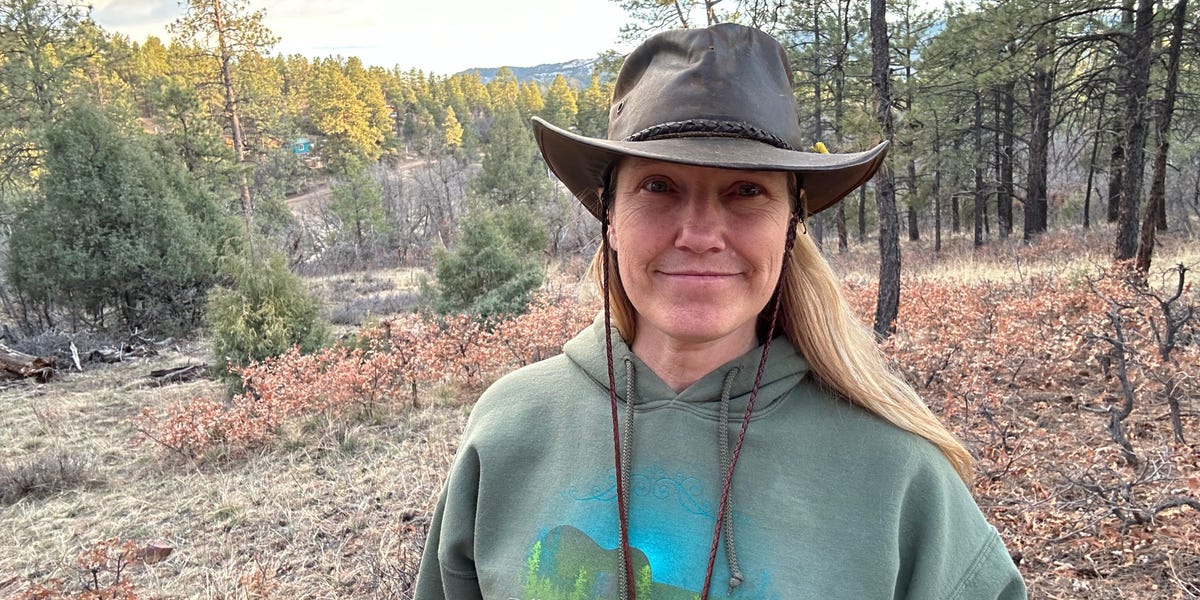
I'm a former Air Force survival instructor. People make a common mistake when it comes to prepping — here's what you really need to do. courtesy of Jessie Krebs Jessie Krebs joined the military in the 90s. This as-told-to essay is based on a conversation with Jessie Krebs, a 54-year-old former Air Force SERE (Survival, Evasion, Resistance, and Escape) instructor who trained military personnel to survive behind enemy lines and avoid capture. She lives off the grid in Pagosa Springs, Colorado. It has been edited for length and clarity.Before I joined the military, I didn't think too much about emergencies. As far as being physically aware of basic needs and what needed to happen, I was probably like most 18-year-olds. I just didn't think about it.I went into SERE in the 1990s, a military school where I became an instructor. Back in the 90s, we were called Survival or SERE instructors; now we're called SERE specialists. SERE stands for survival, evasion, resistance, and escape.The fun thing about my training in the military is that it basically teaches you skills so that you don't need as much equipment. When out in the wilderness, or in an emergency, you can improvise with what you have around you. An incentive flight when Krebs was on active duty in the 90s. courtesy of Jessie Krebs If I'm in a room somewhere and I need to get out of it, I can look at the curtains, I can look at the rugs, and figure out how to improvise a rope.Since then, I've lived off the grid for about 20 years. I have a solar system on my house, and I collect rainwater or haul water from a spring. I'm basically independent, and I don't have any utility bills. I have learned survival, and I have learned to rely on what I have around me — including in emergency scenarios like a blackout.Whether you're in the wilderness, in a vehicle that slid off the road, or dealing with a flood, a fire, or a power grid shutdown, there are five basic needs to know. One: In an emergency situation, you may need to signal to your family members and friends so you can find each other.It's important to know how to signal so you can communicate your location and let others know where you are.If you've got family members scattered around an area and phones don't work, where are you meeting? That's something you need to set up ahead of time and write down on a sheet of paper in a survival kit. For example, maybe it's at the park on the east side of town, where there's a blue slide. We're going to meet within 50 feet of that blue slide.Maybe your signal is three rocks stacked on top of each other. Mine could be two sticks that are at least a foot long, crisscrossed.Everybody's got their own symbol, and we all put that near the slide.At noon every day, midnight or whatever, we're all going to try to meet at the slide. That's on days one through three. Then, on days four through 10, we're going to go to Maggie's house, which is another five miles out of town.That's our clear communication plan.Two: take care of youThis is about personal protection. Clothing and equipment are your first line of defense.Equipment might include a sleeping bag, rope or line, a headlamp, and a knife. There's a lot of stuff I can do with rope; I can use it to tie up shelters, tie a splint, or haul stuff along. Krebs doing a demonstration with rope. courtesy of Jessie Krebs Shelter is important, too. A sleeping bag is preferably lightweight and bulky. If you have a poncho or any kind of waterproof or water-resistant material, you can put it around your sleeping gear. Getting good sleep is huge for taking care of yourself.And then there's fire. It's important to know how to build a fire and how to put a shelter over it when the weather is really bad so it can actually burn.How are you going to make a fire? Do you want to make a fire? Do you want to draw people to your location? If somebody sees a fire, they're likely to come.Three: I say, 'Go pee.'This is about your sustenance. Water is by far the most important. Most people can go about three days on average without water.We can go 30-plus days usually without food. So food is usually a far secondary thing — and unfortunately that's what a lot of people will throw in their survival kit or their bug-out bag; they'll put too much food in there.When you're choosing food to carry, the best thing is something that's got high fat content, especially in the wintertime.Grab your jars of peanut butter, your bottles of oil. Grab things that have a lot of high fat content because that's probably going to be the hardest for you to find.Four: explore. This refers to your travel techniques.Most of the time, when in an emergency, we don't want to travel. We want to bring rescue to us — but if the situation you're in is dangerous, you're going to need to know where you're going and how to get there. Krebs in a makeshift shelter. courtesy of Jessie Krebs Knowing how to navigate without Google Maps is really important. Knowing how to use a compass and knowing where you're safest are all important parts of navigation.Five: stay alive. This has everything to do with mental and emotional health, hygiene, and first aid.Most people freak out, and now they can't think at all. They're in lizard brain, and they just make the situation worse. How do you calm yourself down and get in a state where you can actually think rationally?The second part of that is hygiene. People often think they don't have time to worry about brushing their teeth, washing their face, or taking care of themselves in those basic ways. They don't even think about things like how to go to the bathroom in the woods. But those things are critical, not only for your mental and emotional state, but also because poor hygiene can lead to health issues.Make your own survival kitPeople call them bug-out bags or doomsday bags. In the military, we always called them a survival kit.The more you know, the less you need to carry. Most people don't know that much, so they should probably carry more. Still, they have all this gear, but most of it they don't know how to use.It doesn't do you much good to have a good survival kit if you don't know how to use what's in it. That's probably the biggest mistake people make. They'll buy it without knowing what's in it or how to use it.I usually tell people to make their own survival kit based on those five basic needs in their environment. That means thinking about things like food and water, ways to signal for help, clothing and shelter, navigation, and first aid.A lot of stuff you can get from a thrift store, and it doesn't have to cost too much.Take it one step at a timeWhen in an emergency, I think the biggest thing is to breathe and to be in the moment. At the moment, you're OK. You're alive, and you should comfort yourself with that.Try to relax, pay attention to what's going on right now, and calm down.In a crisis situation, remember, it's not your fault. You didn't create the emergency. You're just going to try to deal with it. If we can just relax, have a little faith in ourselves and the world, we'll get there. We'll survive.It's easy in dark times to focus on the dark. Don't do it. Look for the positive.Do you have a doomsday prepping story to share? Email the editor, Manseen Logan, at mlogan@businessinsider.com. Read next Business Insider tells the innovative stories you want to know Business Insider tells the innovative stories you want to know Business Insider tells the innovative stories you want to know Business Insider tells the innovative stories you want to know Alyshia Hull is a former business contributors fellow who now contributes as a freelancer. She primarily focuses on business, travel, van life, and workspace verticals. Alyshia is a graduate of SUNY Oswego with a degree in journalism. You can connect with her on Twitter and Instagram. Military as told to
I'm a former Air Force survival instructor. People make a common mistake when it comes to prepping — here's what you really need to do.
Full Article
Original Source
Read the full article at Businessinsider →KhanList aggregates and links to publicly available news content. We do not host full articles from third-party sources. Always verify important information with original sources.