
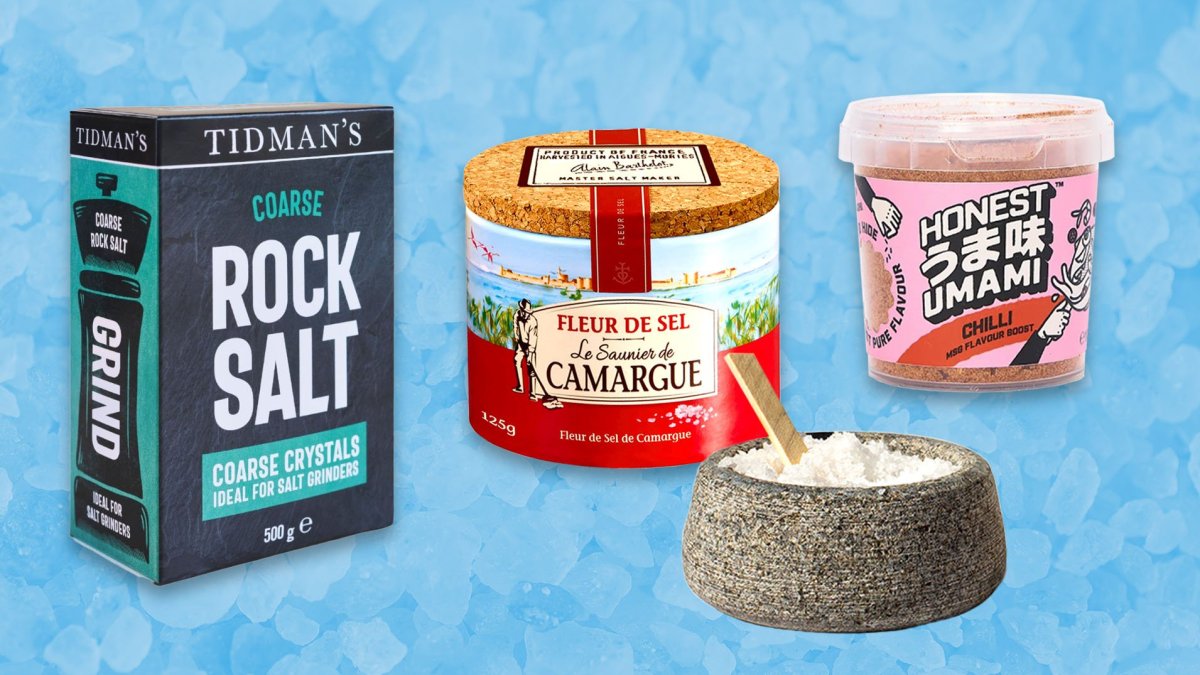
Withholding the whole truth about how posh salt is produced might not seem especially juicy. But the revelation that Essex sea salt company Maldon has been using rock salt imported from Germany to manufacture its prized product has shaken the food world. This salt is adored by everyone from Nigella to Jamie. The brand even compiles an annual “Maldon 50” list of its most impressive and influential fans in the industry. The first thing to make clear is that packets of Maldon salt, which cost around £2.85 for 250g, do contain salt and salt alone. But it turns out that large quantities of German rock salt are added to Maldon during manufacturing, a “salt on salt” process known as seeding. This makes the salt water even saltier and it evaporates – leaving behind the treasured salt crystals – in a more energy-efficient way. Following The Observer‘s investigation into Maldon, following tip-offs from locals who had recorded the German salt trucks arriving under cover of darkness, the Food Standards Authority has concluded that the company does comply with relevant food regulations, despite the lack of transparency and misleading labelling. A spokesperson for Maldon Salt said: “Our business makes sea salt at our site in Maldon by hand, using our centuries-old method which produces the famous pyramid-shaped flakes that are much loved by consumers both in the UK and abroad. We are proud of the quality of the salt we draw on in this artisanal ‘salt-on-salt’ process.” Nevertheless, there is no legal definition of sea salt, so some manufacturers are now calling for this. In the meantime, these are the salts I have in my kitchen, and what we know about how they’re made.Halen Môn, Anglesey sea salt Use for: finishing and flavouring Flakes of Maldon are loved for their geometric pyramid shapes. If you want to replace your Maldon with something similar, Anglesey sea salt is a great choice. While – full disclosure – I have not investigated the company myself, Halen Môn stands out among its competitors as the only UK sea salt producer to have a Protected Designated of Origin (PDO) mark to confirm that its products actually come from the place they claim to. This shows in the pricing. At £5.95 for 100g, it is five and a half times the cost of Maldon. It is also available from Waitrose (£6 for 170g) and M&S (£3.10 for 50g). If you are splashing out on expensive salt, keeping it for best will pay off and the large, mineral-rich flakes of Halen Môn add a touch of magic to finish any dish, from roast veg to salads as well as cookies or chocolate mousse. I’ll add sea salt to almost anything just before it hits the table, from a bowl of lentils to a dish of houmous. If you eat a lot of processed food, be mindful of salt content, but if you’re cooking from scratch, seasoning is essential. Other small UK sea salt producers who claim to produce their own product authentically include Whitby Sea Salt and Blackthorn Salt from Ayr on Scotland’s west coast. Saxa table salt Use for: everyday cooking Following the rise in artisan salts, I’m often asked what’s wrong with bog-standard table salt. The answer is absolutely nothing: the truth is that all salt is made of the same stuff: sodium chloride. The difference lies with where it comes from and how it is harvested, which affects the structure. Saxa is probably the best-known brand of table salt, and the cheap, white plastic canisters of fine grains are sold by all supermarkets. Slosh this into pans of boiling water for veg or pasta and add to any stews, curries and soups that you’re cooking on the hob. It will add saltiness for the lowest cost. Table salt tends to have an added anti-caking agent, usually tiny amounts of sodium hexacyanoferrate (E535), silicon dioxide (E551) or magnesium carbonate (E504), which prevent the microscopic grains from clumping together and not fitting through the container’s small opening. Buying supermarket own-label is much cheaper than a brand name. In Sainsbury’s, for example, Saxa is £1.90/750g while Sainsbury’s own label is 75p for the same volume. Volume is also key as to why many people say that table salt tastes saltier than flaky sea salt. This is because you get far more salt per teaspoon if adding the very fine grains of table salt compared with the irregular large flakes or grains of sea or rock salt. Fleur de sel de Camargue Use for: baking and sprinkling Another sea salt by any other name, but the French word “fleur de sel” makes this one the most romantic salt choice by far, and it’s available from Ocado as well as many independent shops at around £4.50 for 125g. A literal translation of fleur de sel would be salt flowers, and unlike the large flakes of UK-produced sea salt, these grains are more like sugar, delicate and immediately yielding once added to warm vegetable dishes or fish. I use this for finishing dishes and for salads, as well as in baking if I am doing something special. A sprinkle on porridge feels decadent on any mundane morning. Rock salt Use for: meat, pickling and curing, cocktails As the name suggests, rock salt is harvested from the earth. There are huge rock salt quarries all over the world and yes, this is the same stuff we use to de-ice roads. When it comes to food-grade rock salt, it comes in larger and harder crystals than sea salt flakes, with a more concentrated flavour. This makes it great for rubbing into meat to tenderise it, as the crystals maintain their form while cooking and sparkle when it’s time to serve up. It tends to be much cheaper than sea salt – Tidman’s for example is £1.90 for 500g – but doesn’t contain the anti-caking additives that table salt does, so is a good compromise between the two, especially if you plan to use large amounts by cooking something in a salt crust or curing fish under a blanket of it. It’s also a great choice for cocktails. As more of us like to mix drinks at home and prep glassware properly, you might be looking for a sturdy salt that will cling to the rim of a glass. Himalayan pink salt Use for: keeping up appearances This is a kind of rock salt, harvested in Pakistan and prized all over the world for its pretty colour and complex mineral content. I’m not convinced whether using different salts for their nutrient value is worthwhile, because you would have to consume vast quantities to see any benefit, but the colour does win me over if you are looking for a salt to display on your worktop. Flavoured salts Use for: instant flavour I don’t use much flavoured salt but a few places do it well. I prefer salt blends, such as with herbs and peppercorns, which you can mix yourself at home, over flavoured crystals. That said, there are a few I rate, including the Honest Umami MSG chilli salt for sprinkling on eggs or avocado. Monosodium glutamate (MSG) is a kind of salt widely used in Chinese, Japanese and Korean cooking to boost the umami flavour, which is most often translated as savoury rather than salty, but MSG isn’t a direct replacement for cooking salt. Another blend I like is the Goat Rodeo Goods Salty B*tch Kimchi Salt, a Scottish-made product that will liven up anything and everything from roast carrots to potatoes. Smoked salt also deserves an honorary mention – it adds a moreish smoky flavour to eggs and is great on top of butter or cream cheese on toast or in a potato. Maldon makes a great smoked salt. Will I use the brand again? I’m hugely disappointed about the way it has misled its devoted customers. Worse, its actions will no doubt damage the overall reputation of small artisan food businesses, who already struggle to defend the cost of their products. I probably won’t buy it for a while, but there’s no need to worry about safety as the product itself is technically unchanged.
I’m a food editor – the salts I buy for cooking, seasoning and baking
Full Article
Original Source
Read the full article at Inews →KhanList aggregates and links to publicly available news content. We do not host full articles from third-party sources. Always verify important information with original sources.