
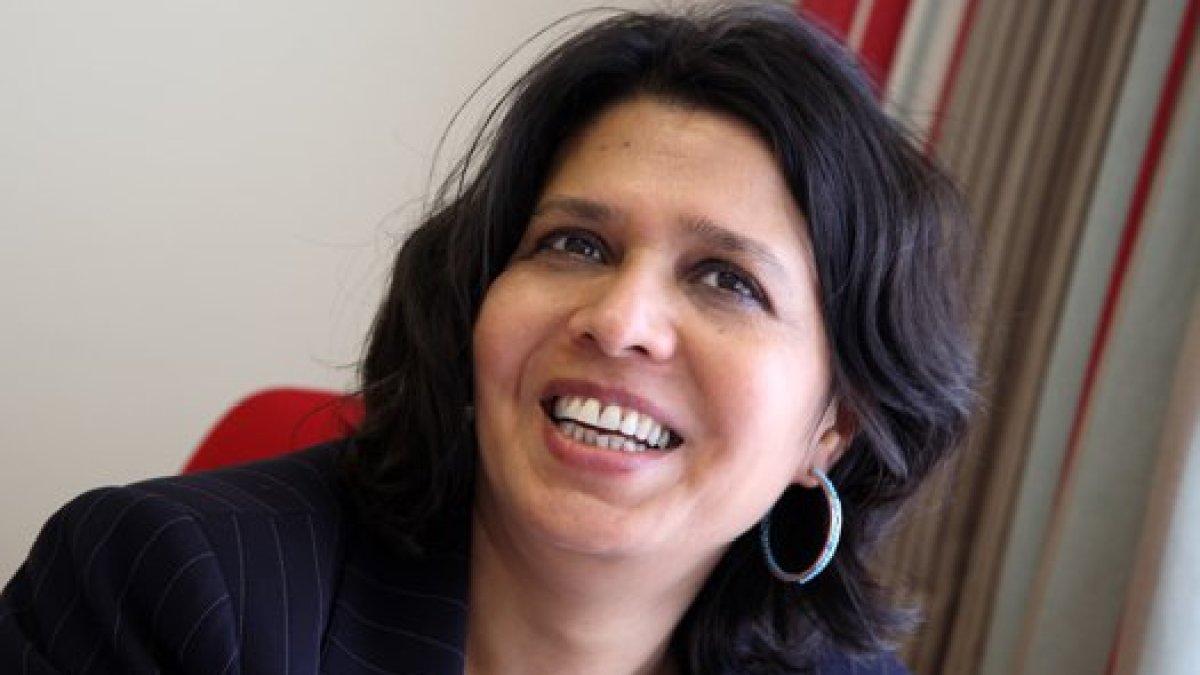
Baroness Geeta Nargund is a British medical professor and reproductive medicine pioneer, who is widely recognised for her work making fertility care safer and more accessible through mild IVF. Over her 30 years working as a consultant, she has come across every reproductive myth under the sun. She is dedicated to furthering education and access to knowledge about fertility and reproduction and was named a Labour life peer in March this year. Her message is clear: “Reproductive health is general health. Fertility treatments, including IVF, are healthcare. What I don’t want is people to be hearing these myths around IVF and fertility treatment and doing something unnecessarily expensive, unnecessarily invasive, or unnecessarily high dose.” Shorts Here, Baroness Nargund debunks the most common myths about both fertility and IVF. There is no ‘fertility cliff’, but age does matter This idea of a cliff edge is scary and not literal. Your fertility does decline with age, but it is gradual, so it is important to identify the other factors affecting your fertility as soon as you can, otherwise you can end up sleepwalking into infertility or early menopause. A detailed medical history gives you a clearer understanding of your trajectory: things like thyroid problems, endometriosis, a family history of early menopause, your medication all have an impact alongside your age. When celebrities talk about having a baby in their late forties or early fifties, it gives a misleading impression that women can have babies that late. I’ve been a consultant for more than 30 years and I’ve had highly educated, high-achieving women come to my clinics in their late thirties and mid-forties and say they delayed it because they saw some celebrities have babies late in life. But these celebrities are likely to be using donor eggs or their own eggs that they froze years ago. Of course, there can be natural conception and births in women in their late forties, but those cases are extremely rare. So, the phrase “fertility cliff” may be frightening and inaccurate, but it doesn’t mean we should be complacent. I only need to worry about menopause from my mid-forties I’ve seen so many women who have been caught out. I had one woman aged 33, a real high flyer who was travelling a lot for work, come into my clinic. She hadn’t had her period in six months and thought it was because of all the flights. I did a scan and various tests and I knew she was menopausal. She assumed she had everything under control and was completely shocked. I asked her if she’d ever spoken to her mum about the menopause and she said it wasn’t something they talked about. It turned out her mother had gone through it at 34. The daughter had no idea that her family history would directly affect her own age of menopause. It’s so important that women are aware of their family history and have these conversations! Men can have children at any age Men have long been missing from the conversation around fertility. Age has a direct impact on them too – it just happens a bit differently. It’s true that it doesn’t affect men as early as women; it hits more in the forties when sperm count and quality both begin to decline. But what is often missed is that there is also an effect of paternal age on the health of the offspring, particularly to do with certain neurodevelopmental conditions like ADHD and autism. Research shows that there is an increased incidence of these conditions in children if the father’s age is 45 or above at the time of conception. Fertility treatments are always intense The impression people have is that IVF means very high-dose hormone injections, taking injections for a long time, and the more eggs retrieved the better. That is not true. My scientific research has all been about making IVF what I would call gentler, softer and safer – without compromising success rates. It’s called mild IVF and it means reducing the dosage and duration of the stimulation drugs with the aim of achieving a higher quality rather than quantity of eggs, and a better quality of uterus lining for implantation. We have demonstrated that you can get similar success rates and results with mild IVF compared with high-dose stimulation: it doesn’t compromise the success rates, it reduces complications relating to high stimulation, and it prioritises the patient’s safety. Success and safety are two sides of the coin in an IVF cycle and you shouldn’t chase success at the cost of safety. So it’s not as simple as more injections, more eggs, more success. If you spend more, you will have more success When you are checking your fertility as a whole, it’s best if you can get a one-stop fertility assessment from a fertility clinic, rather than wasting money on sending off blood tests. I pioneered the “one-stop” diagnostic clinic in the early 2000s, where using advanced ultrasound technology, you can scan the womb and ovaries using Doppler (blood flow) and a 3D ultrasound scan, giving you a qualitative and comprehensive assessment, and only doing a blood test if necessary. When it comes to interpreting fertility test results, always make sure that you see a doctor to understand the information. There are all of these online tests and hormone tests that claim to give you clear answers but I’m afraid fertility is not that simple. When you and your partner are armed with knowledge like this, it can then shape what steps you take without delaying your treatment. Watch out for IVF add-ons that claim to increase your chances of having a baby – optional, non-essential extra treatments like Time-Lapse Imaging and Endometrial Scratching. These can cost thousands and many do nothing, with some even being harmful to a woman’s health and body. Instead, refer to the Human Fertilisation and Embryology Authority website. It explains where there is and where there is not evidence for specific add-ons. If you have PMOS, you cannot have children Polyendocrine Metabolic Ovarian Syndrome (PMOS, previously known as PCOS) affects one in 10 women. When I ran a very large PCOS clinic (as it was called then) at St George’s, I would hear from so many women that they were told they couldn’t have a baby because they had this condition. That is not true! If you are overweight, losing weight can automatically help you ovulate naturally and improve your chances of pregnancy. Issues associated with PMOS, like high testosterone, can be reduced by losing weight. If weight is not the issue, there are tablets that women can take to help them ovulate and conceive naturally. And, you do not need expensive, more intensive, more interventional treatments even with PMOS. You should always see if you can conceive naturally first. If you can’t, low interventions are preferable. Egg-freezing is a guarantee Egg-freezing is advanced now and fast freezing has made a difference, but there is no guarantee that you will have a baby. I would always say to people to try naturally first. Don’t go straight for egg-freezing unless, of course, there are good reasons why you have to delay starting your family. If you have regular periods you are fertile Unfortunately, if you have a regular period it doesn’t mean you’re always fertile, because fertility is not just about periods. You need healthy, open fallopian tubes and a healthy womb lining. Regular periods also don’t guarantee you always ovulate because sometimes your egg sac is ready to ovulate, but it doesn’t release the egg. Again, a full investigation with an expert ultrasound scan to get a clear picture is so important, you cannot rely on assumptions. Stress makes you infertile Stress is a normal part of life and something that people talk about all the time, but it’s like saying “I’m depressed” rather than “I have diagnosed depression”. Stress is when certain chemicals and hormones get released, like steroids and prolactin. That’s what it means in medical terms. Only really extreme stress, not day-to-day stress, can have an impact on implantation and early pregnancy. So if you are a bit stressed from work and think that’s why you’re not conceiving, I’d say that’s probably not true. If you’ve had one baby, you can easily have another Secondary infertility can be a big problem that not enough people know about. Whether or not you can have a second child depends again on your age, you and your partner’s fertility, whether you had a difficult and complicated birth, or complications with a caesarean section. All of this can affect your chances of conceiving and therefore it’s best to speak to a qualified doctor. Supplements can improve fertility The Human Fertilisation and Embryology Authority only regulates clinics, not supplements. So I will only recommend what we know is safe to take, based on peer-reviewed research: folic acid and vitamin D. I would also advise you to be aware of and optimise your weight, don’t smoke, reduce your alcohol intake and get a family health history and your general health checked out. When all of those aspects are covered, people are welcome to explore other options, but I worry about women wasting their time for years on acupuncture or herbal remedies without knowing their baseline fertility.
I’m a fertility expert – these are the 11 mistakes people make when trying for a baby
Full Article
Original Source
Read the full article at Inews →KhanList aggregates and links to publicly available news content. We do not host full articles from third-party sources. Always verify important information with original sources.