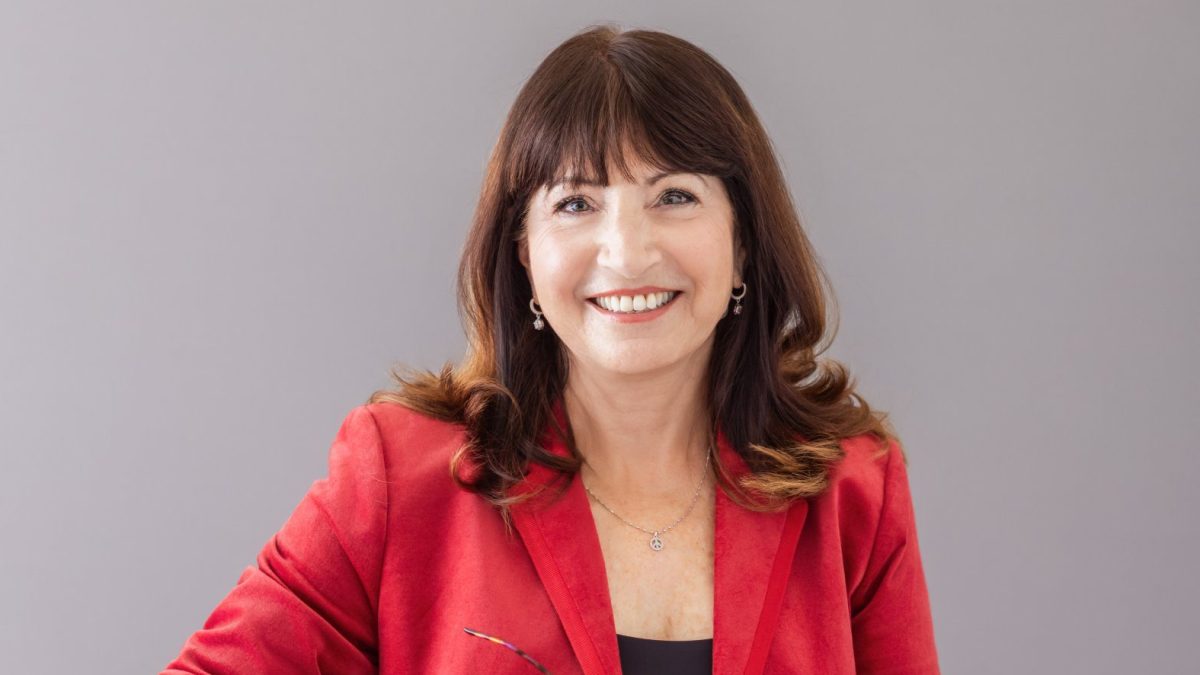
Have we become a generation of permissive over-parenters who could be damaging our children? That’s the belief of child development psychologist Dr Siggie Cohen, whose advice is followed online by millions. Cohen thinks today’s parents over-fix and make things right for our children – we over-negotiate and ask for their permission rather than making decisions (I feel myself blushing at this) and we over-accommodate for our children’s wishes. “We’ve taken children from the complete outskirts of the family to the centre, everything revolves around them,” she explains. “We came from authoritarian ‘do as I say’ parenting where there was a lot of obedience through fear, to an evolution of emotional growth, emotional language and emotional intelligence. It brought us to a more democratic way, listening and hearing children, understanding they matter and have thoughts, feelings and opinions,” she explains. But now, she says, it has gone too far. “We can’t just take a good thing and stay with it. We’ve almost moved into the permissive parenting style, which educators say that between authoritarian and authoritative, is the worst [for children and their outcomes].” Shorts Dr Siggie, as she is known by her fans, has written a new book, You are the Parent: Becoming the Calm, Confident Leader Your Child Needs, which will be published in September. It gives advice on how to avoid over-parenting while still validating a child’s feelings. “I recognised it’s not just parents that come to me [who would benefit from hearing it], it’s almost everyone,” she says. “I felt like I needed to bottle it.” Misunderstanding gentle parenting She says “gentle parenting“, sometimes known as “respectful” parenting because of the emphasis on understanding children’s feelings, didn’t set out to become permissive, but that’s what it has become. “Parents today misunderstand the original concept. They misuse and misinterpret it, and the outcome is kids running the show. And everybody’s like: ‘How come they’re not listening to me?’ And suddenly [parents] say: ‘No more this, and no more that’. So we go from permissive back to authoritarian, and this kind of mishmash does not work.” Cohen, who has three sons – the eldest of whom is 41 – and two young grandsons, believes there was a sweet spot in the 80s when parents understood their children had needs and emotions, but didn’t over-parent. “I think it was short-lived,” she laughs. “The 80s is when we settled into understanding that children need recognition, respect, accommodation, validation – but they still need to just practise their own skills. They need independence. We can intervene, but not overdo it. Let them just play.” Being influenced by social media Ironically for someone who is followed by two million parents online, she feels that social media has damaged parenting. “Now it’s not just ‘keep up with the Joneses’, it’s keeping up with a gazillion Joneses, and all the messages that are bombarding us,” she says. “Everything must be perfect, but there’s no such thing. It’s depleting; I think it drives parents crazy.” Not separating feelings and behaviour You Be the Parent is, she believes, a way to step away from that craziness, stop over-parenting and aiming for a perfection that doesn’t exist. It teaches parents “how to validate their children’s emotions while monitoring and mentoring behaviour”, which she calls the EBP – or emotional behavioural proficiency – method. She says that we can tell a child, with real empathy, “I can see you’re crying, you can be upset, being upset is OK”, and also, importantly, say: “But you can’t kick, throw and scream when you’re upset.” She believes that many parents don’t separate feelings and behaviour. “We don’t need to change how children feel, but help them learn to direct it and express it in appropriate ways. Some behaviours are OK and some are not,” she explains. Dr Siggie cautions parents to stop rushing in to fix our children’s problems immediately – a classic over-parenting mistake that leads to our children feeling helpless and anxious (Photo: Katherine Schuh) Jumping in to fix problems She cautions parents to stop rushing in to fix our children’s problems immediately, a classic over-parenting mistake that leads to our children feeling helpless and anxious. So if our child comes to us and says, “I don’t have any friends; everybody’s mean to me”, she suggests we don’t immediately respond by saying we’ll talk to the teacher or by giving screeds of advice. “I can’t go out there and do life for them,” she says. “When you validate, you don’t have to accommodate. So I would say: ‘Wow, that must be hard. I bet that you didn’t like that.’ I can be an active listener with compassion and empathy without gearing up towards: ‘OK. So, here’s what you need to do.’ Instead, I ask my child, ‘What do you think you can do? What do you think is the best thing to do next time?’ They may say ‘I don’t know’, which is the beginning.” I’ve been guilty of this: it took a long time for me to learn that when people share a problem, they tend to want to be heard, rather than receive advice. I have to remind myself frequently and still get it wrong. For many parents, sitting with our children feeling miserable is hard and often it’s tempting to try to help. Cohen suggests these instincts may also come from our own upbringing – and many parents need to address that. “You have to understand where you come from and what you bring into your parenting. Doing a full 180-degree turn doesn’t mean you are undoing what was done, or even healing yourself.” Asking their permission for parenting Cohen is concerned that so many parents ask their children for permission when parenting – another over-parenting mistake. “We run things by them,” she says. “We let them lead the way on so many areas where they don’t have the experience or answer. We overdo it, asking: ‘Is that OK?’ or ‘How does it make you feel?’ That gives children a false sense of power, but also it’s a huge burden that causes anxiety. A child knows: ‘I’m inexperienced, yet I’m constantly being asked to make decisions and to take responsibility.’” I know I do this too, in fact, my children have started complaining that I say, “Do you want to brush your teeth?” when I’m not offering them a genuine choice. I can see how this people-pleasing phrasing must feel annoying to them. But there are far more serious consequences than being irritating, Cohen explains. In the UK, we have an anxiety epidemic among our teens; in the US she sees children in kindergarten with anxiety. She is surprised that many children are given the choice over bigger life moments, like their secondary school. “It’s probably a much bigger decision than a child can hold,” she believes. “Let’s say that they chose to go to whatever school, and you as a parent went with it, but it doesn’t turn out like they think. Are you going to say: ‘Well, you chose and wanted to go there.’ I think it should be a parental decision, and then the support of the transition should be collaborative. Children will base it on a few friends that go to the same school, and that changes and is so unreliable.” Giving too many opportunities Another over-parenting mistake is giving our children “too many opportunities” by timetabling so much of their time with clubs, sports, activities. While this happens more in the US than the UK, we are following suit. “We motivate them in so many ways to be the best, but their future relies 99 per cent of the time not on their education, but on their resilience, their coping skills, their ability to navigate challenges, and we’re missing that.” Not letting them fail Her biggest advice to guard against over-parenting is to let our children fail. “Ask yourself at any given moment: ‘How much is too much?’ We want them to actually use us, their loving and caring family, their home, as a training ground for struggling, for challenging themselves, and for learning to fall and get up on their own. Getting some scratches here, including mental scratches, is good for healing.” How to get your children to do things they don’t want to, the Dr Siggie Cohen way My three-year-old daughter often tells me she doesn’t want to brush her teeth. Cohen recommends I sit down with all my children and draw up a list of things we absolutely have to do: Eat breakfast, go to bed, go to school, brush your teeth. Then get their suggestions too: Eat ice cream, play video games, not clean our bedrooms, see friends. Whatever they choose. The teeth-brushing example Explain: “There’s some things we have to, and some things we want to, and that’s just how it works.” And then go back to the first list and say: “Tell me, do you sometimes, just sometimes, want to go to school? Remember how you played that game at break, or when you enjoyed coding club?” Show them a reframing that changes how we see things. Or with brushing teeth say: “Do you sometimes actually want to brush your teeth? Because it feels nice after. I’m not saying every day, but sometimes?” You begin to poke holes in their false assumptions. Ask in general: “Is there anything you can do to help yourself when you don’t want to brush your teeth? Do you think that while you’re brushing your teeth, you can pretend that you’re flying, or that you’re swimming in the pool of chocolate?” There are ways to make things better for you, but only you can do it.’ Then in the moment, if I hear “no” to toothbrushing simply say: “I hear you. It’s not a choice: we have to. Sometimes we do what we want to, and sometimes we do what we have to.’ The coat and bag example I’m sure it’s not just my children who dump whatever they’ve been carrying the minute they get home, or forget to pick up their plates after a meal. Cohen advises: “Remember, your children go to school, and in those many hours, they make tons of independent decisions, and carry their own backpacks and know where to hang them.” She recommends the most effective way to get them to remember is to offer to remind them until they don’t need it anymore, saying: “OK, I know you know what to do. Just keep practising. I’m going to remind you every day that you already know what to do, that you already do all these things somewhere else, and they’re so not a big deal. You don’t really need me.” You Are the Parent: Becoming the Calm, Confident Leader Your Child Needs, by Dr Siggie Cohen, is published in the UK by HarperCollins on 10 September (£16.99)
I’m a child psychologist – the things you’re doing that are damaging your kids
Full Article
Original Source
Read the full article at Inews →KhanList aggregates and links to publicly available news content. We do not host full articles from third-party sources. Always verify important information with original sources.