
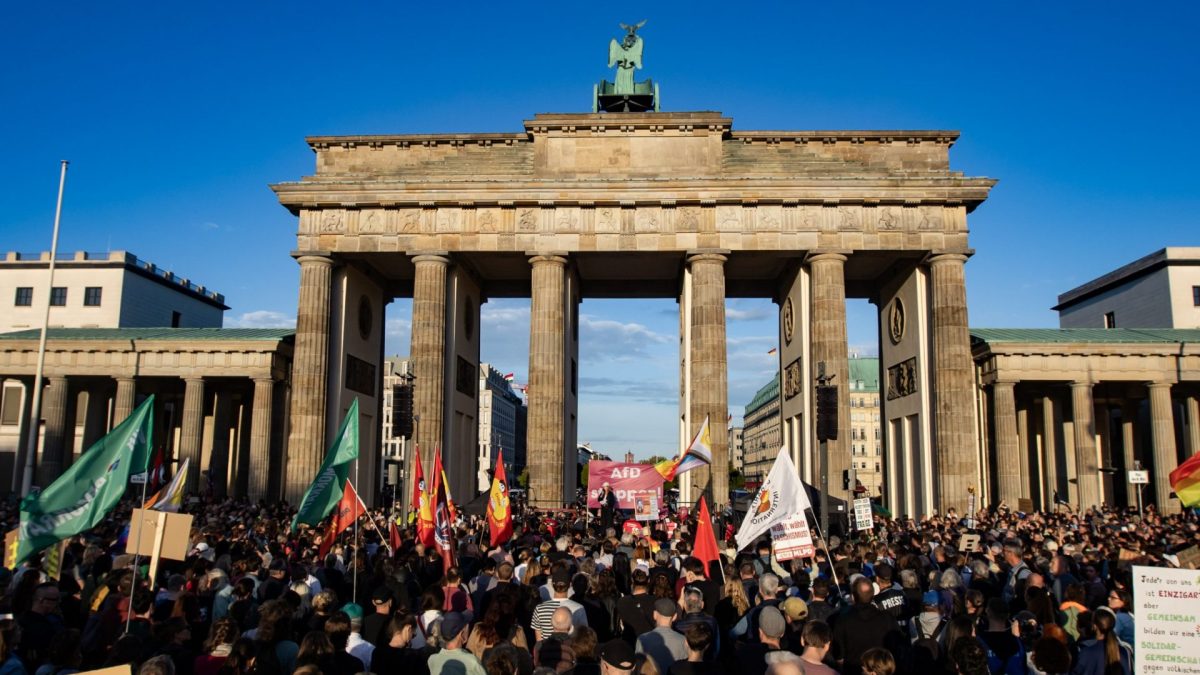
Over the last year, the surge of Germany’s radical far-right has been celebrated by both Donald Trump and Elon Musk. This week, the anti-immigration, pro-Russia group Alternative für Deutschland (AfD) won the most votes in the state election of Mecklenburg-Western Pomerania, the third time it has emerged as the strongest party in a region. The party is set to remain shut out of power in the state because of a “firewall” of non-cooperation agreed by the other main parties. With rising fears that the AfD could become the first far-right party to hold state power since the Second World War, two Brits living in Germany, who asked not to be named, tell of their fears and worries. The first time Ben* saw a swastika in Germany, it was a year after he had left the UK – the symbol burned into the cycling path on his route home from work. He was shocked – displaying, distributing, or publicly showing swastika flags is illegal in Germany. It was in 2015, around the same time he believes far-right sentiment really started “simmering” in the country again, at a time when Germany was welcoming a record-breaking number of asylum seekers fleeing war and persecution in Syria, Afghanistan, and Iraq. Shorts Years later, on a beer run, he remembers seeing a Nazi flag hanging out of the window of a derelict building. Since then, he’s seen “lots” more. “It’s supposed to be unacceptable but I think people have gotten more brave,” he says. Although the British web developer has now been happily living in Germany for 12 years, recently he has felt worried about the future of the country. “Is something really bad around the corner? Are we at the start of something?” he says. “This year has definitely been a turning point and a foothold for the far right. It’s concerning.” Ben moved to a town near Cologne in west Germany in 2014 after he met his German wife in the UK and they made the decision to “try out something different for a year”. One year turned into 12, and in that time they had two children. But ever since the surge of the AfD over the last couple of years, they have had to have serious conversations about whether they will remain in Germany or not. “It’s not that I think we’d ever go back to the UK, I’m happy here,” he says. “But you have to start asking yourself what you would do if the AfD comes into power. I personally see it as a Nazi party or the beginnings of a Nazi party. That’s something that I don’t want to be living near.” The AfD has surged rapidly since it was founded in early 2013 in Oberursel, around 129 miles away from where Ben and his family live, in the north west. The party started as a conservative anti-euro economic protest group, but has since faced frequent comparisons to Nazism due to its ideologies – such as the mass deportation of migrants and separate schools for refugees. Several members are currently under criminal investigation for their involvement in right-wing extremist groups. Over the last couple of years, Ben has seen AfD stands pop up in his home town more often. Even more worrying is that Der Dritte Weg (“The Third Way”), a neo-Nazi political party, now has a building near to the town where he lives. “That’s basically out-in-the-open hardcore Nazis in west Germany,” he says. “I already consider the AfD to be Nazis anyway but it’s concerning how it has slowly become more visible.” On Facebook nowadays, Ben says it’s common to scroll through endless AfD posts of people discussing how it is “acceptable to want a divide between any ‘pure’ Germans and any foreigners”. Locals have been complaining online about refugee centres near his town. Then, a couple of years ago he saw the Der Dritte Weg march through his hometown and an AfD member tried to join his mountain biking group. “We kicked him out,” he says. “The group is apolitical but people do take a stand there. We don’t want people like that spewing hate in our group.” Ben is no stranger to anti-immigrant sentiment – he is regularly at the receiving end of “banter” from work colleagues about his English heritage. But he feels the atmosphere in Germany is changing and even wonders if his rights as a foreigner might be carved away should the AfD come into power. “I’ve got a Aufenthaltstitel, which is permanent residence here in Germany, but if the right comes into power, what happens then?” he says. “Would I lose my Rentengeld – my pension? It can’t be compared to what refugees face of course, or for instance, the second or third generation of Turkish people that moved here as Gastarbeiters [‘guestworkers’ or foreign labourers who helped rebuild Germany during its post-war economic boom]. I think they’re going to be absolutely screwed over.” Ben says there are other considerations that make him feel anxious, particularly in regards to his daughter, who has severe disabilities. “Where do they draw the line?” he says. Far right views have gained momentum in other countries across Europe, including Britain. But Ben says Germany’s history, and something about the psyche, make the threat feel more real here. “Lots of British people have been sucked into the far right and you get the same idiots in Britain like flag-shaggers, but I do think there’s a psychological difference between the British and the Germans,” he says. “People are very proud of their country. Yes, you have nutters everywhere but the difference is, you had actual Nazis in Germany. For me, I find it unacceptable that they haven’t learned their lesson.” But there are noticeable parallels between Reform UK and the AfD in Germany, he adds. “I think that there are a lot of people with pent-up anger because they are in hardship, and they think that foreigners are the problem,” he says. “People can’t do anything about their heritage and they should be proud of it.” Claire*, 34, has been left questioning her future in Germany following the rise of the far right. After leaving London following the results of the Brexit vote, she has lived in Berlin for nearly ten years, having met and married her German husband. Claire, a strategist, says the last couple of state elections – close to where she lives regionally – has thrown up a lot of uncertainty and questions for the two of them. “I’m natively British, even though some might challenge that idea as my heritage is mixed,” she says. “[My husband and I] do not have a simple answer for where we belong, whether that be the UK or Germany or elsewhere. Increasingly, we have to ask questions like, where do we live if things continue the way they go, especially politically and culturally? Do we have kids or not? Where do we have them? I would have mixed-heritage, mixed-identity kids who would not have a clear place to belong according to what a lot of people think these days. Where would be safe for them? Where wouldn’t be?” Claire spends a lot of time in Hamburg, where her husband’s family is from, and if they stop in the car, she is aware that she is in strong AfD-supporting areas. Living in Berlin is more of a multicultural “bubble”, and she has never personally witnessed or experienced any racist incidents, although “as ever, the capitals of most countries don’t reflect the country themselves”. But she does feel scared with the political changes in the country. “At the moment, it’s more of an undercurrent on the periphery of my life, a tension that we can almost feel in the air, but it hasn’t realised yet,” she says. For the time being, Ben says he wants nothing more than to stay in Germany. “I love this country, I’ve met the best friends I’ve ever made in my life,” he says. “Germans have a profound relationship to the forest and wherever you are, you’re always near to the countryside.” He hopes there can be a change of political direction, and a turning away from hate. “People get wrapped up in the wrong things,” he says. “The energy people use to hate is a wrong investment of their time and emotions. It is, of course, an erosion of rights for Germans as well, they just don’t see that yet.” *Names have been changed
I’m a Brit living in Germany. I’m seeing more swastikas in windows
Full Article
Original Source
Read the full article at Inews →KhanList aggregates and links to publicly available news content. We do not host full articles from third-party sources. Always verify important information with original sources.