
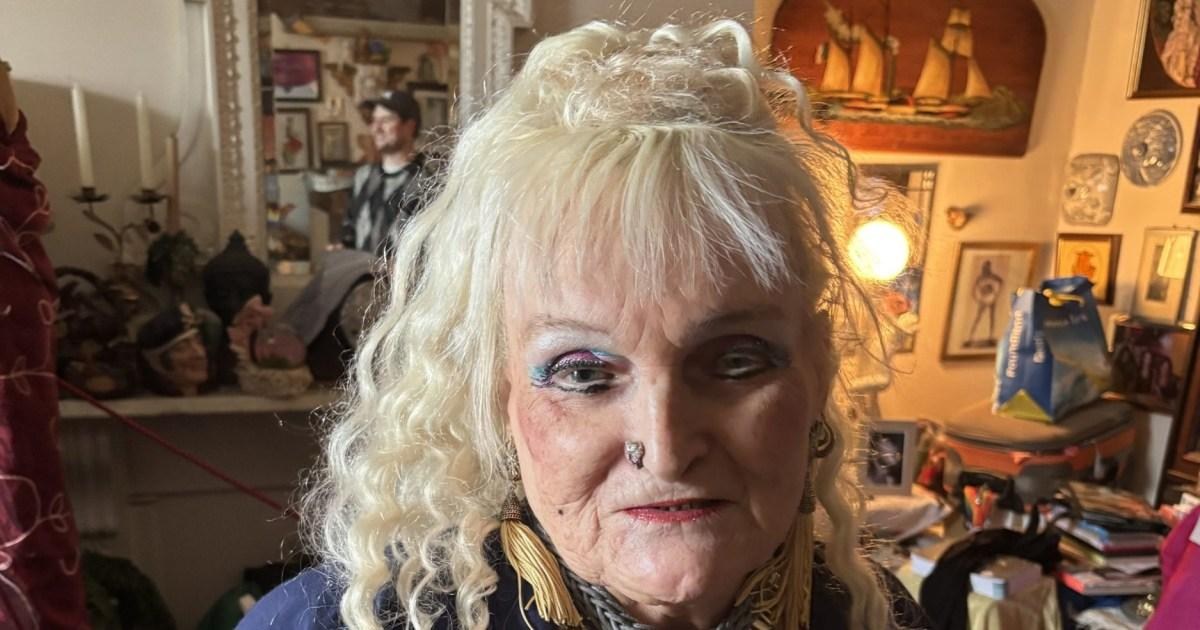
I transitioned in the early 1960s – I have witnessed the shifting mentalities around trans people for over 60 years (Picture: Dee Simpson) It was a February morning like any other in 2023. I got up, made some toast, poured myself a cup of tea and turned on the news. That’s when I froze. I sat upright. My senses seemed to adjust, snapping me awake. It sent an icy chill down my spine. News was breaking about the brutal murder of Brianna Ghey. I was completely horrified. The victim was a young transgender girl, barely 16 years old. It totally shattered me – and it was at that moment that I realised we trans people were in much deeper trouble than I’d imagined. Ask Metro Use AI to go deeper into the stories you care about – powered by Metro and trusted publications. I’m almost 77 years old now. I transitioned in the early 1960s – which means I have witnessed the shifting mentalities around trans people for over 60 years. And I can firmly say that the state the trans community currently finds ourselves in is the most alarming in my lifetime. You only have to look at the Rainbow map (which ranks European countries on their LGBTIA+ legal and policy practices) to see evidence of this. In 2015, the UK was number one on the list. But in 2026, we’ve dropped to number 22 – which I find not only disappointing but also deeply concerning. It makes me wonder where we go from here. I was among the first people to receive gender-affirming surgery on the NHS, in 1967, when I was just 17 years old. After my surgery, I was put on the women’s ward – and I felt pure relief, joy and calm. It felt like coming home – I was exactly where I was meant to be. The other women rallied around me; I made friends, we laughed. Join Metro's LGBTQ+ community on WhatsApp With thousands of members from all over the world, our vibrant LGBTQ+ WhatsApp channel is a hub for all the latest news and important issues that face the LGBTQ+ community. Simply click on this link, select ‘Join Chat’ and you’re in! Don't forget to turn on notifications! During those months, I received top-tier care and was treated with the utmost respect. Back then, us trans women were free to travel and use single-sex spaces without any fuss (Picture: Dee Simpson) After my treatment, I was employed to be a go-go dancer – I travelled Europe performing in military bases and bars – and I never had any problems. I was billed as the most beautiful young lady, and they adored me. During childhood, I’d felt like my being was a mistake of nature – but now, I was living my truth, and it was exhilarating. Everything was falling into place. I had beautiful friends and relationships, and I married a man I loved. I felt empowered and sexy. It was complete freedom. Back then, us trans women were free to travel and use single-sex spaces without any fuss. No one seemed to bother as much. We were just living exactly as we were meant to: as women. Perhaps this was down to the fact that there were less of us living openly, but it just seemed easier. I’ve noticed the tide turning when it comes to tolerance of trans people (Picture: Dee Simpson) Of course, it wasn’t all sunshine and roses. Trans dancer and model April Ashley’s 1970 court case, when a judge ruled that she was male on the basis that it was impossible to change sex, is etched in my mind as being especially horrifying. It set a precedent that made it impossible to legally change gender in the UK until the Gender Recognition Act 2004 – and this was devastating. We’ve always been, at best, tolerated, never wholeheartedly accepted. That said – I never felt like we were fodder for the news, something to be feared or as openly up for debate in the way that we are today. During the last few years, I’ve noticed the tide turning when it comes to this tolerance of trans people. Join Metro's LGBTQ+ community on WhatsApp With thousands of members from all over the world, our vibrant LGBTQ+ WhatsApp channel is a hub for all the latest news and important issues that face the LGBTQ+ community. Simply click on this link, select ‘Join Chat’ and you’re in! Don't forget to turn on notifications! Take JK Rowling, for example. Everything was fine for me, I was sailing through life – and then, in the last few years, she put the spotlight on us. She used her power and platform to encourage an anti-trans movement and I feel she villainised us. I don’t understand why she is so scared of us. Why can’t she just leave us be? Suddenly, life is a lot harder for trans people. We’re the victims of more abuse, both verbally and physically. I seem to come across anti-trans words or opinions on an almost weekly basis. Between 2020/1 and 2024/5, official police-recorded hate crime based on trans identity increased by 50%. Our rights have become something of a political football, kicked about amongst MPs without much thought for the people whose lives they actually impact. I worry about what the next generation will have to endure (Picture: Dee Simpson) Last year, the UK Supreme Court ruled that the definition of sex in the Equality Act 2010 strictly refers to ‘biological’ sex only. In layman’s terms, trans women like me are not legally considered women; and, from this month, we won’t be able to access single sex spaces, like changing rooms or bathrooms, if service providers decide that other users might ‘object’ to our presence. I often try to take no notice of such nonsense – our rights are regularly reduced to ‘debate’ around single sex spaces, which is a drop in the ocean of the wider trans experience – but it is an example of how trans rights are being reversed in the UK. Just last week I went for a pre-assessment for a routine knee operation and was told that I would not be on the women’s ward – I would need a separate room. I can only assume this is related to the recent legislation, and it was strange and uncomfortable to realise that my experience of the healthcare system felt more inclusive and safe during the 1960s than it does in 2026. That’s not to discredit the NHS, who actually employed me for over 15 years – but to highlight the way in which politics influences the way the NHS have to treat us. It makes me worry a lot about the next generation of trans people. Older people are often speaking about how hard things were ‘back in their day’ – but the hardest time I’ve ever known for transgender people is right now. At 15, I could easily access hormones and my doctors celebrated my self-discovery, offering encouragement in our monthly checkups; but now, it seems that our trans young adults are having to jump through hoops and experience years of uncertainty and mental strain as they wait for other people to make decisions for them. And it’s the sense of uncertainty that really penetrates. It’s something that feels more prevalent now than ever before; not just the uncertainty for myself, but for the community as a whole. I worry about what the next generation will have to endure – and the whole thing has left me deflated. I don’t know what rights I’ll have from one day to the next. As such, I’ve been working on a book project that chronicles my trans history, to document how life has changed over the years. I am hopeful that once published, it offers a sense of joy and hope to the next generation of trans people; to prove that we can not only survive, but thrive. I should know; I spent decades thriving. That’s why I want to see future trans generations doing the same – instead of just barely surviving. *As told to Ryan Cahill Do you have a story you’d like to share? Get in touch by emailing izzie.price@metro.co.uk. Share your views in the comments below. Arrow MORE: Signs your son is being radicalised, as ‘rape list’ found in UK secondary school Arrow MORE: I don’t care what people say — I’ll never stop using my hotel buffet hack Arrow MORE: I was convinced I was going to meet my soulmate – but I had been lied to in the worst way
I’m 76 and transgender – life is far harder for trans kids today than it was for me
Full Article
Original Source
Read the full article at Metro →KhanList aggregates and links to publicly available news content. We do not host full articles from third-party sources. Always verify important information with original sources.