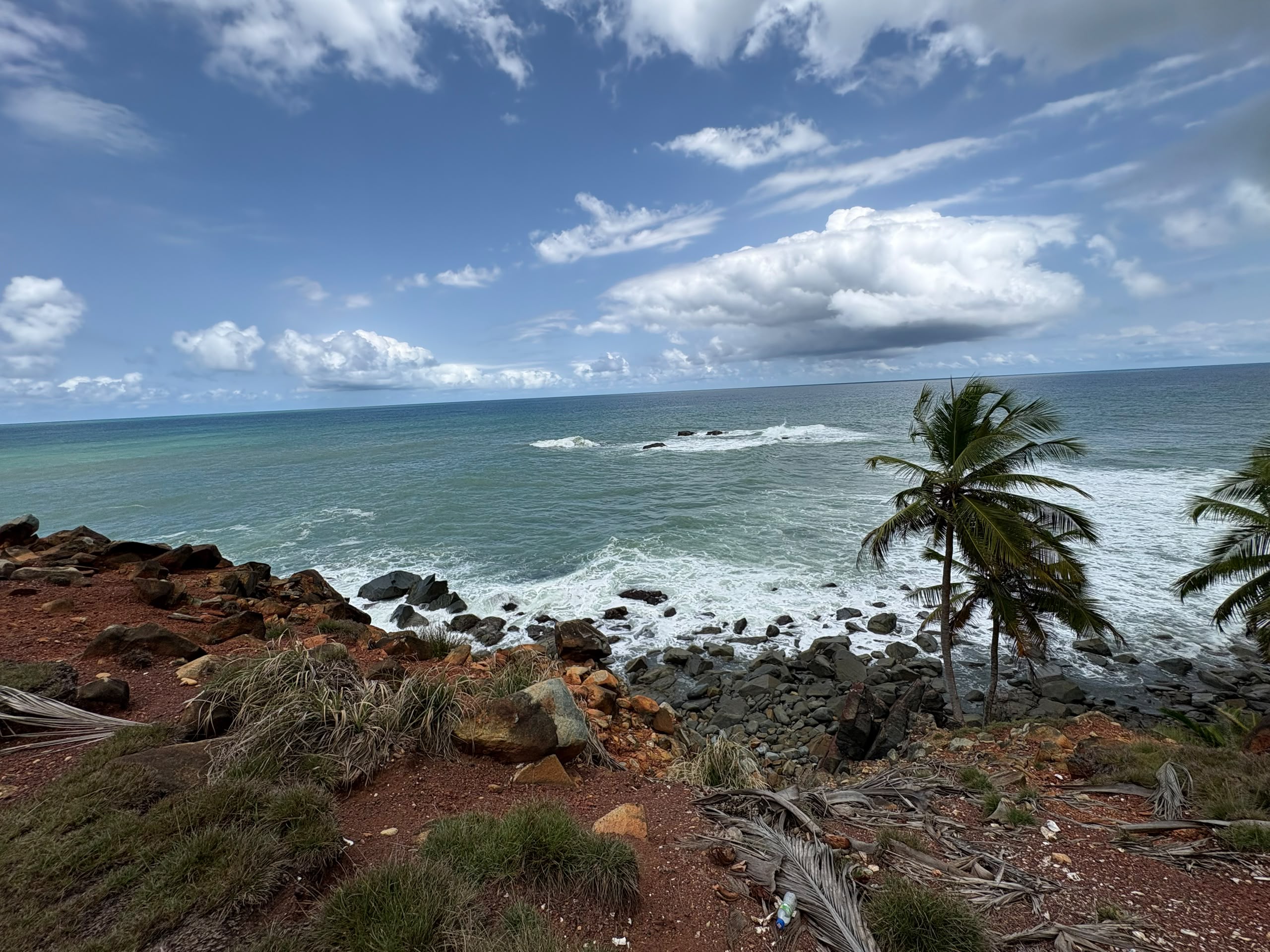
Illegal gold mining in Ghana’s Greater Cape Three Points Forest Reserve threatens vulnerable and endangered species in the protected forest, say conservationists.Sediment and toxic chemicals from the mining also threaten the adjacent waters of a newly declared marine protected area just offshore.Conservation NGOs want the government to act against illegal miners, including establishing permanent camps in the forest to protect a wider area. Ghana’s land ministry is failing to act against illegal gold mining in the Greater Cape Three Points Forest Reserve, say conservationists. Their call comes as pollution threatens vulnerable and endangered species in both the protected forest and the adjacent waters of a newly declared marine protected area. Mining activity is causing toxic chemicals, including mercury, arsenic and cyanide, to wash into streams in the reserve and then into the sea via the Nyan River, said Stephen Kankam, deputy director of Hεn Mpoano, a Ghanaian NGO that works with communities, government and businesses to strengthen management of coastal and marine ecosystems. “The destruction is phenomenal,” he told Mongabay in a phone interview. “I mean, you cannot just imagine the kind of destruction that is ongoing. There is clearing of large swaths of the forest areas that have paved the way for digging, for excavation, and all sorts of operations within the forest.” He said the inshore waters have turned brown, as tons of polluted sediment flow into the ocean: “All the ecosystems that we are considering as fish habitats, like the mangrove ecosystems, the bottom or the rocky shores — all those areas where the fish stay within the near-shore environment are affected.” Aerial view of Cape Three Points, Ghana. Image courtesy of Environmental Justice Foundation. The Cape Three Points Marine Protected Area was formally inaugurated in April 2026. Its 700 square kilometers (270 square miles) are intended to be a safe zone which serves as a nursery for small pelagic fish, those that live in the open sea, helping the region’s depleted fish stocks to recover. Kankam told Mongabay that illegal mining has been taking place in the Greater Cape Three Points forest reserve for the past three years, but has become more alarming in the past six months. The reserve covers 45 sq km (17 sq mi) in Ghana’s Western region, an area about 13 times the size of New York’s Central Park. It was once roughly 70% forested, with trees, including valuable hardwoods such as afrormosia (Pericopsis elata), spread across a series of small hills. It has provided habitat for a range of vulnerable species, such as the yellow-casqued hornbill (Ceratogymna elata), endangered grey parrots (Psittacus erithacus) and white-naped mangabeys (Cercocebus atys lunulatus), and critically endangered Roloway monkeys (Cercopithecus roloway). Along its eastern edge, land for farms and rubber plantations has been carved out of unprotected forest. Just 10 years ago, the Key Biodiversity Areas factsheet noted some prospecting pits and small abandoned mines, but described the reserve as “only lightly disturbed”. This has changed in recent years. Charles Afosah, the local project lead for the NGO West African Primate Conservation Action, works with residents to patrol the reserve and restore degraded areas. He told Mongabay that the forest has been badly damaged in the past year. “Currently, I can’t say if mangabey or Roloway [monkeys] have been affected, but what has been affected more are trees,” he said. “The trees have been falling to the ground because the land has been degraded.” A roloway monkey (Cercopithecus roloway) in a zoo in Duisburg, Germany in 2020. Image by Christophe Lorse via Flickr (CC BY-NC-SA 2.0). Cape Three Points, Ghana, 2019. Image by Axel Drainville via Flickr (CC BY-NC 2.O). Farmers around the reserve have also been affected. Many of them rely on the now-polluted river to irrigate their crops. “The communities are greatly affected and some of their vegetables are affected,” Afosah said. We don’t know where some of these foodstuffs in the market will land.” Afosah added that some locals are involved in the destruction: “But they are the same people who are giving out their rooms and other things to these illegal miners to stay in. Some of them are foreigners.” He also said the government’s National Anti-Illegal Mining Operations Secretariat (NAIMOS) has not paid sufficient attention to this reserve, allowing illegal miners free rein. “NAIMOS is not in Cape Three Points,” Afosah said. “It has been a while. I heard NAIMOS was looking for a place or the member of parliament was collaborating with them to find an operating base for patrols.” He said he was disappointed by weak enforcement, on the part of the regular police, in support of community patrols, “Since last year, we have made several arrests, but you arrest the person, and tomorrow, you see the person walking freely in the community.” Afosah said the impact of mining puts the forest and its wildlife at risk and threatens long-standing plans to develop ecotourism in the area, which also features attractive beaches and an old slaver’s castle, as well as the marine protected area offshore. Hεn Mpoano’s Kankam said sediment from the mining finds its way into mangrove forests along the shore, which are important breeding grounds for fish and crustaceans. “If that area is blocked because there’s sand accumulation, of course, mangroves are going to die,” he said. “They are not going to thrive within these areas. ” He called on the government to reassign responsibility for the Cape Three Points reserve to the Wildlife Division, an arm of the Forestry Commission of Ghana, which has armed officers better equipped to confront the sometimes dangerous illegal miners. He wants the authorities to set up permanent camps in the forest, which he says could protect a wider area. “They will serve as a deterrent, but they will also be a mechanism to reach out to nearby areas where mining is happening, even outside the forest, so that law enforcement can reach out to these areas where mining occurs in rivers and streams that are connected to the MPA,” he said. Banner image: Cape Three Points, Ghana. Image courtesy of Hεn Mpoano. With its first marine reserve, Ghana protects its ocean to secure its future (commentary) Feedback: Use this form to send a message to the author of this post. If you want to post a public comment, you can do that at the bottom of the page. Credits Topics
Illegal mining threatens Ghana’s first marine protected area
Full Article
Original Source
Read the full article at News →KhanList aggregates and links to publicly available news content. We do not host full articles from third-party sources. Always verify important information with original sources.