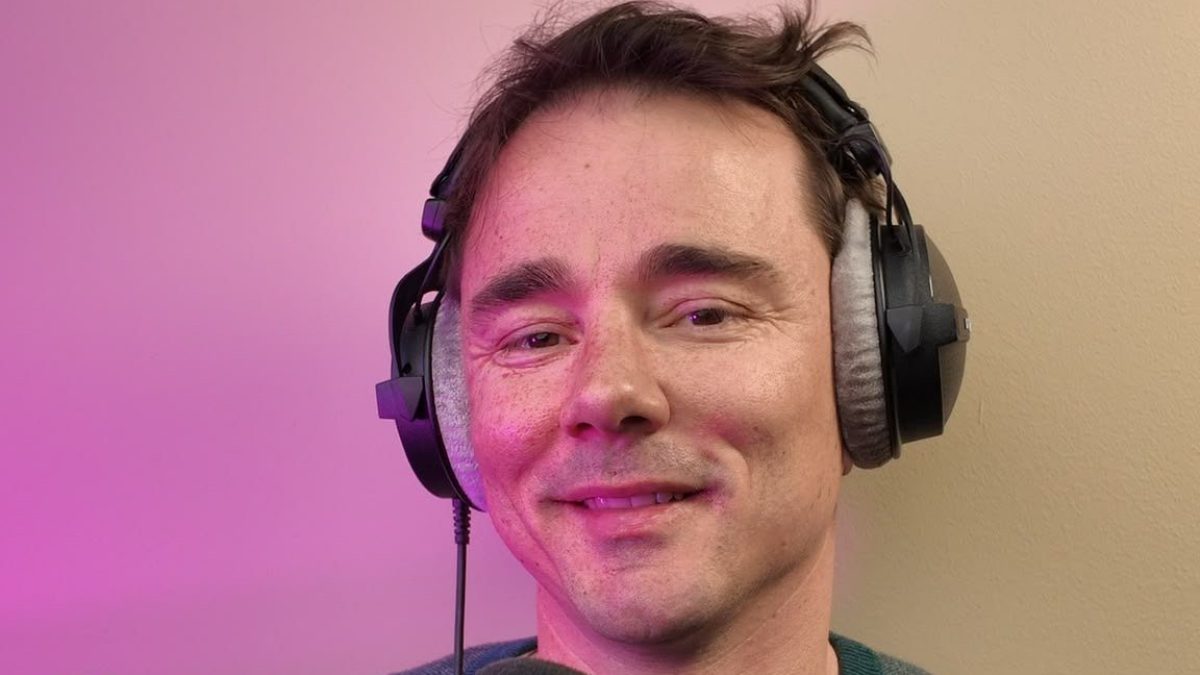
Darin Graham, 39, has been repaying £300 a month towards his student loan for the last decade – but despite that, his debt still increased by £1,600 last year. He racked up debt of £47,000 in studying for his BA in English literature at Anglia Ruskin University, which he started in 2013, and an MA in investigative journalism at City St George’s, University of London in 2016. After 10 years of repayments, the podcast and video producer, owes £54,568 – some £7,500 more than he originally borrowed. Shorts Darin, who lives in Towcester, Northamptonshire, and runs his own company, Daring Media, says: “I don’t regret going to uni, but the debt does stress me out – especially now I’m self-employed, trying to work out how much to repay each month. It’s very complicated.” He says money was very tight when he was growing up and he was only the second person in his extended family to attend higher education. “I felt at the time university was the thing you needed to do to get a good job and I knew media was a tough industry to get into,” he says. Darin Graham doesn’t regret going to university, but is worried about his student loan debt Darin secured a grant as well as a student loan and maintenance loan to cover his studying and living costs, but still worked admin jobs throughout university to fund his learning. During his studies, he also took on a number of placements and jobs within media, including the BBC and as a runner on Location, Location, Location. He then got a call from an editor he’d worked with at the BBC offering him a role making an audio documentary. He worked there for six years before going freelance and setting up his own company. “I don’t think everyone needs to go to uni now to get a good job. I enjoyed it, it gave me stability for three years and I made a lot of friends,” says Darin. “But I feel like I’m never going to pay the debt off. I just see the balance going up and up, despite paying it off for 10 years. It’s very frustrating.” The real cost of university If you’re thinking about going to university, then the typical cost of tuition fees and maintenance loans (which help with living costs) is around £60,000. You start to repay the debt in the April after you finish your course, and once you earn over £25,000. Repayments are currently set at 9 per cent over your earnings above this amount and after 40 years, the debt is wiped. Tuition fees are capped at £9,790 per year for 2026-27. Without substantial help from parents, students will also need to think about living costs such as rent, bills and food. The amount you get as a maintenance loan is means-tested and the government expects parents to contribute based on their earnings, even if they can’t afford to or don’t want to. Plan 2 student loans were taken out by students who started university in England from 2012 to 2023. In April, the repayment threshold (the amount you can earn before you start repayments) was increased to £29,385. This will remain frozen until 2030, instead of rising with inflation plus 3 per cent. It means that, as wages rise, more of your salary is dragged into repayment. Parliament’s Treasury Select Committee is now investigating whether these loans are fair. Many are angry over high interest, confusing terms and repayments which last decades. Plan 5 loans, for students who started from 2023, have a repayment threshold of £25,000 and the interest rate on the loan is linked to the Retail Prices Index (RPI) measure of inflation. These borrowers will pay lower interest, but repay for longer than those on Plan 2 loan, whose debt is wiped after 30 years. The Government says this system is fairer, but some campaigners, such as Rethink Repayment, say the system was badly explained, and that the threshold freeze changes the deal as many graduates are having to repay far more than expected. There are also long-term impacts to take-home pay for anyone earning over the threshold, and this can affect their ability to borrow and get a mortgage. Finlay Doyle dropped out of university to start his own business ‘I wish I’d known sooner that university wasn’t for me’ Finlay Doyle dropped out of university after a year and a half. He had been studying geographic information science at Newcastle University but in 2021 decided to leave to set up his non-alcoholic wine business MIUE. “I didn’t really know what I wanted to do. Everyone around me was going to university and I wanted to go to a good one, so I chose the course through clearing. It looked interesting,” says Finlay, 21, from north-west London. “But I didn’t like university that much. It felt pointless and the course was very niche.” Finlay was inspired, in part, by his own decision to stop drinking and began looking into setting up his own business. “I stopped drinking in my first year of uni. I was done with waking up at 11am with a hangover, so I started not drinking for a month and then at the end of it I felt great. It seemed silly to go back and it just progressed from there, and now it’s been two and half years.” After two months of research, he took the leap and quit university. Luckily, Finlay’s parents had paid for his tuition and living expenses at university. Instead of student debt, he took out a £25,000 start-up loan to get the business started. “It’s funny because taking out the student loan debt is more socially acceptable than the £25,000 loan I have,” he says. “Some of my friends are shocked – but in my eyes it’s the same thing, getting into debt, I’m just using it differently.” Does it pay to get a degree? The Institute of Fiscal Studies has concluded that, in general, those with a degree are likely to earn more than those who do not have one. A university education is also linked to higher employment rates. Some 90 per cent of those who have a degree are in employment, compared to 60 per cent of those who do not, according to government data. For some roles, such as doctors, lawyers and architects, a degree is a must-have. But in other areas, more people are shunning further education in favour of hands-on experience and apprenticeships. “Employers are becoming much more skills-focused and are recognising that talent comes through many different routes”, says Martin Warnes, managing director of Reed.co.uk, who says there a more opportunities for non-graduates across fields such as technology, engineering, construction, logistics and professional services. Around 330,000 under-25s start apprenticeships each year, according to government data. These have historically been more common in trade professions, such as electricians or plumbers, but a growing number of corporate firms are offering apprenticeship programmes including Amazon, John Lewis and Mitchell & Butlers. If you’re thinking of going down this route then it’s worth looking into the long-term earning potential of your career. Look at job adverts for your chosen career in five to 10 years’ time and work backwards. The key is understanding the long-term cost before signing up.
‘I’ll never pay the debt off’: Who actually benefits from going to university
Full Article
Original Source
Read the full article at Inews →KhanList aggregates and links to publicly available news content. We do not host full articles from third-party sources. Always verify important information with original sources.