
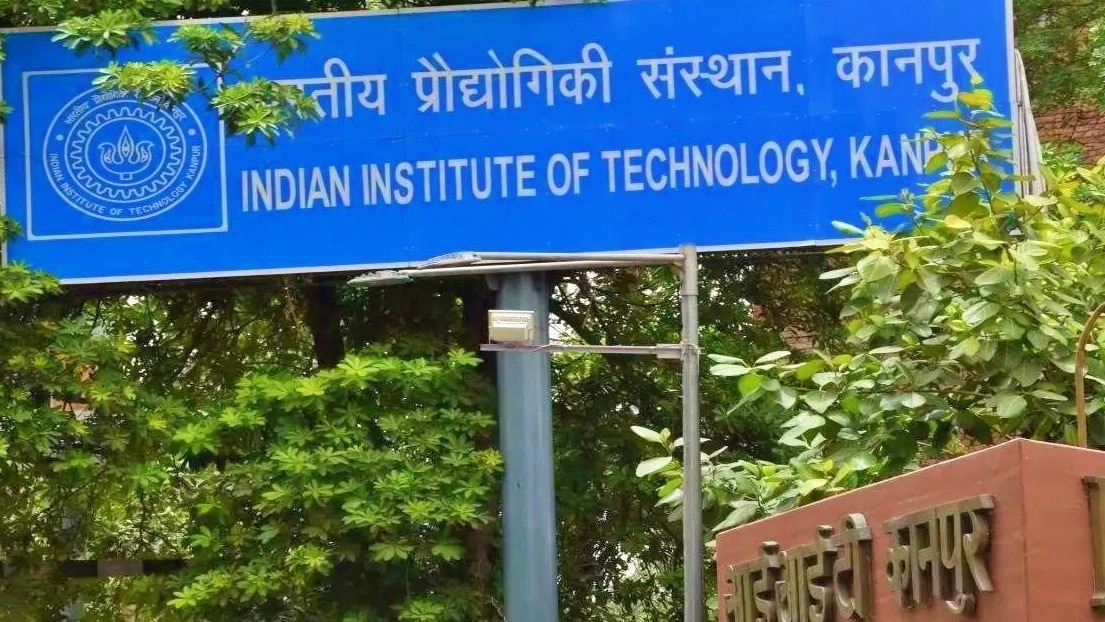
IIT Kanpur has developed an AI-based Family Score system with the Andhra Pradesh government to assess household welfare needs using existing data. The project aims to reduce dependence on repeated surveys while keeping final decisions with officials.As per IIT Kanpur, the initial phase tested whether artificial intelligence could be used as an alternative to conventional household surveys for assessing socio-economic conditions File Photo)IIT Kanpur has developed an AI-powered Family Score system that could help governments identify households requiring welfare support using existing government data, reducing the need for repeated large-scale household surveys.The Indian Institute of Technology Kanpur (IIT Kanpur) has developed an AI-based system that can assess the socio-economic conditions of households using data already held by government departments. The institute said the Family Score system could provide governments with a faster and more cost-effective way to identify families that may require welfare support.The system was developed as part of a collaboration between IIT Kanpur and the Government of Andhra Pradesh. The Phase 1 findings were recently presented to Andhra Pradesh Chief Minister N Chandrababu Naidu and senior government officials.According to IIT Kanpur, the initial phase tested whether artificial intelligence could be used as an alternative to conventional household surveys for assessing socio-economic conditions. HOW IIT KANPUR'S FAMILY SCORE WORKSThe Family Score system uses existing government datasets to assess the socio-economic well-being of households and place them into defined categories.The AI models were trained using around 15 government-owned datasets containing indicators related to household socio-economic conditions. The models were then calibrated against socio-economic scores generated through a statewide survey. Once trained, the models can generate Family Scores for households represented in the available government datasets without requiring a new survey or additional data collection.IIT Kanpur said the ensemble of machine learning models demonstrated the potential to outperform conventional surveys in determining the socio-economic conditions of households while requiring less time, manpower and resources.FAMILY SCORE TO COVER 1.35 CRORE ANDHRA PRADESH HOUSEHOLDSThe next phase of the project will expand the system across Andhra Pradesh and integrate it with the AP State Data Centre (AP SDC).Phase 2 will also involve a large-scale statewide validation and calibration exercise.According to IIT Kanpur, the datasets currently available with the government can generate Family Scores for around 1.35 crore households out of an estimated 1.72 crore households in Andhra Pradesh. This translates to coverage of roughly 75 per cent of households.The system has been developed by IIT Kanpur's Wadhwani Center for Developing Intelligent Systems (WCDIS) and Wadhwani School of AI & Intelligent Systems (WSAIS) in collaboration with the Airawat Research Foundation (ARF).IIT Kanpur Director Professor Manindra Agrawal said the project aims to use AI and existing government data to better understand the socio-economic conditions of families and enable more targeted welfare delivery.He said the initial results indicate that the approach could reduce dependence on costly and time-consuming surveys while maintaining a focus on responsible and transparent use of AI.Professor Nitin Saxena, Dean of the Wadhwani School of AI & Intelligent Systems, highlighted the interpretability of the system.According to Saxena, each Family Score comes with a reason, allowing government officials to understand the basis of the assessment and retain control over decisions.The project is part of a broader collaboration between IIT Kanpur and the Andhra Pradesh government aimed at applying AI and data-driven systems to governance.AI COULD CHANGE HOW GOVERNMENTS IDENTIFY WELFARE BENEFICIARIESTraditional household surveys can require significant time, manpower and financial resources, particularly when governments need to assess millions of households.The Family Score approach attempts to use information that governments already collect through different departments and databases. If validated at scale, such systems could allow governments to update socio-economic assessments more dynamically instead of relying only on periodic surveys.However, the effectiveness of the system will depend on the quality, completeness and timeliness of the government data used to generate the scores. The statewide validation planned under Phase 2 is therefore expected to be important in assessing how accurately the AI system identifies household needs.IIT Kanpur said the project is aimed at supporting welfare delivery rather than replacing government decision-making, with officials continuing to remain responsible for final decisions.The institute said the initiative demonstrates how AI could be used to bring together fragmented government data and generate evidence-based inputs for public policy and welfare delivery.- EndsPublished By: Mridusmita DekaPublished On: Sep 8, 2026 18:20 IST
IIT Kanpur develops AI tool to identify household welfare needs without surveys
Full Article
Original Source
Read the full article at Indiatoday →KhanList aggregates and links to publicly available news content. We do not host full articles from third-party sources. Always verify important information with original sources.