
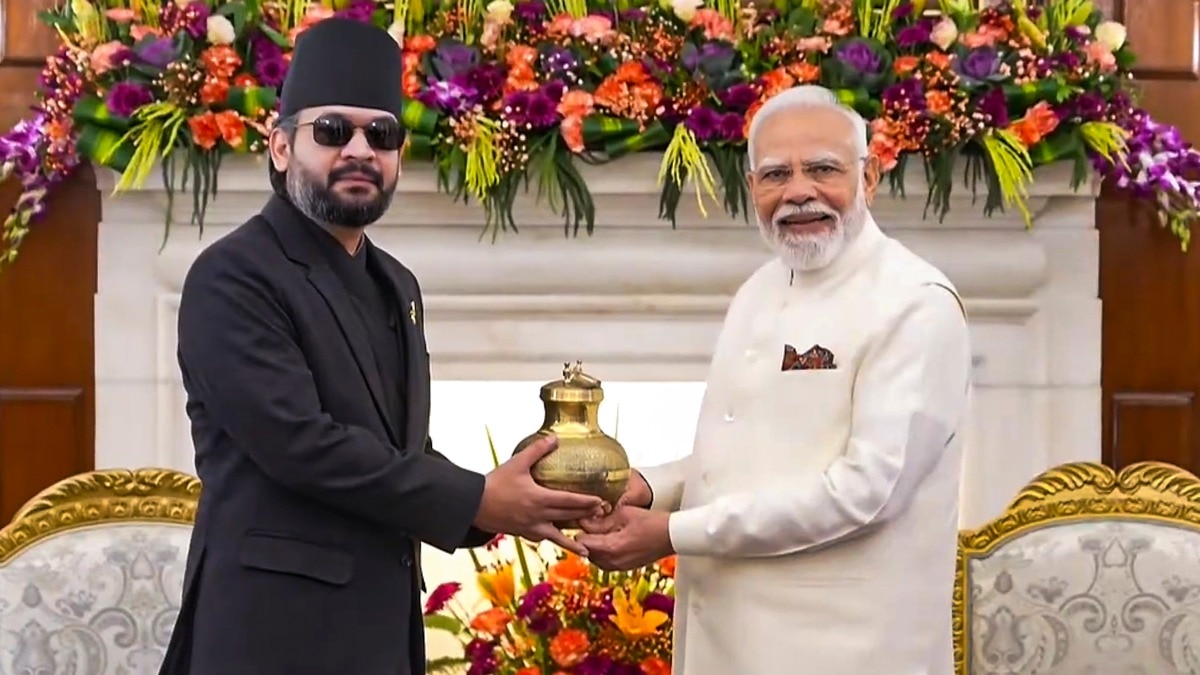
For Nepal Prime Minister Balendra Shah, his first bilateral visit to India was about securing support for an ambitious development agenda. From setting up an Indian Institute of Technology (IIT) campus in Nepal to seeking assistance for its cricketing infrastructure, Kathmandu had several requests for New Delhi. India has now responded with a series of announcements spanning education, sports, connectivity, energy and economic cooperation, giving a fresh push to the bilateral partnership.Prime Minister Narendra Modi on Monday announced a series of concrete steps that directly address several long-standing priorities of the Nepali side during Prime Minister Balendra Shah's first bilateral visit to India. The announcements, made after one-on-one and delegation-level talks at Hyderabad House, centre on education, sports infrastructure, post-disaster reconstruction, energy, and connectivity — areas that featured prominently in Nepal's pre-visit engagements with Indian interlocutors.At the joint media interaction, Modi underscored the depth of the relationship. "The relationship between India and Nepal is not merely one between neighbours, but is rooted in a deep sense of belonging and unbreakable trust," he said, framing the outcomes as practical expressions of that shared bond.The two leaders also released a joint vision document outlining long-term goals across economic partnership, connectivity, digital links, water resources, energy, trade, sports, education and health. Balen's visit to India marks his first overseas trip for a bilateral meeting.RECONSTRUCTION SUPPORT AND DEVELOPMENT PACKAGEOne of the most substantial announcements was a Development Cooperation Package of 24,000 crore Nepali rupees (over 15,000 crore in Indian rupees). PM Modi linked the assistance explicitly to the damage caused by the severe Bhotekoshi flood in August and to Nepal's longer-term development needs. The package is intended to help affected families recover, create new opportunities and strengthen Nepal's capacity to deal with future disasters.Nepali officials had earlier indicated they were seeking substantial grant and line-of-credit support for reconstruction of infrastructure, particularly in the Rasuwa-Bhotekoshi corridor. The Indian announcement provides a clear financial commitment in that direction.EDUCATION AND YOUTH: IIT OFFSHORE CAMPUS IN NEPALA key item on Nepal's wishlist was the establishment of an Indian Institute of Technology (IIT) presence in the country. PM Modi confirmed that India would set up an offshore campus of the IIT in Nepal, along with a Startup Incubator and an Innovation Hub."Nepal's younger generation is full of talent, energy and big dreams. India wants to be a committed partner in helping them realise these dreams. To fulfil this commitment, we will establish a Startup Incubator, an Innovation Hub and an offshore campus of the Indian Institute of Technology in Nepal," he said.Complementing the campus, New Delhi will expand scholarship opportunities for Nepali students in law and technology programmes in India and will support the development of an Agro Industrial Park focused on food processing and value addition. These steps respond to Nepal's interest in higher education linkages and in creating pathways for its young population in technology and entrepreneurship.CRICKET AND SPORTS INFRASTRUCTURE FOR NEPALSports cooperation, particularly cricket, was another area Nepal had highlighted. PM Modi stated that India would step up support for infrastructure development and player training in Nepal, with special emphasis on cricket."India will also step up its cooperation in developing sports infrastructure in Nepal and training its players, particularly in cricket," PM Modi said.The commitment gives concrete shape to earlier discussions on assisting Nepali cricket and aligns with the broader people-to-people dimension of the relationship.ENERGY, FUEL SECURITY AND HYDROPOWEREnergy cooperation featured strongly in the Monday bilateral meeting. The two sides marked the foundation stone laying of the Lower Arun Hydroelectric Project and reaffirmed the commitment to complete Arun-III on schedule. PM Modi noted the vast clean energy potential of Nepal's rivers and the role India's large energy market can play in turning that potential into economic prosperity for Nepal.Together, the projects aim to harness Nepal's hydropower potential to generate electricity for domestic consumption and export, with India emerging as a key market for the power generated.On the fuel side, India inaugurated the second phase of the Motihari-Amlekhganj petroleum pipeline and laid the foundation for the Jhapa Petroleum Terminal. These projects build on India's role as a reliable supplier of petroleum products and other essential goods, including during periods of supply pressure earlier this year.The pipeline expansion is expected to improve the efficiency and reliability of fuel deliveries.CONNECTIVITY AND TRADE FACILITATION BETWEEN INDIA AND NEPALSeveral connectivity projects were advanced too in the bilateral meeting between the two prime ministers. The leaders inaugurated the Dharchula Road Bridge between Uttarakhand and Nepal and laid the foundation stone for the Banbasa Integrated Check Post. Work on the Dodhara Chandani Integrated Check Post on the Nepali side will also be accelerated.These steps are intended to ease the movement of people and goods between Uttarakhand and Nepal, while broader road, rail and border connectivity projects linking Bihar, Uttar Pradesh and other Indian states with Nepal will receive fresh impetus.For transit trade, India will provide access to the Kandla and Paradip ports in Gujarat and Odisha, respectively.On the cultural-religious front, the two sides launched the Sarayu Kamala Express train service linking Ayodhya and Janakpur, making it easier for pilgrims to combine visits to Ram Lalla in Ayodhya with the darshan of Mata Sita in Janakpur. Cooperation will also be deepened on connectivity between Lumbini, Bodh Gaya and other shared Buddhist and Shiva-Shakti sites.The joint vision document released on Monday is intended to provide a clearer roadmap with measurable targets.It covers the full spectrum of cooperation — from economic partnership and physical connectivity to digital links, water resources, energy, trade, sports, education and health. Taken together with the specific projects inaugurated or announced, the outcomes reflect "India's Neighbourhood First" approach and its stated interest in a strong, prosperous Nepal.- Ends
IIT, cricket, Kandla Port access: 5 Balen Shah wishes India is fulfilling
Full Article
Original Source
Read the full article at Indiatoday →KhanList aggregates and links to publicly available news content. We do not host full articles from third-party sources. Always verify important information with original sources.