
I spent 30 years as an expert witness answering one question for a judge or jury: did the person managing someone else’s money know, or should have known, something was wrong. Gov. Tim Walz’s (D-MN) Minnesota just handed the country a five-minute version of that question. Federal prosecutors say Feeding Our Future, a nonprofit group meant to feed hungry children during the pandemic, became a $250 million pipeline for luxury cars, real estate, and international travel.Its founder, Aimee Bock, was sentenced in May to 500 months, more than 41 years, and ordered to pay $243 million in restitution. The judge told her she had sat at the epicenter of a fraud vortex. That much is settled. What is still disputed, and what should worry taxpayers of every party, is whether the officials supposed to be watching were asleep at the wheel, or knew it was on fire and filed the paperwork anyway.The scheme was not sophisticated. Haywood Talcove, who runs the fraud division at LexisNexis Risk Solutions, told Fox News Digital this month how it works: buy a stolen identity off the dark web, form an LLC through a state process that verifies almost nothing, enroll it in a government program, then bill for services that were inflated or invented outright. One site allegedly claimed 6,000 meals a day while serving about 40. Kickbacks came back disguised as consulting fees, paid through shell companies the employees controlled themselves. None of it required a mastermind. It required a government willing to pay first and ask questions never. Minnesota’s own legislative auditor delivered a verdict on the state’s side of the ledger, and it is not flattering. Its review found the Department of Education never followed up on a 2018 audit that flagged serious problems at Feeding Our Future, then let payments to the group jump 2,800% between 2020 and 2021 with no additional scrutiny. The auditor’s conclusion was that the department’s inadequate oversight created opportunities for fraud. About as close as a nonpartisan auditor gets to saying somebody fell asleep at the switch.The harder question dividing Washington is what Gov. Tim Walz (D-MN) and Attorney General Keith Ellison knew and when. A House Oversight and Government Reform Committee report titled “The Cost of Doing Nothing” alleges senior officials in both offices were aware of credible fraud concerns as early as 2019 and kept authorizing payments for months afterward. I’d call that title generous, given the actual cost ran into the hundreds of millions.The record is not a clean confession. In April 2021, when the department tried to withhold payments, a judge warned the state’s attorneys they had a real problem, based on a prior consent decree on processing speed, not the fraud allegations themselves. The department lifted its stop pay policy on its own. No court ever ordered it to resume payments, which cuts into the state’s after-the-fact defense that its hands were tied.Here is why that hedge does not let anyone off the hook. In my world, a fiduciary does not get to claim ignorance as a defense when that ignorance was a choice. The standard is not whether the person managing the money personally profited. It is whether a reasonably prudent person, holding the same information, would have acted differently. An agency that watches payments to a single vendor jump nearly 3,000% in a year, does not investigate, and calls that normal has already failed that test. Call it negligence or willful blindness. Either way, it’s disqualifying.THE $10 BILLION BABYSITTER: HOW MEDICAID TURNED AUTISM THERAPY INTO A FREE-FOR-ALLNone of this gets solved by another commission gathering dust in St. Paul. Programs that pay first and verify later will keep attracting people who treat a government form as an ATM. The fix starts with real identity and entity verification before the check goes out, not 18 months after a whistleblower finally gets someone’s attention. It needs independent, third-party auditing built in from Day 1, not bolted on after a scandal breaks, and real consequences for officials who ignore audit findings, not a press conference promising to do better next time.The Stoics had a phrase for this: amor fati, love your fate, because pretending the unpleasant thing did not happen never makes it go away. Minnesota taxpayers cannot love this particular fate. But they can demand their government stop manufacturing more of it. Somewhere in this country right now, the next fraudster is filling out an LLC registration form. The only open question left is whether anyone in government plans to verify before they cash the check.Jay Rogers is a financial professional with more than 30 years of experience in private equity, private credit, hedge funds, and wealth management. He has a Bachelor of Science in criminal justice from Northeastern University and has completed postgraduate studies at UCLA, the University of Pennsylvania, and Harvard. He writes about issues in finance, constitutional law, national security, human nature, and public policy.
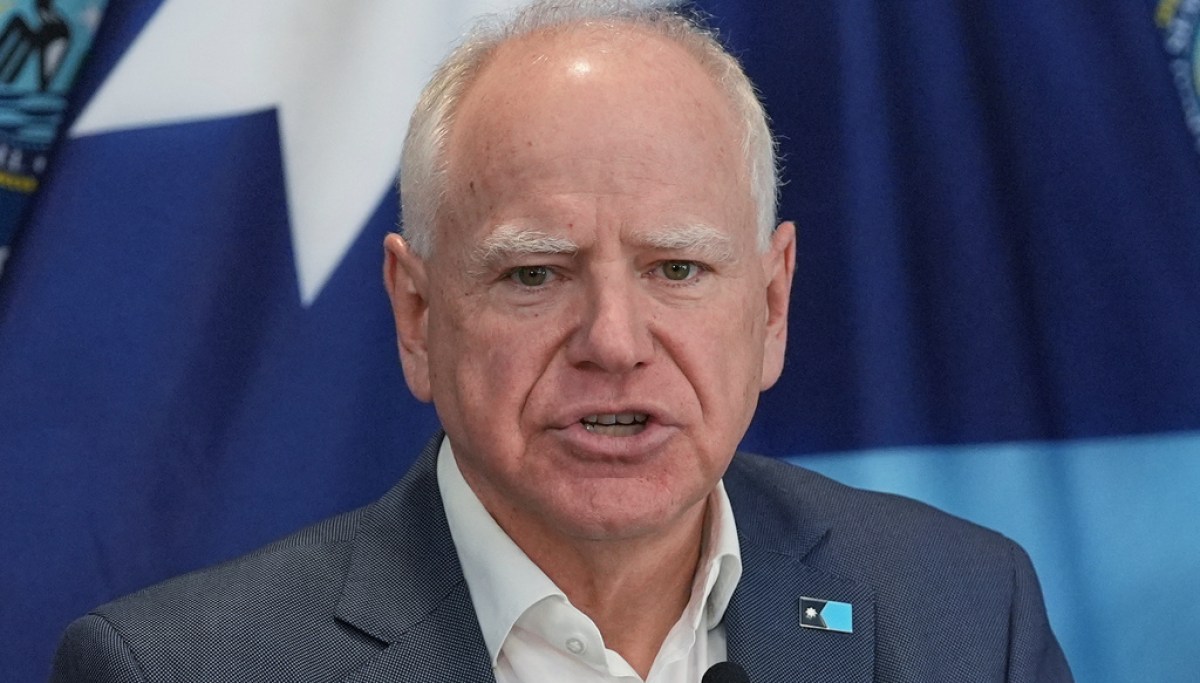
Ignorance was a choice: How Tim Walz handed scammers $250 million
Full Article
Original Source
Read the full article at Washingtonexaminer →KhanList aggregates and links to publicly available news content. We do not host full articles from third-party sources. Always verify important information with original sources.