
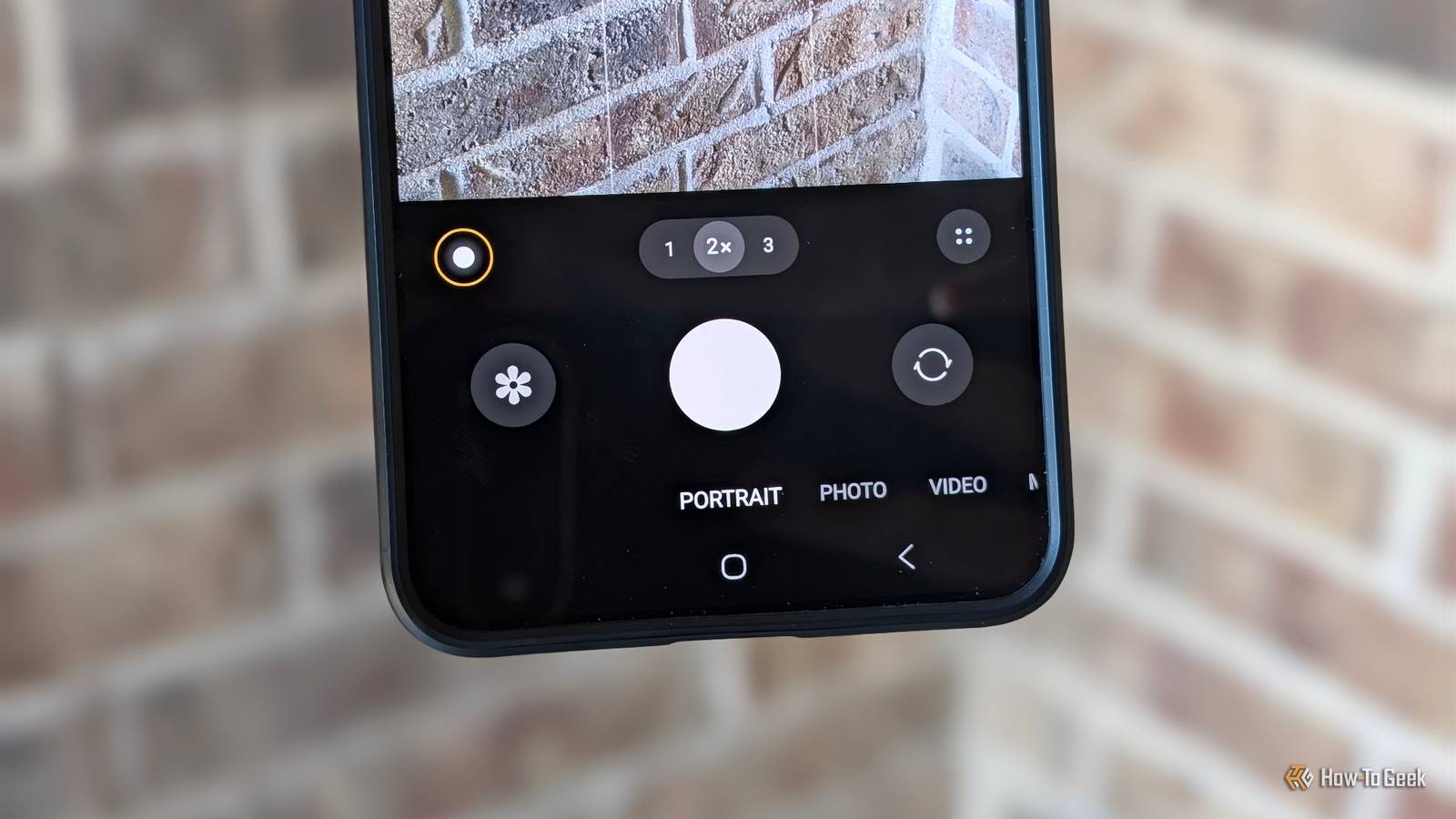
Published Nov 20, 2026, 6:30 AM EST Cory Gunther is a senior author and Newsletter Editor at Valnet, covering cutting-edge tech, Android, and more for How-To Geek. He's covered Android, cars, and technology for over a decade. When he's not reviewing the latest gadget, you can find him off-roading in his Toyota truck, fixing said truck, or doing something outdoors with friends and family. He's covered CES, SEMA, and MWC and reviewed countless phones, TVs, speakers, EVs, e-bikes, and more. Before Valnet, Cory worked for GottaBeMobile. His writing has also appeared on SlashGear, InputMag, and AndroidCentral. He's written over 9,000 articles. Most people open Portrait mode on their phone and immediately start snapping at the default 1x zoom. If that's you, you're doing it wrong and completely missing out on DSLR-quality photos. One little toggle can make all the difference, but it's important to know when to use each zoom level and the types of situations where 1x is the better option. In general, though, you're better off using 2x whenever and wherever possible, which corrects wide-angle distortion and mimics the look of a classic 50mm DSLR portrait lens. Here's what you need to know. Why Portrait mode often takes "better" photos Get that crispy pro-grade look One of my favorite smartphone camera features is Portrait mode, which tries to replicate the look of photos taken on a fancy DSLR with a long lens and a shallow depth of field, delivering crisp, dramatic photos where the subject pops. Portrait mode is what you want to use for crisp, professional-looking photos where the subject is in focus, and the background is subtly blurred. And that's exactly how the feature works. In simple terms, your phone's Portrait mode simulates depth of field and artistic blur using computational photography, depth mapping, and other hardware and software. Fun fact: the first modern phone with a background-blurring feature was the HTC One M8 in 2014, called UFocus, using dual-camera depth sensing and such. It wasn't that great, but Google's Pixel 2 series in 2017 did it so well that the feature instantly became popular. The first Samsung phone with this feature was the Galaxy Note 8 in 2017, though at the time Samsung called it Live Focus. For Apple, Portrait mode was first made available on the iPhone 7 Plus in 2016, and the rest is history. Now many of us use it all the time. In my opinion, Samsung has the best portrait mode, followed closely by Apple and Google. I usually avoid 1x in Portrait mode It's why your subjects look weird Credit: Cory Gunther / How-To Geek The cameras on our smartphones are extremely advanced, both in terms of hardware and software. And while a lot goes into what makes a photo great or which mode to use, I've generally found vastly better results when shooting in portrait mode at 2x. And there's a good reason for it. Without getting too technical about the physics of standard 24mm–26mm smartphone wide-angle lenses, or 2x optical vs. 2x sensor crop, and all the software behind the scenes, in general, shooting in Portrait mode at 2x requires you to step back a little bit, which creates more natural facial proportions, tighter framing, and improves the background compression. Have you ever taken a photo in Portrait mode on your phone and your nose seems wide, or noticed that faces don't look as natural and normal as they do in real life? For one, perspective distortion exaggerates features nearest the camera. Plus, phones use wide-angle lenses, which can cause a lot of distortion, especially at the edges where objects appear stretched. Combine that with all the computational stuff for background blur, and those 1x Portrait mode photos just aren't as good as you were expecting. Portrait mode at 2x is closer to a real prime lens It's all about the right focal length Credit: Justin Duino / How-To GeekCredit: Justin Duino / How-To Geek When you toggle the 2x in your smartphone camera controls, it zooms in a bit and typically lands around a 48-52mm equivalent, which is as close as you'll get to the ideal 50mm focal length that a professional is likely shooting at with a prime lens for portrait shots. Keep in mind that this will vary by phone, which lens the camera app uses, and the crop. Check your phone's camera specifications to see the equivalent focal length. There's a reason a prime lens is considered the gold standard, and it's so great that it's earned the nickname "Nifty Fifty" in the photography community. Sure, some modern, expensive zoom lenses can close the sharpness gap, but that nifty fifty offers better optical quality and a faster aperture. So, when you tap into 2x on your smartphone, you're as close as possible to that ideal 50mm mark. At the same time, it'll require you to step back a little bit to get the photo, which helps bring distant backgrounds closer, makes the main subject more pronounced, and, more importantly, gives the right proportions. Faces won't look wide; the telephoto lens will have less noise and distortion because it's cropped to 2x. Portrait mode turns a regular photo with everything in focus into a vivid, sharp, visually appealing image, with the subject taking center stage. The two images above make a good comparison; even though they're not human portraits, you get the point. All of this combines to create a better photo with a subject that truly pops, along with a more natural transition into the background blur, known as bokeh. The artificial blur on our smartphones typically looks better at 2x for all the above-mentioned reasons. For the perfect 2x Portrait mode photo on your phone, keep the subject 5+ feet away, good lighting is key, and don't forget to tap to focus before clicking the shutter button. You can even dial back the f-stop or use the post-photo editing tools to slightly reduce the blur for a more natural overall result. Oh, and don't forget you can record portrait-mode videos on most new phones, too. Sometimes 1x is better, or all you'll need That said, sometimes 1x is more than enough, and in certain situations it'll actually give you better results. For example, in tight indoor spaces, you might not be able to switch to 2x, and indoor situations often involve low light, where a telephoto lens can struggle. Indoors, 1x portrait mode can often have better results. It's also worth mentioning that for larger shots or big environments where you want a lot in focus, switch back to 1x and shoot away.
If you’re not using 2x with Portrait mode, you’re taking photos wrong
Full Article
Original Source
Read the full article at Howtogeek →KhanList aggregates and links to publicly available news content. We do not host full articles from third-party sources. Always verify important information with original sources.