
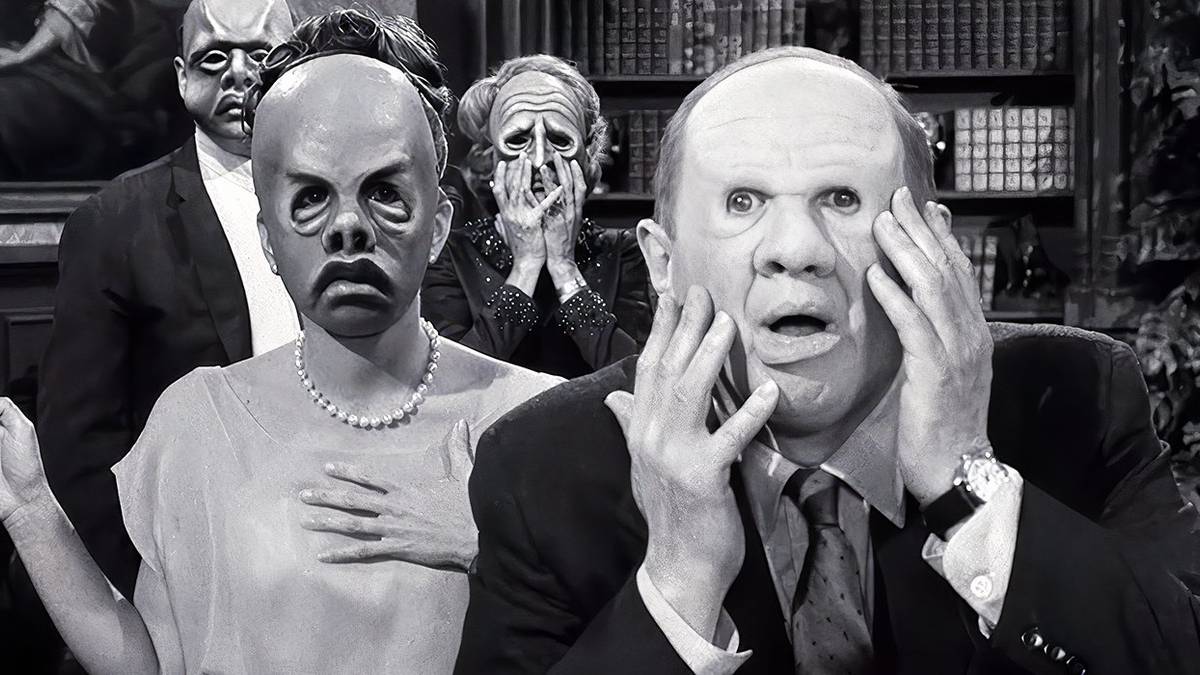
Image via CBS Published Nov 14, 2026, 5:47 PM EST Lloyd 'Happy Trails' Farley: the man, the myth, the legend. What can be said about this amazing - and humble - man that hasn't been said before? Or, more accurately, what can be said in public? Born in Calgary, Alberta, Canada, Lloyd is a master of puns and a humorist, who has authored one pun book to date - Pun and Grimeish Mint - and is working on a second. His time with Collider has allowed Lloyd's passion for writing to explode, with nearly 1,000 articles to his name that have been published on the site, with his favorite articles being the ones that allow for his sense of humor to shine. Lloyd also holds fast to the belief that all of life's problems can be answered by The Simpsons, Star Wars, and/or The Lion King. You can read more about Lloyd on his website, or follow his Facebook page and join the Llama Llegion. Happy trails! Sign in to your Collider account If you're a fan of The Twilight Zone, then you know that it stands as one of television's most influential and unique series. Creator Rod Serling adhered (largely) to a set of rules for each episode, in which ordinary characters find themselves in extraordinary settings, with one miracle or imaginative circumstance, and the premise is established quickly to keep the story tight and engaging. But there was literally no limit to which genre those rules might play out in: science fiction, suspense, horror, fantasy, supernatural drama, psychological thriller, even black comedy. Then came the inevitable twist, driving home the morality lesson in an unexpected, sometimes even horrific, way. There simply was never anything like The Twilight Zone on TV before, and any series that sought to play in its wheelhouse after would draw unavoidable comparisons to it. Yet there are some strong entries among those that sought to replicate The Twilight Zone's success, including Serling's own Night Gallery. There's one in particular that stands out, a series that often gets confused with Serling's but is more focused on the science-fiction genre for storylines. It's an underappreciated sci-fi anthology series that is groundbreaking in its own right, and for fans of The Twilight Zone it's the perfect complementary piece. It's The Outer Limits. 'The Outer Limits' Plays by Different Rules The below, narrated by Vic Perrin, is a shortened variation, used in later episodes, of the opening that greeted viewers on September 16, 1963, when The Outer Limits made its debut on ABC: "There is nothing wrong with your television set. Do not attempt to adjust the picture. We are controlling transmission. For the next hour we will control all that you see and hear. You are about to experience the awe and mystery which reaches from the inner mind to the outer limits." COLLIDERInteractive Crew Projection Sci-Fi/Quizzes/Hero Match PAUL ATREIDESCAPTAIN KIRKPRINCESS LEIAELLEN RIPLEYMAX ROCKATANSKY Collider QuizWhich Sci-Fi HeroAre You8 Questions · 5 LegendsFive iconic heroes. Five completely different ways of facing an impossible universe. One of them shares your instincts, your values, and your particular way of refusing to back down. Eight questions will tell you which one.On The Manifest Paul Atreides Captain Kirk Princess Leia Ellen Ripley Max Rockatansky Find Your Hero Question 01LEADERSHIP 01How do you lead when the stakes couldn't be higher?The way you lead under pressure is the most honest thing about you. AI absorb everything, every variable and every pattern, and move only when I know the path forward.BI read the room, make the call, and own the consequences. Hesitation costs more than mistakes.CI rally people. A cause needs a voice, and I refuse to let fear be louder than conviction.DI assess the threat, establish what needs doing, and get it done without waiting for permission.EI don't lead. I act. Others can follow or not. I'm already moving. ← BackPick one, then Next Next Question Question 02STRENGTH 02What is your greatest strength in a crisis?The quality that keeps you alive when everything else fails. APrescience. The ability to see further ahead than anyone else and plan accordingly.BImprovisation. I'm at my best when the plan falls apart and I have to invent a new one.CConviction. I know what I'm fighting for, and that certainty doesn't waver when it's tested.DComposure. I stay functional when everyone around me is falling apart. Panic is a luxury.EEndurance. I outlast things. I take the hit and keep moving long after others have stopped. ← BackPick one, then Next Next Question Question 03MOTIVATION 03What is the thing you'd sacrifice everything else for?Your deepest motivation is your truest compass. AThe survival and dignity of my people, even if I have to become something frightening to ensure it.BThe safety of my crew, every single one of them. No one gets left behind.CFreedom, for my people and for every world still crushed under the weight of an empire.DThe truth. What really happened, what's really out there, whether anyone believes me or not.EThe one person, or the one memory, that still makes any of this worth surviving for. ← BackPick one, then Next Next Question Question 04PEOPLE 04How do you relate to the people around you?Who you are to others under pressure is who you really are. AWith intensity and distance. I care deeply, but the weight I carry makes closeness complicated.BWith warmth and irreverence. I take the mission seriously, not myself.CWith directness and trust. I say what I mean, and I expect the people I work with to rise to it.DWith professional care but clear limits. I'll protect you, but I won't pretend we're family.EWith wariness that slowly becomes loyalty. I don't trust easily, but when I do, it holds. ← BackPick one, then Next Next Question Question 05THREAT 05You're facing a threat that no one else believes is real. What do you do?How you respond when you're the only one who sees it defines everything. APrepare in silence. If they won't listen, I'll be ready when they finally have to.BKeep pushing until someone listens, and if no one does, handle it myself.CBuild the case, find the allies, and make the threat impossible to ignore.DDocument everything. The truth matters even if no one believes it yet.EStop trying to convince anyone. Survive it. That's the only argument that counts. ← BackPick one, then Next Next Question Question 06COST 06What has your heroism cost you personally?Every hero pays. The question is what, and whether they'd pay it again. AMy innocence. I've seen what I'm capable of, and I can't unsee it.BPeople I loved. The command chair has a view, but it's a lonely one.CA normal life. I gave up everything ordinary the moment I chose the cause.DMy sense of safety. I know exactly what's out there now, and I can't pretend otherwise.EAlmost everything, and I'm still not sure what I'm carrying it all for. But I keep going. ← BackPick one, then Next Next Question Question 07RULES 07How do you feel about the rules of the world you're in?Every hero has a relationship with the system. What's yours? AI understand them deeply, and I know exactly which ones must be broken, and why.BI respect the spirit of them and bend the letter when the situation demands it.CThe system is the problem. I'm not here to work within it. I'm here to dismantle it.DI follow protocol until protocol stops being useful. Then I make the call myself.EThe rules collapsed a long time ago. What's left is instinct, and mine are reliable. ← BackPick one, then Next Next Question Question 08PURPOSE 08When everything is on the line, what keeps you going?The answer is the most honest thing about you. ADestiny, or something that feels so much like it that the difference no longer matters.BThe people on my ship. Their faces, their trust, the fact that they're counting on me.CThe belief that what we're fighting for is worth every sacrifice, including this one.DSheer refusal to let it win, whatever it is. I don't stop. That's just who I am.EI'm not sure anymore. But the road is still there, and I'm still on it. ← BackPick one, then Next Reveal My Hero Your Hero Has Been IdentifiedYour Sci-Fi Hero Is Your answers point to the iconic sci-fi hero who shares your instincts, your values, and your particular way of facing the impossible. DunePaul AtreidesArrakis · Dune, 2021The hero who knows exactly what becoming one will cost. You carry a weight most people would crumble under: the knowledge of what you're capable of, and the burden of what you might have to become.Why This Is You You see further ahead than others and you plan accordingly, even when the vision frightens you. You are driven by loyalty to your people and a sense of destiny you didn't ask for but can't escape. Paul Atreides is not simply a hero. He is someone who understands the cost of power and chooses to bear it anyway. That gravity, that willingness to carry what others won't, is exactly you. From The Collider File Dune: Part Three closes Denis Villeneuve's trilogy on December 18, 2026, adapting Dune Messiah. Messiah is the book that turns on its own hero, which is why Villeneuve waited to film it. Sees It ComingCarries The WeightArrakis Star TrekCaptain KirkUSS Enterprise · Star Trek, 1966The captain who refuses to accept that a no-win scenario exists. You lead with instinct, warmth, and an absolute refusal to accept a no-win scenario, because you've always believed there's a third option nobody else has thought of yet.Why This Is You You take the mission seriously without ever taking yourself too seriously. Your crew would follow you anywhere, not because you demand it, but because you've earned it. Kirk's genius isn't tactical, it's human. He reads people, bends rules with purpose, and wills outcomes into existence through sheer conviction. That combination of warmth, audacity, and relentless optimism is unmistakably yours. From The Collider File Paul Wesley's Kirk took the center chair in Strange New Worlds season 4, which premiered July 23, 2026. The producers have confirmed Kirk stays with the show through its final season. No-Win ScenarioCrew FirstStarfleet Star WarsPrincess LeiaThe Rebellion · A New Hope, 1977The one who holds the line when the line is all that's left. You are the kind of person who holds the line when everyone else is losing faith, not because you're fearless, but because giving up simply isn't something you're capable of.Why This Is You You lead through conviction. Your voice carries because your belief is unshakable. You gave up everything ordinary the moment you chose the cause, and you've never looked back. Leia is not a supporting character in her own story. She is the moral center of the entire rebellion. That same fierce, principled, unbreakable core is what defines you. From The Collider File Carrie Fisher was 19 when she shot A New Hope, and Leia's first scene in the saga is a refusal. Lucasfilm ruled out recreating her digitally, so her last appearance was built from footage she had already filmed. Holds The LineThe CauseRebellion AlienEllen RipleyThe Nostromo · Alien, 1979No speeches. Just the person still standing at the end. You are not reckless, not grandiose, and not particularly interested in being anyone's hero. You just refuse to stop when it matters.Why This Is You You see threats clearly, you document the truth even when no one listens, and when the time comes you handle it yourself. Ripley's heroism is earned, not performed. She doesn't have a speech. She has a plan and the nerve to see it through. You share her composure under the worst possible pressure, and her refusal to pretend the monster isn't there. When it counts, you don't flinch. That's everything. From The Collider File FX renewed Noah Hawley's Alien: Earth for a second season, pushing the franchise onto the home planet. Sigourney Weaver has said she is seriously weighing a return to Ripley after reading a new script. No SpeechesHandles ItNostromo Mad MaxMax RockatanskyThe Wasteland · Mad Max, 1979Lost everything, kept going anyway. You have been through fire that would break most people, and what came out the other side is something the world underestimates at its peril.Why This Is You You don't ask for help, don't need validation, and don't wait for anyone to tell you the rules no longer apply. Your loyalty, when it finally arrives, is absolute, but it's earned in silence and tested in action, not in words. Max is not a nihilist. He is someone who lost everything and found, against his will, that he still has something worth protecting. That bruised, stubborn, ultimately human core is exactly yours. From The Collider File George Miller has a script for the next Mad Max, The Wasteland, but has said only that we will see whether it gets made. The 1979 original was shot for a few hundred thousand Australian dollars and became one of the most profitable films ever made. Outlasts ItEarned LoyaltyWasteland Crew Match 1· · ·0% 2· · ·0% 3· · ·0% Retake The QuizCopied A Collider InteractiveCOLLIDERMore quizzes at collider.com It's reminiscent of The Twilight Zone's opening narration, but where Serling evoked a sense of imagination, an introduction into "a dimension not only of sight and sound but of mind," The Outer Limits' opening narration is a different beast. There is no welcome to a dimension of imagination, but rather a sense of being at the mercy of something (or someone) sinister we don't know, yet it's offset by the phrase about experiencing awe and mystery. It is, in a word, unsettling, and points to a key difference between the two series. As mentioned above, The Outer Limits kept its focus on science fiction, but leaned more heavily on horror in its storytelling. As a result, there's a dark, Gothic quality to the series that creates uneasiness, bolstered by its opening narration and the "theme song" that accompanies it: a quick orchestral blast followed by a steady, electronic buzz underneath. The Twilight Zone had morality lessons, but The Outer Limits existed in a world where meaning and morality were in a constant state of change. Episodes of The Outer Limits, too, were subject to rules, but radically different ones, as established by producer and writer Joseph Stefano. The primary rule Stefano insisted on was that each episode include a "bear," a monster meant to "induce wonder or tolerable terror or even merely conversation and argument." Symbolic of key story points, the "bears" could be humans, atrociously stripped and altered of their humanity; shapeless, antagonistic blobs; imperialistic, truculent aliens; or benevolent aliens, curious and compassionate beings, misunderstood and attacked by the true villains: ourselves. For all its differences, The Outer Limits shares the same elements that have made The Twilight Zone still relevant today. Like its kin, the sci-fi/fantasy bend of the series made it easier to slip thought-provoking statements on social issues past network censors. It's the same road taken on a different path, with The Outer Limits addressing the physical and emotional scars left on prisoners of war with "Nightmare," where aliens interrogate captured Earth soldiers, or the fear of a "Big Brother" surveillance state in "Obit" and its focus on a mysterious listening device that could tune in on anyone, anywhere. Over its run, The Twilight Zone saw one episode, "The Encounter," pulled from syndication, and faced censorship for a ridiculous reason, over "Judgment Night." The Outer Limits, likewise, faced censorship for one of its episodes as well: Season 1's "The Architects of Fear." In it, scientists get the bright idea to bring peace by bringing the world together to face a single enemy: a hostile alien. So they make one, with scientist Allen Leighton (Robert Culp) volunteering to undergo multiple surgeries and injections in order to be transformed into a "Thetan." The final look of the Thetan was so frightening that ABC affiliates broadcast a black screen whenever it appeared on-screen, tape-delayed the episode, or simply didn't show it at all. Unfortunately, network demands and a shift to a new time slot for the series' second season effectively neutered everything that made the first season so successful, most significantly by forcing out Stefano. The second season was, for all intents and purposes, an entirely different show (having also ditched the concept of a "bear" for each episode), and the series came to an end after airing 49 episodes. The anthology eventually returned in 1995, with a revival that ran for seven seasons. Still, its influence can be seen in everything from The Terminator (which drew comparisons to the Season 2 episode "Soldier" and prompted a lawsuit) to the Alien franchise, and expanded to television with FX's Alien: Earth last year. Release Date 1963 - 1965-00-00 Network ABC Directors Gerd Oswald, Byron Haskin, Charles F. Haas, James Goldstone, László Benedek, Leonard Horn, Paul Stanley, Alan Crosland, Jr., John Brahm, Abner Biberman, Felix E. Feist, John Erman, Leon Benson Writers Joseph Stefano, Seeleg Lester, Robert C. Dennis, Sam Neuman, Milton Krims, Meyer Dolinsky, Allan Balter, Anthony Lawrence, Jerry Sohl, Robert Mintz, Harlan Ellison, Stephen Lord, Robert Towne, William Bast, William R. Cox, John Mantley, Otto Binder, Robert Specht, Samuel Roeca, Oliver Crawford, Richard H. Landau, Orin Borsten, Ib Melchior, Francis M. Cockrell Cast Alex Nicol Gen. Lee Stocker
If You Love ‘The Twilight Zone,’ ABC’s Forgotten Sci-Fi Is Its Much Darker Replacement
Full Article
Original Source
Read the full article at Collider →KhanList aggregates and links to publicly available news content. We do not host full articles from third-party sources. Always verify important information with original sources.