
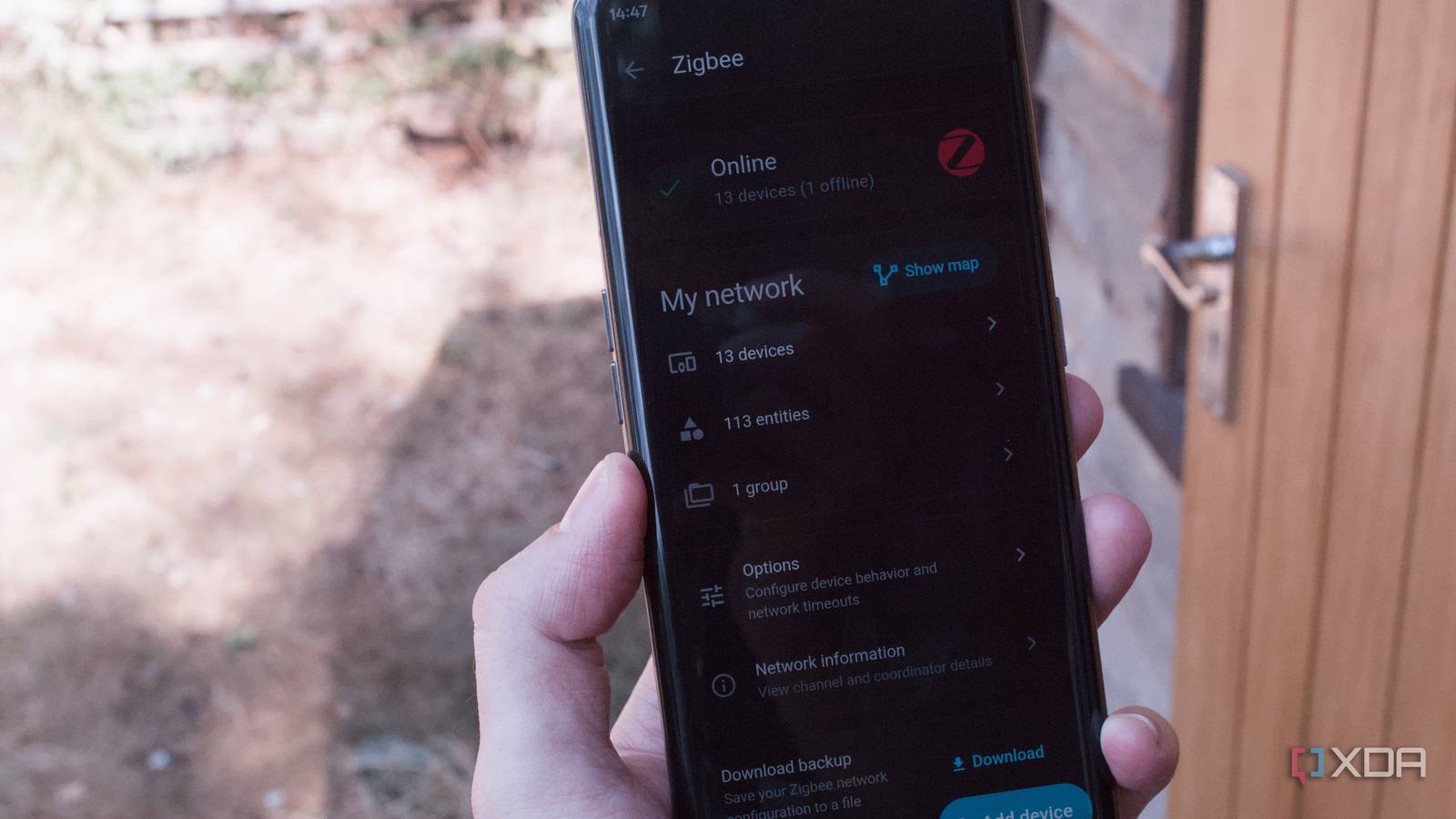
Published Aug 14, 2026, 10:00 AM EDT Richard is the PC Hardware Lead at XDA and has been covering the technology industry for almost two decades. He's been building PCs since young, and when not creating content, you can often find him inside a chassis somewhere. Home Assistant has been a staple of our home for years now, and if there's one thing I would do differently from the offset, it would be using Zigbee for all smart home devices. It took far too long for me to hop aboard the Zigbee networking train, taking advantage of separating clients from the congested Wi-Fi bands. It's not only more reliable across the board, but Zigbee devices can even act as repeaters, creating expanded smart home coverage. Zigbee is the way to go from day zero It's worth the additional setup steps for a new smart home I wouldn't even wait for a while to get Zigbee sorted and ready to go. Choosing Zigbee (or Matter, etc.) for connecting smart home devices together provides the network infrastructure immediately. Smart home hardware doesn't support both Wi-Fi and Zigbee. It's usually one or the other, and if you head down the path picking up Wi-Fi-enabled devices like I did, you'll eventually encounter a situation where you have a mix of different connections, which creates quite the mess. It's also easy to get lost in adding devices and immediately creating automations before the rest of the pack has been unboxed. This can lead to frustration with weaker signal strengths and the like, which is why it's incredibly important to get the placement of your Zigbee router just right. This is another thing I'd change. Instead of connecting the broadcaster to the back of my Home Assistant server, I'd follow online guidance and use a USB extension cable. I wouldn't even wait for a while to get Zigbee sorted and ready to go. And not every Zigbee device can repeat the signal. Battery-powered Zigbee hardware will usually be designed to conserve power and won't therefore be equipped to handle the routing of data, which would decimate the small battery. I found smart plugs to be the ideal repeaters that can double as power monitors and remote switches, allowing for some complex automations to be created as well as data to be collected for the Energy Dashboard. If you're running Proxmox, it's also a good idea to get all the hardware you plan to use installed and activated so you don't get confused with PCI devices that get renamed and things start to break. I had just that with the NIC when it had its address switched when a second GPU was added. It's always a good idea to have the means to interact with the server locally with a screen and keyboard. But once Zigbee is up and running, everything is handled through Home Assistant. Not installing every HACS integration You likely don't need to have everything in HA The thing with the smart home is to ensure it's smart. It's a little like the uncanny valley in computer graphics. Should you go a little too far with the smart home, it can create instances where it can work against you. Sometimes it's just not worth the time and effort. One of Home Assistant's greatest strengths is its expandability and support for custom integrations. HACS is brilliant in that it can provide an easy way to install custom community-built features. The thing with the smart home is to ensure it's smart. It's easy to get carried away and set up custom cards, animated floor plans, custom device controls, and even modifications to the frontend. Not only can this cause unnecessary complications for managing the platform, it also makes it difficult for beginners to get to grips with how everything works. Home Assistant can be challenging at the best of times, and while the developers are making waves in simplifying as much as possible, it can be easy to undo this effort. I'm now keeping our HA installation as vanilla as possible, in that there's not much installed on top of the base package. I've got Zigbee managed, as well as a community integration to handle EcoFlow access to pull data on our solar PV installation, but that's about it. I've designed the HA installation to be easy to use for everyone, not just me. I actually want all members of the household to rely on the smart home platform that drives everything without needing to check a knowledge base or ask questions. Starting with the basics If I were to start fresh, it would be to connect the absolute essentials first and ensure I have a stable base to work with. Areas really do help, and it is something I largely ignored with previous installations. One thing I did get squared away was backups. HA has its own backup system, which is great and helps with rolling back to earlier configuration versions, but Proxmox snapshots are another layer that should be used. Just like the rest of a smart home or home lab, backups are everyone's new best friend. Updates can be another headache when there are too many integrations in the kitchen. If an update goes wrong and clashes with something within the install, you'd have to check the base platform as well as custom integrations, cards, themes, JavaScript, add-ons, configurations, and more. I'm not suggesting I would avoid HACS altogether, but I would be much more strategic with the types of integrations I would prioritize. Document everything for later reference Don't lose yourself with your own spaghetti madness If there's another thing I wish I did sooner with my wider home lab and LAN, it would be documentation. A label maker, QR codes, and self-hosting Gitea completely changed the game by allowing me to create the means to have updated resources on what's powering specific software or what's running on a system. IP addresses and more can be added to labels, along with any other data that I'd require, and the same goes for documenting Home Assistant. It can become quite the spaghetti mess with connections to countless devices on the network. Documenting everything you do with Home Assistant is a great way to not lose oneself when making further changes or attempting to diagnose a problem. I also found it worthwhile to document not only what was configured but also a reason as to why. This can help with troubleshooting even if it doesn't immediately seem related to the problem experienced. I've since adjusted our smart home platform to make the most of what we have, but if I were to start fresh, I would combine all of this to create a far better and more stable Home Assistant installation to build the ultimate smart home. Home Assistant OS Windows, macOS, Linux iOS compatible Yes Android compatible Yes
If I started my Home Assistant setup over today, here's what I'd do differently
Full Article
Original Source
Read the full article at Xda-developers →KhanList aggregates and links to publicly available news content. We do not host full articles from third-party sources. Always verify important information with original sources.