
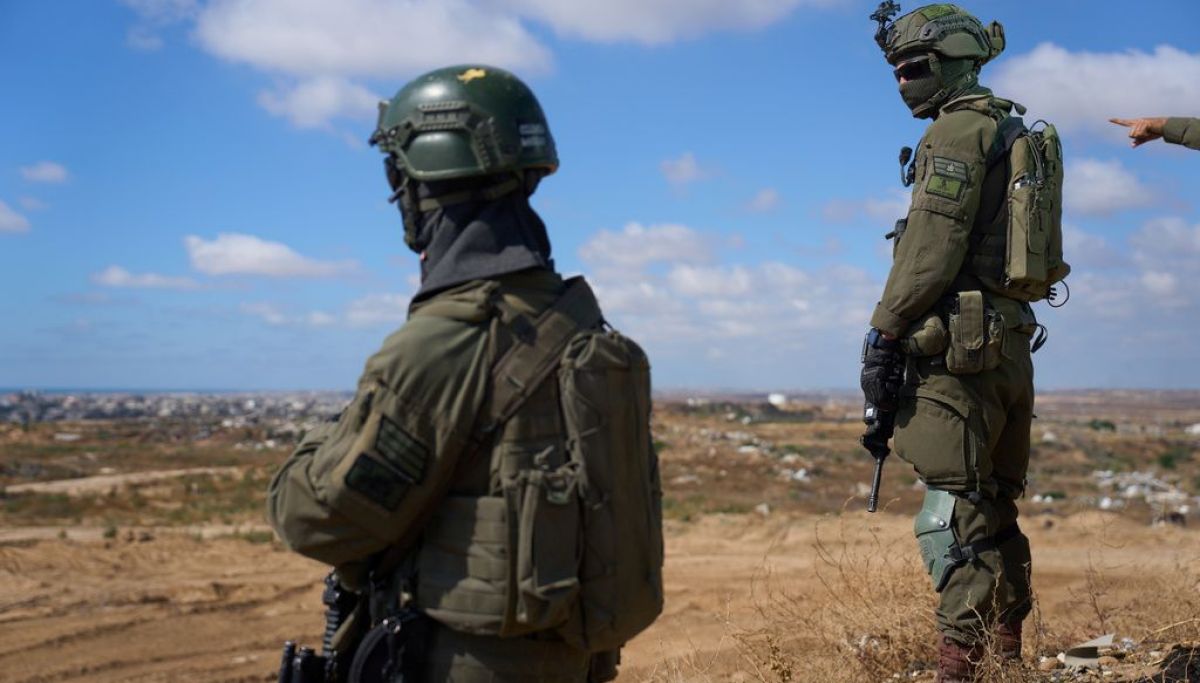
Israeli Prime Minister Benjamin Netanyahu stood near Gaza’s Yellow Line this week and said Israel is not withdrawing from the territory it now holds while Hamas remains armed. During his visit to an IDF position in Gaza, he put the issue plainly: Israel will remain until the work of disarming Hamas is finished.That position will be criticized as obstructionist. It is also the only one that makes sense.Much of the debate over President Donald Trump’s Gaza plan has focused on sequencing: Does Hamas disarm first, or does Israel withdraw first? The Board of Peace has already moved toward the sensible answer. As the Washington Examiner reported, Hamas is expected to take verified steps before Israel is required to withdraw. But that still leaves the most important question unresolved.Who gets to decide that Hamas has actually disarmed?The current Gaza roadmap gives an International Verification Committee responsibility for certifying compliance, supported by an International Stabilization Force. Those institutions can be useful. They can inspect weapons sites, monitor compliance, and document violations.But they should not have the final word.Israel should.On Oct. 7, 2023, Hamas-led terrorists crossed into Israel, massacred civilians, abducted families, and committed sexual violence. That was not a theoretical failure of deterrence. It was the consequence of misjudging the capability and intentions of an enemy living beside Israel.That history matters when outsiders tell Israel what level of residual risk it should accept.Soldiers serving in an international force may act courageously and honorably. But when their deployment ends, they go home. Their families will not remain within rocket range of Gaza. Their children will not live beside whatever tunnel, weapons cache, militia structure, or command network inspectors might have missed.Israelis will.That is not an insult to international monitors. It is a difference in stakes.If international inspectors conclude that Hamas has complied but Israeli intelligence identifies functioning tunnels, weapons depots, production facilities, armed units, or command structures that remain intact, Israel should be able to say no.No further withdrawal.No requirement that Israel trade territory for an assurance it does not believe.That amounts to a veto, and Israel should have one.The obvious objection is that an Israeli government could invoke security indefinitely simply to remain in Gaza. That possibility deserves a safeguard, but history argues against assuming that permanent possession of Gaza is Israel’s default objective.Israel has already left Gaza. In 2005, it dismantled its settlements in the strip and withdrew the Israeli forces protecting them. Whatever one thinks of that disengagement or what followed, the historical fact matters: Israel demonstrated that it was willing to leave Gaza.The issue today is whether Israel should be required to leave before it believes the armed organization that invaded it can no longer do so again.There should be discipline on Israel’s veto. If Israel objects to a finding of compliance, it should identify the remaining military capability as specifically as intelligence protection permits. That objection should trigger another inspection or review. The United States and other partners should be free to challenge Israeli evidence.But until the discrepancy is resolved to Israel’s satisfaction, Israeli forces should stay.The burden should not be on Israel to withdraw first and discover later whether its intelligence was right.Trump’s roadmap has the right basic structure. It requires heavy weapons, production sites, weapons depots, and tunnels to be decommissioned, and makes movement from one phase to the next contingent on verified completion of the previous phase.But verification works only if the country exposed to the consequences of failure trusts the result.Hamas has already given Israel reason for skepticism. After the agreement was announced, Hamas officials disputed what “disarmament” actually meant, describing weapons storage rather than an unambiguous surrender of military capability.The distinction matters. A weapon placed in storage can be retrieved. A tunnel entrance can be sealed while the network beneath it remains usable. A military organization can surrender hardware while preserving the people, infrastructure, and knowledge needed to rebuild.Israel has learned, painfully, that quiet is not the same thing as security.Israel has every reason to want its soldiers out of Gaza. It withdrew before. What it cannot afford is to leave merely because outsiders have decided the remaining risk is acceptable.Jewish history has repeatedly taught the danger of allowing others to decide when Jews are safe enough. A sovereign Israel should not surrender that judgment now.International partners can inspect, verify, challenge, and advise.ISRAEL AND TURKEY ARE ON A COLLISION COURSE — AND TRUMP’S LOOSE CANNONS ARE MAKING IT WORSEThey cannot make Israel accept an answer it does not believe.If Israel is not satisfied that Hamas has been disarmed, Israel stays.Arie Blitz, M.D., M.B.A., is a retired physician and independent writer in Weslaco, Texas, who writes on foreign policy, medical ethics, and public policy.
If foreign inspectors are wrong, Jews die. Israel holds the final say
Full Article
Original Source
Read the full article at Washingtonexaminer →KhanList aggregates and links to publicly available news content. We do not host full articles from third-party sources. Always verify important information with original sources.