
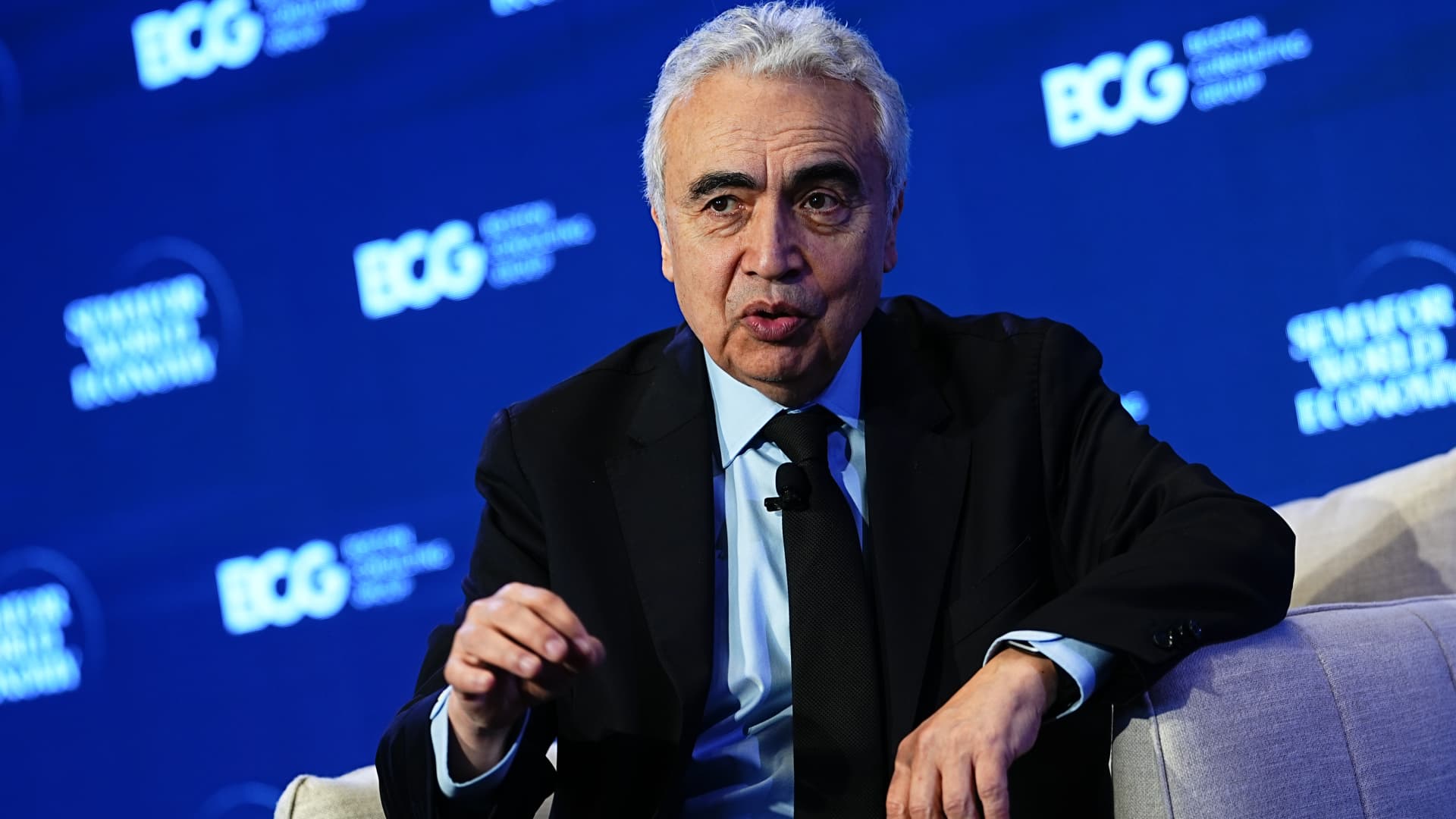
Fatih Birol, executive director of the International Energy Agency (IEA), at the Semafor World Economy Summit during the International Monetary Fund (IMF) and World Bank Spring meetings in Washington, DC, US, on Tuesday, April 14, 2026.Bloomberg | Bloomberg | Getty ImagesThe Iran war has "crushed" confidence in the Strait of Hormuz as a reliable supply corridor, IEA Executive Director Fatih Birol warned.IEA Executive Director Fatih Birol wrote in an article published Wednesday that he was skeptical of a return to "normalization.""I don't see any credible pathway back to the situation that existed in February 2026," Birol wrote in a guest essay for The Economist's "The World Ahead 2027," published Wednesday."Shipping flows through the Strait of Hormuz have been blocked once, with a hugely disruptive effect on oil and gas markets. It can happen again. Confidence in the Strait as a safe and reliable corridor for energy and other goods has been crushed," he said.Before the war began on Feb. 28, the strait was a major artery for oil and gas. Gulf crude exports have recovered in recent months, reaching more than 80% of pre-war levels in October, the IEA said in its November market report. But renewed U.S.-Iran strikes broke a lull in direct fighting this week."I think perceptions of risk around the Strait have changed for good," Birol added, citing new routes, such as pipelines in Saudi Arabia and the United Arab Emirates that bypass the strait.At 6:45 a.m. ET, U.S. West Texas Intermediate futures were seen trading at $85 a barrel, with international benchmark Brent crude futures at $92.74 a barrel.'Uncertainty is now the rule' Many IEA members relied on emergency oil stocks, softening the economic disruptions, Birol wrote.Southeast Asian countries such as the Philippines and Thailand are looking to "build up similar buffers," as they were the hardest hit by the energy shock, he added.Birol predicted that the crisis would accelerate countries' shift toward domestic energy sources such as cost-competitive solar and wind, while renewing interest in nuclear power.But this will require stronger grids and battery storage, he added."Uncertainty is now the rule, not the exception, so energy decision-makers need to be wary of creating new dependencies, even as they seek to address old ones," Birol said.
IEA chief sees no 'credible pathway' back to pre-war normality in the Strait of Hormuz
Full Article
Original Source
Read the full article at Cnbc →KhanList aggregates and links to publicly available news content. We do not host full articles from third-party sources. Always verify important information with original sources.