
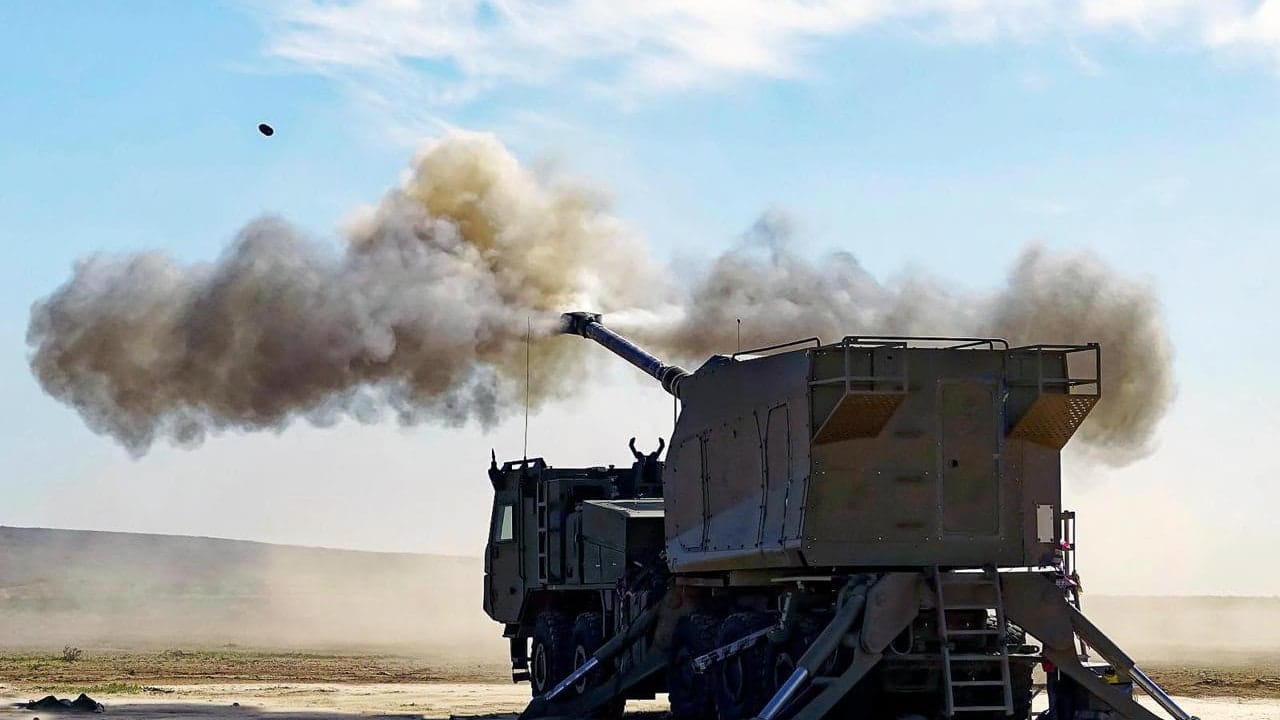
NOVEMBER 2, 2026 12:00Updated: NOVEMBER 2, 2026 12:02The Defense Ministry and IDF have signed a 15-year agreement worth approximately NIS 600 million with Elbit Systems to establish a dedicated training facility for the Artillery Corps, supporting the new Ro'em (SIGMA) self-propelled howitzer and Lahav (PULS) rocket launcher systems.The agreement includes the development and supply of advanced technological training infrastructure, as well as instruction, maintenance, and logistical support services.The deal follows a separate $235 million contract announced on October 19 to supply Elbit's PULS rocket launchers and EXTRA-MR rockets to an unnamed European country.The Ro'em, known internationally as the SIGMA 155, is a 155 mm. self-propelled howitzer mounted on a highly mobile 10x10 truck chassis.The Defense Ministry decided to procure the system in 2017, and development began in 2019. In 2021, it was determined that the howitzer would enter operational service in the IDF under the name Ro'em. Elbit has also been expanding its international operations, including plans announced in October for a new production and maintenance facility in Sweden.View of Elbit Systems offices in Jerusalem on December 3, 2024. (credit: Chaim Goldberg FLASH90)In late 2025, the first unit officially declared the system operational following an extensive period of testing and deployment across a range of operational environments.Ro'em offers significant advantages over older artillery systemsThe Ro'em offers significant advantages over the US-made M109 Doher self-propelled howitzer, which remains in IDF service.Thanks to its automated ammunition loading and gun positioning systems, the Ro'em requires a crew of just three soldiers: a commander, gunner, and driver, compared with eight crew members operating the M109.The new howitzer has a firing rate of six to eight shells per minute, more than twice that of its predecessor. It can also fire its first shell in less than 60 seconds after the vehicle comes to a halt.Tests have demonstrated a high degree of accuracy, with a reported deviation of approximately 0.7%.The Ro'em also features independent navigation and fire-control systems installed in each howitzer, allowing it to operate without relying on a separate command-and-control vehicle.The system is designed to meet the IDF's operational requirements for at least the next 50 years. It also provides protection for the crew inside an armored driver's cabin.Elbit expands international defense salesThe Ro'em is not intended exclusively for the IDF. Elbit Systems also markets the howitzer internationally and, according to foreign sources, it has been sold to Singapore. Denmark, Thailand, and the Philippines have purchased an earlier version of the system.Thailand has continued procuring Israeli defense technology. In October, Israeli manufacturer IWI announced the delivery of its ARBEL anti-drone system to Thailand, amid broader Thai military modernization plans that also include artillery acquisitions.Elbit has also been broadening its portfolio beyond land-based weapons. On October 20, the company announced its acquisition of Canadian underwater drone manufacturer International Submarine Engineering, expanding its maritime defense capabilities.Zeev Landau, deputy director-general and head of the Directorate of Production and Procurement at the Defense Ministry, said the agreement reflects the ministry's strategy of strengthening operational readiness and supporting Israeli industry.Boaz Cohen, general manager of Elbit Systems' Land Division and IMI, added that the artillery school and training framework for Artillery Corps soldiers would enable the corps to maintain its fire capabilities at the highest level of readiness.Follow us on Google
IDF's next-generation artillery gets NIS 600 million training boost with Elbit deal
Full Article
Original Source
Read the full article at Jpost →KhanList aggregates and links to publicly available news content. We do not host full articles from third-party sources. Always verify important information with original sources.