
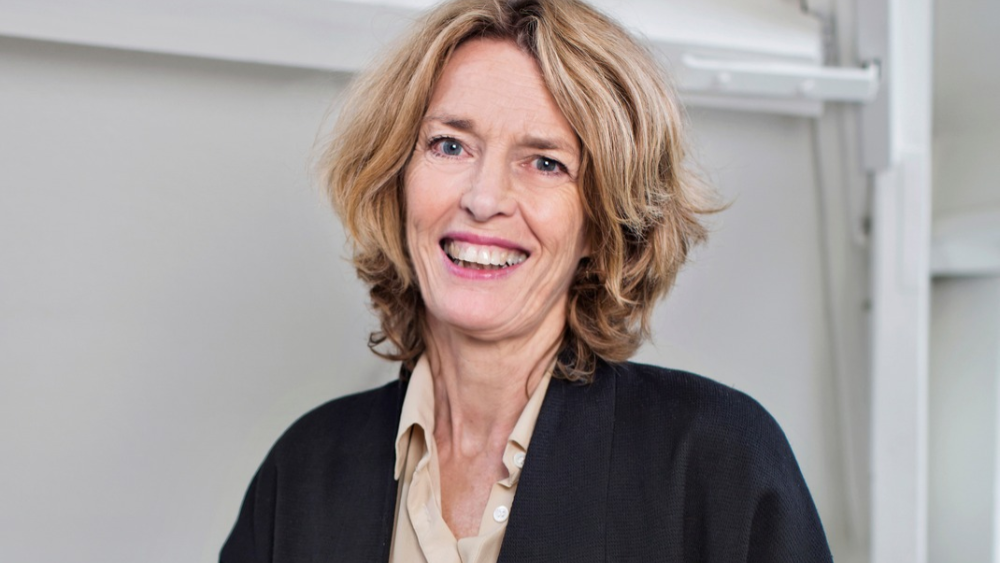
Adriek van Nieuwenhuyzen has been the head of industry at the International Documentary Film Festival Amsterdam (IDFA) for almost 20 years. Having selected thousands of projects for the festival’s renowned co-production and co-financing market, the Forum, she acquired a great understanding of what documentary audiences are looking for. According to the veteran, people currently want to see “timely” issues on screen, and to be informed of what is happening in an increasingly chaotic geopolitical landscape. This year has proven audiences are hungry to watch documentaries on the big screen, with fall festival season having been dominated by films like Alex Gibney’s “Musk,” Yuval Abraham and Rachel Szor’s “NAZA” and Lance Oppenheim and Nathan Fielder’s “You Can See Everything.” Despite having selected Forum entries before the boom brought by these films, van Nieuwenhuyzen could already feel something in the air. “What we’re bringing into our talks program this year is conversations about a kind of momentum which is really speaking with audiences and that I appreciate,” she tells Variety. “‘Musk’ is such a brilliant example of everything happening in the U.S. with these obscene amounts of money and power. I love that people are picking up on it and want to see these kinds of films because it speaks to them, it’s timely, it’s urgent, and it offers them something they feel they have to know and understand.” Van Nieuwenhuyzen emphasizes that the success of these films only confirms the Forum’s long-established curatorial guidelines, which prioritize films that can speak to burning, often sensitive issues, through a sharp cinematic vision. The industry head says what she “loves now” is seeing a film like “NAZA” bringing people to cinemas despite being an “extremely uncomfortable watch.” “That’s what we are looking for, artistic filmmaking showing a curiosity of the filmmakers and daring to bring something to the world that people didn’t know yet.” The head brings up Roxy Rezvany’s Forum entry “Being North Korean” as a great example of what they are looking for at the industry sidebar. “It’s dealing with womanhood in North Korea, a country where a human rights crisis is happening, but it speaks specifically about the position of women,” she says of the project. “It’s hybrid, conceptual; it’s colorful. It’s a lot of things you don’t expect with this content.” “That’s what we are looking for when we select films for the Forum: the unexpected, the things we didn’t think about that are out of the box, sometimes very uncomfortable,” she goes on. “I think that is also important to acknowledge that documentaries can do great things by getting people out of their comfort zone.” “NAZA” Venice Film Festival Over her time in post, van Nieuwenhuyzen has seen the festival through historic ups and downs, from financial crashes to new technologies, so she understands better than anyone the need for adaptability. This year, the Forum team has implemented a key change in its structure, splitting the presentation projects into two categories. Projects will now be showcased either to a larger audience at the Forum Pitches program or in the more intimate settings of Roundtable Presentations, where they’ll have the chance for longer, more in-depth feedback sessions. “What we learned after last year is that people in the industry, filmmakers, producers, funders, the people in the room, feel that the forum should be an agora,” says van Nieuwenhuyzen. “It should be a place for open debate and exploration. In moments where the documentary world is—I don’t like to use the word crisis, but there are, of course, obvious difficulties in financing and finding audiences—we need each other.” Van Nieuwenhuyzen had feedback last year from filmmakers who, even though they felt their project was not the right match for a broadcaster, were still interested in learning how they perceived prospects and vice versa. The new roundtable format is “more time-consuming” as it allows more space per project, but the Forum head is “very curious to hear the responses” to the proposition. “A lot of established filmmakers are presenting in roundtables. It’s not only early-stage projects. It’s a mix of upcoming filmmakers, projects in the development phase but also works that are longer on their way but where it’s really interesting to have an in-depth conversation about what kind of partnerships they are looking for and how they want to shape that film.” As for other key topics this year, AI remains at the forefront of conversation, with IDFA holding talks and panels that home in on issues of rights and the ethics of AI usage. Speaking on one of the panels, titled “Is AI stealing my work?,” van Nieuwenhuyzen says the idea came from filmmakers who “learned their documentaries were used for AI learning tools and never gave permission.” “It has to do with the fact that we do not have legal frameworks,” she adds. “All these contracts didn’t take AI into account, so that is one of the issues. People should be informed. It’s up to everyone what they want to do with their films, but they have to understand what’s happening so they can make an informed choice. Either they sell it and get money out of it, or they refuse because they don’t want that to happen.” The issue of AI in archival work is particularly relevant to doc makers, especially as high-profile titles like Ava DuVernay’s “14th” come under scrutiny for using artificial intelligence in archival work. “Archival material is often in a bad shape, and AI as a tool can fill in the missing materials,” says the industry head. “But, of course, it is an algorithm. You can totally make something up that was not actually in the original frames, so there is very much an ethical question here: how do we feed the machine, and how do we allow the machine to make something up for us that gives maybe a wrong interpretation of how the material was originally filmed and meant to be. “If you use AI to create images, these images will land in our archives and in 10 years no one will know it is AI,” she goes on, noting how discussing artificial intelligence in archival work is not only about the images of yesterday but also about how we preserve our current cinema for the future. “How do we make sure that what we create today is also usable in 10, 15 years?” Time will tell. This year’s IDFA Forum will take place in Amsterdam between Nov. 15-18.
IDFA Industry Head Says Docs Like ‘Musk’ and ‘NAZA’ Signal That Audiences Want ‘Timely’ Films: They Offer ‘Something They Feel They Have to Know’
Full Article
Original Source
Read the full article at Variety →KhanList aggregates and links to publicly available news content. We do not host full articles from third-party sources. Always verify important information with original sources.