
Published Aug 19, 2026, 9:00 AM EDT Airline and Airport Management Graduate, Student Commercial Pilot and Commercial Aviation Writer. Based in London & Nagoya Reaching the absolute pinnacle of the United States commercial aviation industry, commanding a heavy twin-aisle widebody across oceanic routes for the country's dominant legacy carriers, has long been portrayed as a deep corporate rivalry defined by competing paycheck offers. American Airlines, Delta Air Lines, and United Airlines together control a massive share of the domestic and international passenger market, perpetually battling for elite travelers, corporate contracts, and top-tier flight deck talent. Beneath the fierce marketing wars and historic market dominance, an unexpected reality has taken shape across their flight operations. The multi-billion-dollar race to outbid one another for top aviators has paradoxically resulted in an unprecedented economic convergence, erasing the traditional pay disparities that once dictated career choices. As a result of this convergence, pilots now need to take a hard look at the actual compensation structures engineered by recent collective bargaining agreements between the Allied Pilots Association, the Air Line Pilots Association, and the executive boardrooms of the Big Three. When a senior captain straps into the left seat of a Boeing 777, Boeing 787, or Airbus A350, the headline hourly rate no longer acts as a competitive differentiator. This article answers the question of what these widebody captains truly earn today, looking deeper at how identical base pay scales across American, Delta, and United mask a deeper financial divergence hidden in tax codes, profit sharing, and retirement matches. An Even Split Credit: Shutterstock The convergence of legacy pay scales is largely the direct result of the contract rounds of 2023 through 2024, which erased the traditional wage gaps that once drove pilot recruitment wars. Delta initiated the wave with an agreement featuring immediate raises, quickly matched by United's multi-billion-dollar package and American's subsequent alignment with the Allied Pilots Association. The resulting milestone achieved strict numeric parity across the upper echelons of long-haul fleet operations. Now, a twelve-year captain on a 777, 787, or A350 receives an identical base rate of $465.13 per hour, regardless of whether they fly for American, Delta, or United. Applying that uniform hourly rate to a standard 900-hour annual guarantee establishes a baseline base salary ranging from $410,000 to $419,000 before factoring in premium scheduling or international stipends. By contrast, a first officer with matching seniority on the same heavy widebody equipment earns $317.73 per hour, generating an hourly spread of roughly $147 between the left and right seats. When accounting for holiday pay, overtime credits, and international per diem, total annual W-2 compensation easily climbs between $465,000 and $520,000. Yet, because top-line hourly rates are now locked in absolute alignment, prospective and veteran aviators find that raw base pay can no longer serve as the primary differentiator when evaluating career moves. With baseline compensation completely synchronized across the major carriers, the financial reality of flying a heavy widebody shifts away from headline hourly rates into an ecosystem of secondary variables, tax implications, and deferred compensation mechanics. This is where the differences start to become far clearer. How Airlines Help Add To The Base Wage Credit: Shutterstock Base hourly wages remain identical at $465.13 across the major carriers, so the actual financial difference between American, Delta, and United pilots materializes within secondary benefits and corporate profit-sharing. Delta Air Lines maintains a historically lucrative profit-sharing structure that can distribute an additional 10% to 20% of earnings during strong fiscal years, whereas American and United rely on alternative performance formulas or more modest bonus distributions. These differences mean that two captains flying identical aircraft on identical monthly schedules can still experience noticeable annual take-home variances depending on which corporate logo is painted on the fuselage. Insights detailed by MiGFlug emphasize that these ancillary compensation layers represent the true modern battleground for airline labor retention. In addition to annual profit-sharing variances, all three legacy carriers have converged on an industry-leading 18% direct non-elective 401(k) contribution rate for eligible pilot earnings, establishing a massive baseline for retirement wealth-building. However, the tactical ways pilots can manage these funds differ, such as Delta introducing nonqualified deferred compensation plans and market-based cash balance options to help high earners affected by annual IRS contribution ceilings. According to Mercer Advisors, these advanced financial planning tools allow senior widebody captains to protect significant portions of their peak earnings from immediate taxation. As a result, total compensation packages often exceed $500,000 annually once deferred benefits and retirement matches are fully accounted for. Even when factoring in profit-sharing percentages and deferred compensation accounts, corporate benefit structures are only part of the equation shaping a pilot's net worth. The geographic location of an aviator's home base is a massive external variable that can swing annual take-home pay by tens of thousands of dollars before a single flight is even dispatched. All In The Location Credit: Shutterstock When a pilot's gross earnings are locked by identical collective bargaining scales, the single most aggressive factor for wealth accumulation moves entirely outside the airline's control and into the tax code of their home base. Legacy carriers operate massive hubs spread across vastly different state tax jurisdictions, which means an aviator's choice of base is somewhat of an invisible multiplier on their actual net take-home pay. The financial contrast becomes a lot more obvious when examining specific legacy hubs across the United States. American Airlines keeps a massive portion of its widebody operations at Dallas/Fort Worth International Airport (DFW) in Texas, a state with zero personal income tax, whereas Delta and United maintain heavy operational strongholds in high-tax coastal environments like San Francisco (SFO), Los Angeles (LAX), or New York (JFK). A Year 12 widebody captain based out of DFW keeps roughly $308,000 to $320,000 after tax considerations alone, against $267,000 to $283,000 for the same pilot operating out of a state that heavily taxes personal income. Ultimately, the structural state tax variance creates a cash gap of several tens of thousands of dollars annually between captains performing identical flight duties. Base Hub Primary Airline State Income Tax Environment Estimated Post Tax Take Home Range Dallas-Fort Worth (DFW) American Airlines 0% percent personal income tax $308,000 - $320,000 New York (JFK / LGA) Delta / United / American High state and local municipal tax $267,000 - $283,000 San Francisco (SFO) United / Delta Progressive high-bracket state tax $267,000 - $283,000 Chicago (ORD) United / American Flat state income tax structure $280,000 - $295,000 Where a pilot is based offers a powerful shield against state taxation, but when it comes to schedule control, commuting burdens, and the seniority needed to hold those coveted zero-tax slots, relocating just to get lower personal income tax rates can often become far less desirable. As senior captains continue to reap the benefits, pilot unions find themselves under mounting pressure from members demanding targeted solutions for regional cost-of-living imbalances. Seniority Gives Freedom Of Choice Credit: Shutterstock In practice, converting these high-earning structures into a sustainable lifestyle means making the most of monthly line bidding. A senior widebody captain with over a decade of longevity does not fly whatever is assigned; instead, they use electronic preferential bidding systems (PBS) to construct custom work schedules that maximize credit hours while keeping fatigue to a minimum. For instance, a Dallas-based American Airlines captain flying the Boeing 777-300ER can strategically plan back-to-back long-haul rotations, such as DFW to London Heathrow (LHR) or Tokyo Haneda (HND), into fewer working days, leaving half the month free while still clearing the 900-hour annual guarantee and protecting their zero-state-tax domicile status. Junior first officers have to take whatever open time or unassigned airport reserve slots remain, whereas senior widebody captains have the ability to bid for prime international pairings that carry lucrative international overrides and per diem. Furthermore, as airlines integrate advanced fleet additions, such as Delta’s growing widebody commitments and cabin retrofits, senior captains can use their seniority to secure the most desirable equipment types, so that their high hourly rates translate into optimized working conditions rather than tiring multi-leg domestic routes the majority of the time. As senior captains optimize their schedules around tax-free domiciles and high-credit pairings, a secondary issue starts to emerge. With hundreds of veteran pilots approaching mandatory retirement age across all three carriers, how will airlines backfill the massive leadership vacuum in the left seat without destabilizing training pipelines? Out With The Old, In With The New Credit: Shutterstock The underlying tension sustaining these high-tier widebody compensation models is an impending demographic bottleneck driven by mandatory retirement rules and aggressive fleet expansions. Under federal aviation regulations, commercial captains must retire at age 65, creating an unyielding exit velocity for the senior-most aviators who have achieved top-scale hourly rates. With American Airlines facing over 800 pilot retirements and Delta tracking hundreds of departures alongside multi-year aircraft order books, the training pipeline required to upgrade right-seat first officers into heavy widebody left seats is operating at maximum capacity. Analyzing the broader labor ecosystem shows that this retirement wave gives active pilot unions unprecedented leverage during ongoing contract cycles. For instance, Delta Air Lines representatives have already begun framing new operational priorities as their current Pilot Working Agreement approaches its amendable date in late 2026, relying on thousands of projected career transitions to push for further compensation enhancements. Carriers need to pour millions into simulator training centers and expedited upgrade pathways just to keep pace with widebody fleet deliveries, such as incoming batches of A350-1000s and 787s. Consequently, the financial viability of maintaining these top-tier contracts depends entirely on airlines successfully balancing record passenger demand with escalating fixed labor costs. It is clear that this delicate balance between record labor costs and fleet growth will be challenging for the major US carriers to manage, and the true test of these multi-billion-dollar contracts will emerge when economic cycles affect overall airline profitability. Especially if the industry faces economic downturns similar to those currently being seen, compensation may well become a source of significant friction. High Potential For Unrest? Credit: Shutterstock The realization of identical top-tier hourly rates across American, Delta, and United does not signal an end to corporate competition. What it is doing is moving the battleground from basic wage scales to the hidden mechanics of profit-sharing, tax optimization, and fleet deployment. When base pay is locked at $465.13 per hour, the true financial health of a career captain is defined by how effectively their airline can monetize international routes and how strategically their domicile choice navigates state tax codes. The ultimate test of whether these historic pay structures can endure will be measured against upcoming contract amendable dates and multi-billion-dollar aircraft delivery schedules through the late 2020s. As Delta's Pilot Working Agreement approaches its amendable milestone in December 2026, and as United and American absorb hundreds of mandatory retirements, executive boardrooms will face mounting pressure to protect profit margins without triggering labor unrest. Whether these record-breaking compensation packages represent a permanent economic baseline for elite aviation or a cyclical peak driven by post-pandemic pilot shortages is the defining question for the future of commercial flight decks.
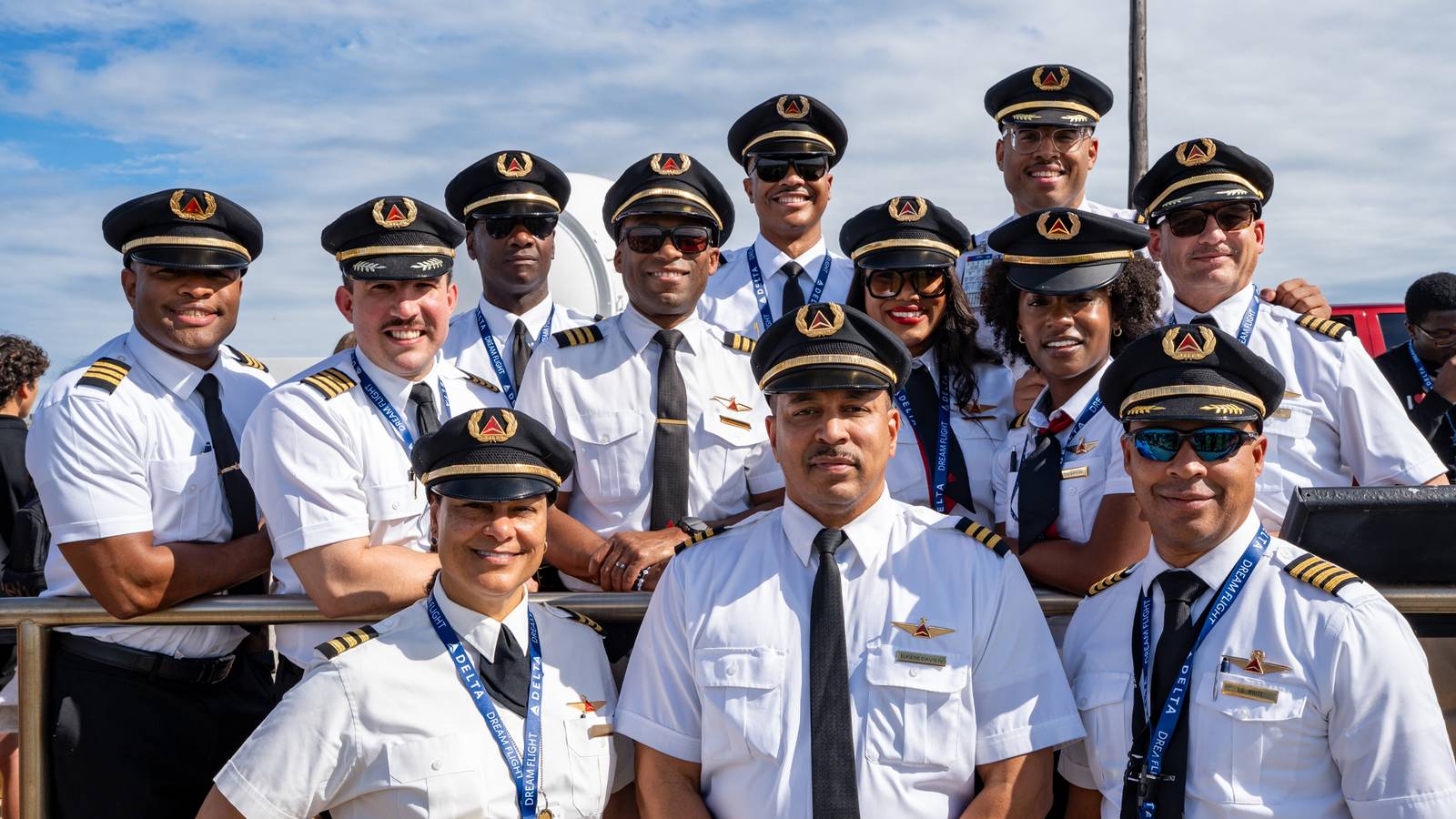
Identical Pay? The Real Salary Figures Of American, Delta & United Airlines' Widebody Captains
Full Article
Original Source
Read the full article at Simpleflying →KhanList aggregates and links to publicly available news content. We do not host full articles from third-party sources. Always verify important information with original sources.