
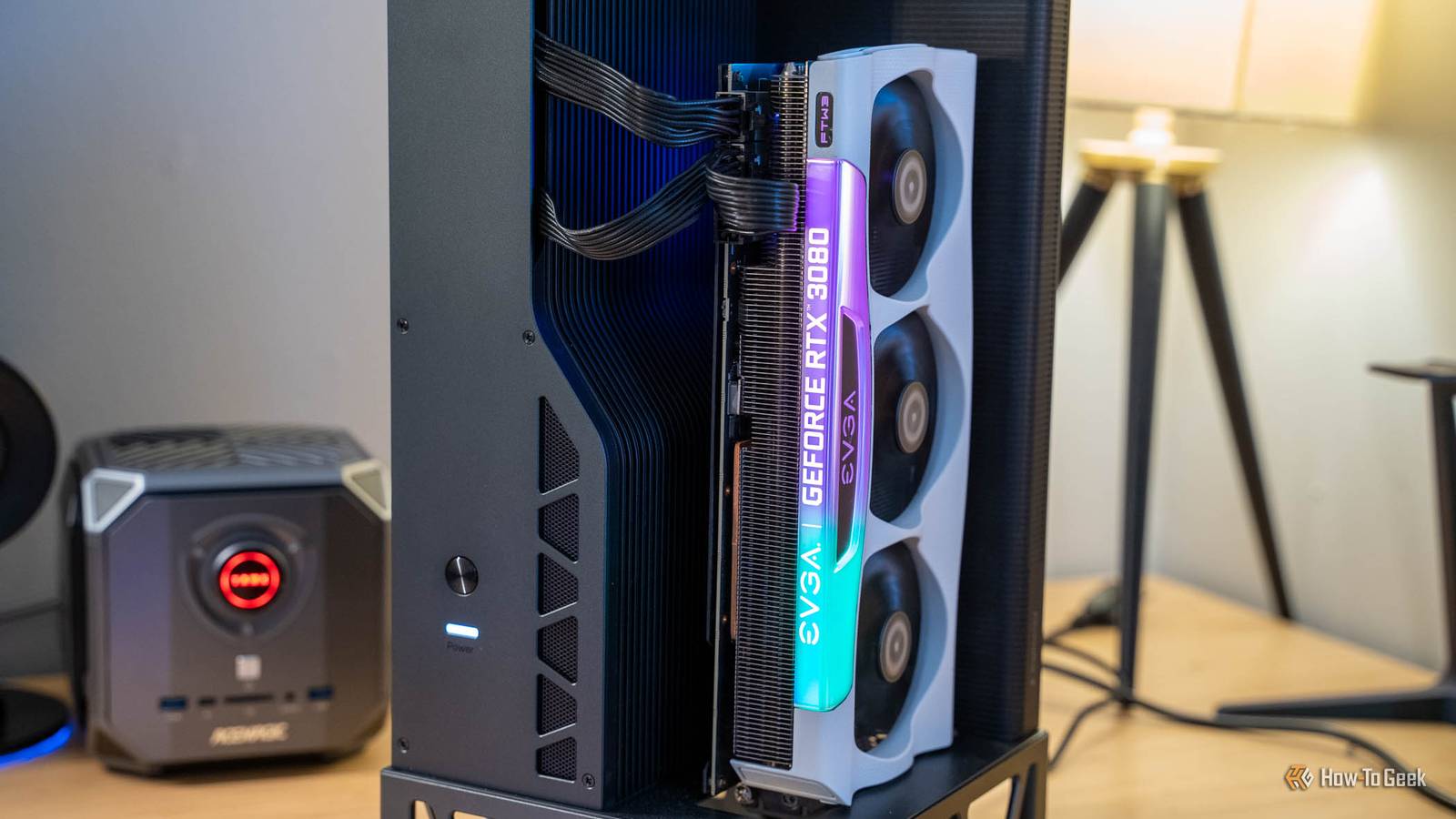
Published Nov 6, 2026, 5:30 PM EST Monica J. White is a journalist with over a decade of experience in covering technology. She built her first PC nearly 20 years ago, and she has since built and tested dozens of PCs. PC hardware is her main beat, and graphics cards and the GPU market at large are her main area of interest, but she has written thousands of articles covering everything related to PCs, laptops, handhelds, and peripherals. From GPUs and CPUs to headsets and software, Monica's always willing to geek out over all things related to computing. Outside of her work with How-To Geek, Monica contributes to TechRadar, PC Gamer, Tom's Guide, Laptop Mag, SlashGear, Whop, and Digital Trends, among others. Her ultimate goal is to make PC gaming and computing approachable and fun to any audience. Monica spends a lot of time elbow-deep in her PC case, as she's always making upgrades, testing something, or plotting out her next build. She's the go-to tech support person in her immediate circle, so she's never out of things to do. Whenever she has spare time, you'll find her gaming until the early hours and hanging out with her dog. Thanks, RAM shortage. GPU prices are now worse than I can ever remember them being, and recent rumors just made them even worse. With insiders reporting that Nvidia is done producing the RTX 5090, the RTX 5080 just became a much more desirable option than before. Its price skyrocketed to the point of no return. You can either shell out $2,000-$2,900+ on the RTX 5080 or aim for lower performance brackets. And the worst part is, there's no way around it. The RTX 5080 has become a $2,000+ GPU I refuse to accept that GPUs are just about my favorite thing about the entire PC hardware market. I test them, I follow leaks, I'm hyped for launches, and when they happen, I cover those launches. That's been the case for years. But in the last few months, there's just not been a lot to talk about. Checking the prices of GPUs is an ever-so-disappointing experience, all thanks to the ongoing RAM-pocalypse. We've all grown used to the miserable state of things and accepted that we may have to turn to tricks like Lossless Scaling to squeeze out final bits of performance from GPUs that are pushing retirement. We all thought it could hardly get any worse ... and then, the rumors started. Nvidia is reportedly ending production for the RTX 5090, and although that's not been confirmed, the GPU market responded as if it was. By buying out RTX 5080s, the next best thing. The RTX 5080, initially launched at $999, can no longer be found for under $2,000. Some cards are almost at $3,000. A high-end GPU, but nowhere near the top, now costs more than the beastly RTX 5090 did at launch. I hate it here. The RTX 5090 is practically gone, and that only makes it worse Rumors of discontinued production aren't helping matters The RTX 5090 was supposed to be Nvidia's $1,999 flagship, but in all honesty, that price tag hardly ever materialized. The GPU was overpriced at launch, of course. (Arguably, the MSRP made it overpriced from the get-go, but that's a whole different debate I'm not going to get into.) Launch prices are always higher, but the RTX 5090 hit the likes of $3,000 to $4,000 all too easily around that time. And then, the prices normalized a tiny bit, although I was still warning people against buying the RTX 5090. Rightfully so, because at times, the RTX 5090 peaked at close to $6,000. Now? Finding one for under $7,000 seems impossible. Some models creep close to $1,000. To make matters worse, the rumors of Nvidia redirecting all of its GB202 chips toward more professional and AI products are only raising the prices for both the 5090 and the 5080. Nvidia hasn't confirmed whether this is true, so we don't know whether the RTX 5090 is indeed no longer in production. But a report from PC Gamer has me worried: Apparently, at least one Nvidia board partner reportedly can't even order the GPU and memory packages needed to manufacture new RTX 5090 cards. If true, that's absolutely grim. So, here we are, stuck with immensely expensive GPUs we can scarcely even buy. But is there any solution? AMD is the obvious alternative, but there's a problem It's not an apples-to-apples comparison Naturally, the only solution to this particular problem is to shop AMD or drop your expectations down to RTX 5070 Ti level (which is also way overpriced). In a way, both of those solutions are one and the same, as AMD's flagship RX 9070 XT can just about rival the RTX 5070 Ti. But none of those can beat the RTX 5080, of course. So it's not a full-on fix to this problem; it's a workaround at best. With that said, AMD does have some excellent GPUs. The RX 9070 XT is fantastic, and although it sells for far above its $599 launch price, it's still the only graphics card worth buying, with prices closer to the $900-$1,000 range than the RTX 5070 Ti, which now sells for $1,500-$1,700 and up. AMD brings us some of the same benefits of the 5080: You get 16GB VRAM, great 1440p performance, and perfectly respectable 4K gaming capabilities. But can it replace the RTX 5080? Unfortunately not. AMD doesn't have a direct competitor to either the RTX 5090 or the RTX 5080 in this generation, so we're stuck with Nvidia. Nvidia knows some of us can't easily switch CUDA, ray tracing, and DLSS make leaving GeForce harder than it sounds For some, giving up Nvidia is no easy feat, and I'm not just talking about Team Green bias here. Because of that, and the lack of a real competitor at the high-end, Nvidia knows full-well that it's got us beat. I'd happily recommend AMD to most people right now, but if you want the best ray tracing performance, DLSS 5 with its AI-slop glory, and MFG, not to mention access to Nvidia's CUDA ecosystem, none of that is going to cut it. For people who work with local AI, 3D rendering, or other GPU-heavy applications, switching to AMD can mean sacrificing performance, software capability, or features they've grown accustomed to. So, in the end, the real choice is buying Nvidia or accepting a performance drop if you're one of those people. The entire GPU market is getting worse, and waiting might not help RAM shortages combined with wild demand for AI GPUs aren't magically going to fix themselves. Some analysts now pin the end of the RAM shortage closer to 2030 than to 2028. We're in for a long ride here, folks. So, what can I say? Buy that $2,000 RTX 5080 if you're desperate. It probably won't get better, although there are rumors of a 24GB version somewhere on the horizon, but I'm not sure how much I believe in the existence of Nvidia's RTX 50 Super refresh at this point. I'm starting to feel like this just might be it until the RTX 60-series, and in that case, I can't even hope for the prices to drop anymore.
I'd sooner set $2,000 on fire than buy an RTX 5080, but Nvidia knows I don't have anywhere else to go
Full Article
Original Source
Read the full article at Howtogeek →KhanList aggregates and links to publicly available news content. We do not host full articles from third-party sources. Always verify important information with original sources.