
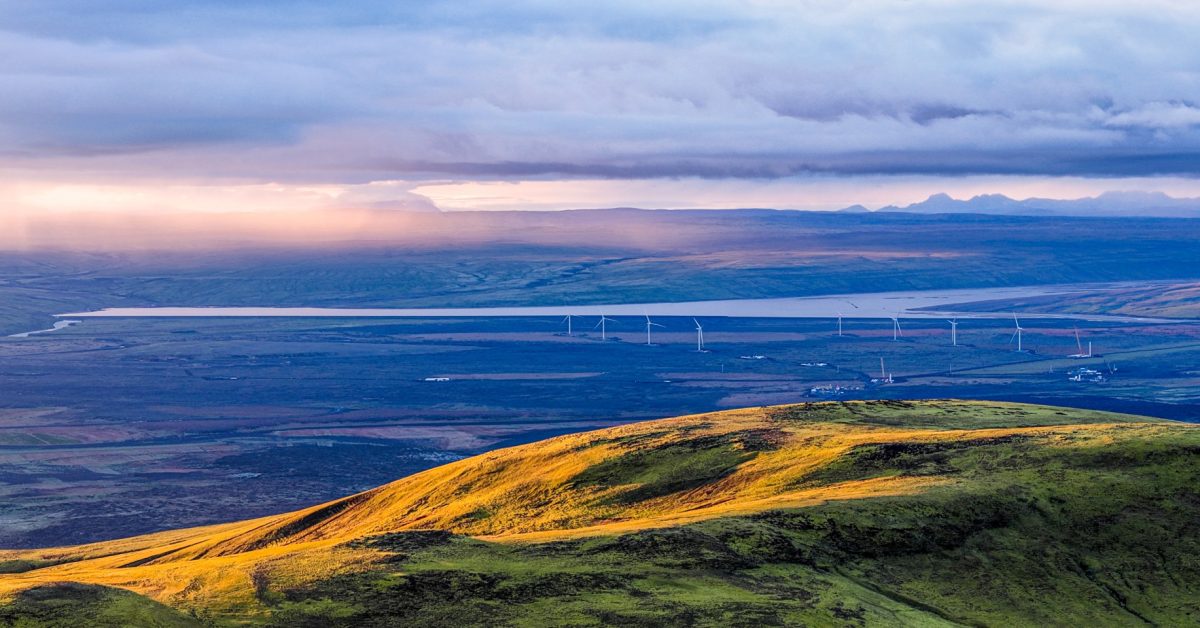
Photographer Hreinn Hjartarson Iceland’s first utility-scale wind farm comes with a useful perk: When the wind picks up, its hydropower reservoirs can save water for later. Vaðölduver Wind Farm plugs straight into the existing Búrfell hydropower infrastructure, sharing 220 kV transmission lines, substations, and access roads. And Iceland’s windiest months coincide with the time of year when less water flows into its reservoirs. Landsvirkjun, Iceland’s national power company, officially commissioned Vaðölduver on September 15, 2026. The first 14 turbines are online; another 14 will be installed in a second phase, and the entire wind farm is expected to be operating by the end of 2027. Once complete, Vaðölduver will have 120 megawatts (MW) of capacity. When I met with the folks at Landsvirkjun in Reykjavik last month, they told me that’s enough to power the equivalent of 90,000 Icelandic households. Vaðalda’s electricity feeds into the grid and is sold through power purchase agreements. More wind, less pressure on water Photographer Hreinn Hjartarson Vaðölduver sits on a lava-and-sand plain east of the Þjórsá River, south of Sultartangi Dam. Landsvirkjun already operates seven hydropower stations in the surrounding Þjórsá and Tungnaá region. The wind farm was sited in this region of Iceland because the seasons line up nicely. The winds are strongest in winter, when inflows into hydropower reservoirs can be low. In summer, wind speeds tend to drop, but glacial melt increases water availability for the hydropower system. When the wind turbines are generating plenty of electricity, Landsvirkjun can ease off hydropower and leave more water in its reservoirs. When the wind drops, hydropower can pick up more of the demand. That gives the utility more control over when it uses its stored water and helps that water go further. Plenty of wind closer to the ground German wind turbine maker Enercon manufactured Vaðölduver’s turbines. The project also includes a service and maintenance agreement with Enercon. Landsvirkjun had a decade of experience operating pilot wind turbines before building Vaðölduver. One big thing they learned: They didn’t need tall towers to find plenty of wind. There’s little vegetation or other surface obstructions across this unique, exposed landscape. That allows the turbines to capture productive winds closer to the ground than they could at a more wooded or sheltered location. “Lower” is relative, of course. The turbines still reach 150 meters (492 feet) at their highest blade tip. The wind farm covers 17.1 square kilometers (6.6 square miles). Twenty-five turbines are rated at 4.26 MW each, and the remaining three at 4.5 MW. Landsvirkjun’s presentation puts annual generation at 440 GWh and lists a P50 net efficiency figure of 43%, which is considered strong for onshore wind. A third pillar for Iceland’s power supply The ability to tap into existing infrastructure was a major factor in Landsvirkjun’s site selection. Where a wind farm goes affects its cost, its environmental footprint, and the people who live nearby. Landsvirkjun also identifies active engagement with communities and other stakeholders as essential to building wind projects. At Vaðölduver, the immediate task is to finish the remaining 14 turbines while the first phase completes its trial runs. The company sees wind as a potential third pillar of Iceland’s electricity supply alongside hydropower and geothermal. Vaðölduver shows how those resources can work together, with wind adding generation while helping conserve stored water. Electrek’s Take Iceland is a world leader in clean energy. It generates nearly 100% of its electricity from renewable sources, combining hydropower fueled by glacial runoff and rivers (around 70%) and geothermal energy (around 30%). Over 90% of Icelandic households use direct geothermal hot water for space heating and hot water, while the remaining homes use renewable electricity. But it’s got the same grid capacity challenges as every other country. Adding wind – and anything else that uses power – means paying close attention to what the grid can handle. Iceland has an isolated transmission system, so maintaining stability and ensuring sufficient capacity are increasingly important as the country develops more projects. While in Reykjavik, I met with the Minister of the Environment, Energy and Climate, Jóhann Páll Jóhannsson, who told me that the Icelandic grid’s capacity is expected to grow from 20 TWh to 24-25 TWh within a decade. Jóhannsson also said that he is pro-data center and that investors are keen to establish more of them in the country. When I asked Jóhannsson and his team, as well as the teams at Landsvirkjun and publicly owned ON Power, Iceland’s second-largest electricity generator and largest EV charger network, about grid expansion plans to handle that pipeline, they all said that legislative reforms were being passed to speed up energy permitting processes. There is also financing in place to grow the grid. The physical transmission network is being expanded, but the process is slow because NIMBYism is creating bottlenecks. In learning about new and completed Icelandic power projects during my visit, it was apparent that the companies in the power and geothermal heat sector regularly collaborate on projects – everyone brings their expertise to the table and works for the common good (yes, really). But what was striking in discussions about grid expansion was that there seemed to be no plans to pitch in with the Icelandic transmission system operator (TSO), Landsnet hf. It seemed that the plan was to let the TSO come up with the solutions on its own. At most, Jóhannsson’s team said its legislative reform “opened the door” to possible grid innovations. When I asked the Landsvirkjun team whether they were considering working with the TSO on distributed energy resource (DER) projects like virtual power plants and onsite battery storage for its heavy-industry clients, which make up 80% of its business, they said they hadn’t considered it. Iceland has earned its reputation as a clean energy leader. Bringing that same collaborative and creative approach to expanding its grid would help it keep setting an example for the rest of the world. Read more: Renewables to reach 40% of total generating capacity, beat gas within a year – EIA If you’ve ever considered going solar, make it easy by finding a trusted, reliable solar installer near you that offers competitive pricing by checking out EnergySage. It has hundreds of pre-vetted solar installers competing for your business, ensuring you get high-quality solutions and save 20-30% compared to going it alone. Plus, it’s free to use, and you won’t get sales calls until you select an installer and share your phone number with them. Your personalized solar quotes are easy to compare online, and you’ll get access to unbiased Energy Advisors to help you every step of the way. Get started here. FTC: We use income earning auto affiliate links. More.
Iceland’s first wind farm comes with a water-saving bonus
Full Article
Original Source
Read the full article at Electrek →KhanList aggregates and links to publicly available news content. We do not host full articles from third-party sources. Always verify important information with original sources.