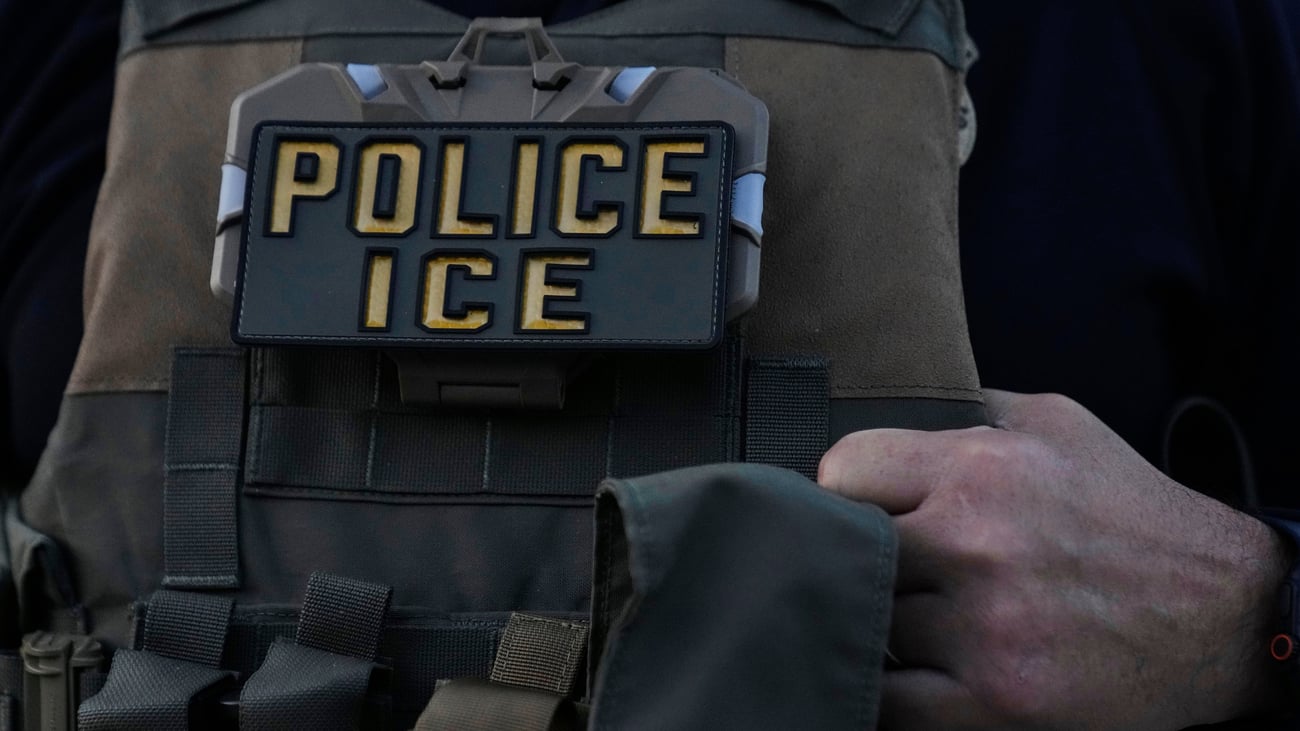
WASHINGTON (CN) — The Trump administration has spent tens of millions of dollars building out the ability of immigration enforcement agents to collect DNA samples from detainees, a program that has so far collected genetic records from millions of people and deposited them in a federal criminal database.But experts say the effort, which represents legal territory so far uncharted by the courts, raises serious constitutional questions — and some worry it could serve as a preview to a “genetic panopticon” broadening government surveillance powers.U.S. Immigration and Customs Enforcement agents have for years collected DNA samples from people detained as part of their operations. But under the second Trump administration, the number of genetic records taken by federal agents has skyrocketed. According to a July report published by the Georgetown University Law School’s Center on Privacy and Technology, ICE agents captured the DNA of as many as 900,000 people last year.Those genetic records, the report said, are entered into a sweeping criminal justice database known as the Combined DNA Index System, or CODIS. The repository, run by the FBI, contains genetic profiles contributed by federal, state and local law enforcement.As of December, more than 3 million entries in CODIS were indexed as “detainee” profiles. And it’s not just adults who are subject to DNA collection by immigration authorities. Federal agents took genetic samples from roughly 133,000 children as young as four years old — as well as from hundreds of elderly people, including a 96-year-old.Media reports have also pointed to examples of immigration agents collecting DNA samples from bystanders during immigration operations, including advocates and legal observers.The Homeland Security Department, meanwhile, is further expanding its ability to collect DNA samples from immigration detainees. Government contracting documents published Monday show ICE has spent an additional $10.1 million on “rapid DNA tests,” equipment and services it says will be used during immigration enforcement operations to “verify biological relatives.”A spokesperson for the agency did not return repeated requests for comment.The use of DNA sampling on immigration detainees, many of whom are charged with civil offenses, raises constitutional questions — namely with respect to the Fourth Amendment, which shields against warrantless searches and other unreasonable seizures of property by the federal government.But while experts told Courthouse News that there are legal guardrails on the collection of genetic information for law enforcement purposes, the water is murkier when it comes to immigration enforcement, where federal courts have yet to weigh in on whether ICE’s mass DNA sampling violates the Constitution.Existing judicial precedent allows police to collect genetic samples from a suspect if they’ve been arrested with probable cause that they committed a serious crime. That guideline stems from the Supreme Court’s 2013 ruling in the case Maryland v. King, in which the justices held that a cheek-swab DNA test does not violate the Fourth Amendment’s prohibition on unreasonable search and seizure.But that decision wasn’t made in the context of immigration enforcement said Ric Simmons, a legal scholar and professor at The Ohio State University’s Moritz College of Law.“The issue here is that most of these individuals did not commit any kind of serious offense,” Simmons said in an interview. “There’s no probable cause to commit a crime. They’re just being arrested for immigration purposes, and there’s no court case that authorizes this kind of search for any kind of civil violation like this.”That might make it seem like ICE’s effort to collect genetic samples of people detained for civil immigration offenses is a clear Fourth Amendment violation. But a history of legal leeway when it comes to immigration enforcement could complicate things, Simmons pointed out.“There’s a bit of immigration exceptionalism,” he said. “They could argue that this isn’t used for law enforcement — it’s a special need beyond law enforcement, so it has to be a reasonable search.”The Trump administration, Simmons argued, could claim their DNA swabs don’t violate the Constitution because immigration detainees are already in custody and have a “large space” in their privacy rights, and that the collection is being used for “limited purposes” such as locating other people who have committed crimes.But no court has ruled yet on whether it’s legal for immigration agents to undertake such a sweeping genetic collection operation on people they’ve detained.Missy Owen, president of the National Association of Criminal Defense Lawyers, said the lack of case law on the issue should not detract from what she positioned as a “complete dismantling” of Fourth Amendment rights.“When we start doing things as law enforcement that have never been done before, the idea that there’s no jurisprudence on it either way doesn’t make it OK,” she said.Owen said while it was true that the judiciary has yet to weigh in on DNA collection for immigration enforcement purposes, the Constitution’s protections against warrantless searches still apply.“The Fourth Amendment was written to stop general warrants, and the idea that the government can search anyone, anywhere, just in case they find a crime,” she said. “By swabbing the cheeks of noncitizens or peaceful observers, ICE is resurrecting that tyranny of general warrants.”There’s also little recourse for immigration detainees who have their genetic information taken by ICE agents. Simmons said citizens can petition to have illegal Fourth Amendment searches ruled inadmissible in future criminal cases — unlike people facing deportation.“Even if they did this illegally, even if a court says you’re not allowed to take these swabs, they could still use the evidence they got in any kind of deportation proceeding.”And detainees can’t sue immigration officers for infringing their rights, Simmons said. While migrants could “theoretically” bring a class action suit against DNA collection, such an effort would have little effect on genetic records already collected by immigration authorities.Looming even larger for legal experts, however, is CODIS, and the government’s move to ingest millions of detainees’ genetic profiles into a universal criminal database. Owen said the repository “crossed a terrifying line” for the future of government surveillance.“This is the birth of a genetic panopticon,” she said. “They’re taking the most intimate data a human being possesses — their DNA — and they’re dumping it into an insecure permanent surveillance database on the off chance that you might commit a crime years from now.”Owen pushed back on any potential arguments from ICE that their collection of genetic records would be used to identify the relatives of detainees or other criminals. “This isn’t about law enforcement,” she said. “What they are creating is permanent biometric surveillance on a targeted community.”Simmons, for his part, said CODIS is “a dream device” for the government and that it could serve as a good crime-fighting tool, but that ICE appeared to be using existing immigration law and “weakened” constitutional protections on Fourth Amendment searches to build out the database as much as possible.He also questioned why the Trump administration had taken such a wide swath of genetic samples. “Why are they taking DNA swabs from four-year-old children? I’ve never heard of anything like this before. They’re taking DNA swabs from minors.”And both Simmons and Owen warned about the knock-on effects of such broad use of DNA sampling by immigration authorities.“It’s not just people who are being processed through an ICE facility or ICE administrative proceeding,” said Owen. “It’s being extended beyond that to people who go out and protest, people who watch, people who record video. It’s what our country is founded on — those First Amendment protections of being able to go out and do those things.”Simmons pointed to the minority dissent in Maryland v. King, in which the late Justice Antonin Scalia argued the Supreme Court had not set forth a clear definition of a “serious crime” that would warrant a Fourth Amendment DNA swab. The ruling doesn’t sit on “strong doctrinal ground,” Simmons added.“A lot of people have thought that the next logical step is for the government to start doing it to everybody, and for the courts to allow that to happen,” he said. “If it becomes normalized to do this with immigrants who haven’t committed crimes at all, then we might see things happening for any kind of arrest whatsoever.”ICE officials have said the agency is collecting DNA information from detainees as part of an effort to build a broader national database. According to a 2025 email published as part of the Georgetown Law report, a top ICE legal adviser said the “primary purpose” of the collection program was to put together a repository “for solving crimes.”Subscribe to our free newslettersOur weekly newsletter Closing Arguments offers the latest about ongoing trials, major litigation and rulings in courthouses around the U.S. and the world, while the monthly Under the Lights dishes the legal dirt from Hollywood, sports, Big Tech and the arts.Additional Reads
ICE agents are building a DNA database. What about the Constitution?
Full Article
Original Source
Read the full article at Courthousenews →KhanList aggregates and links to publicly available news content. We do not host full articles from third-party sources. Always verify important information with original sources.