
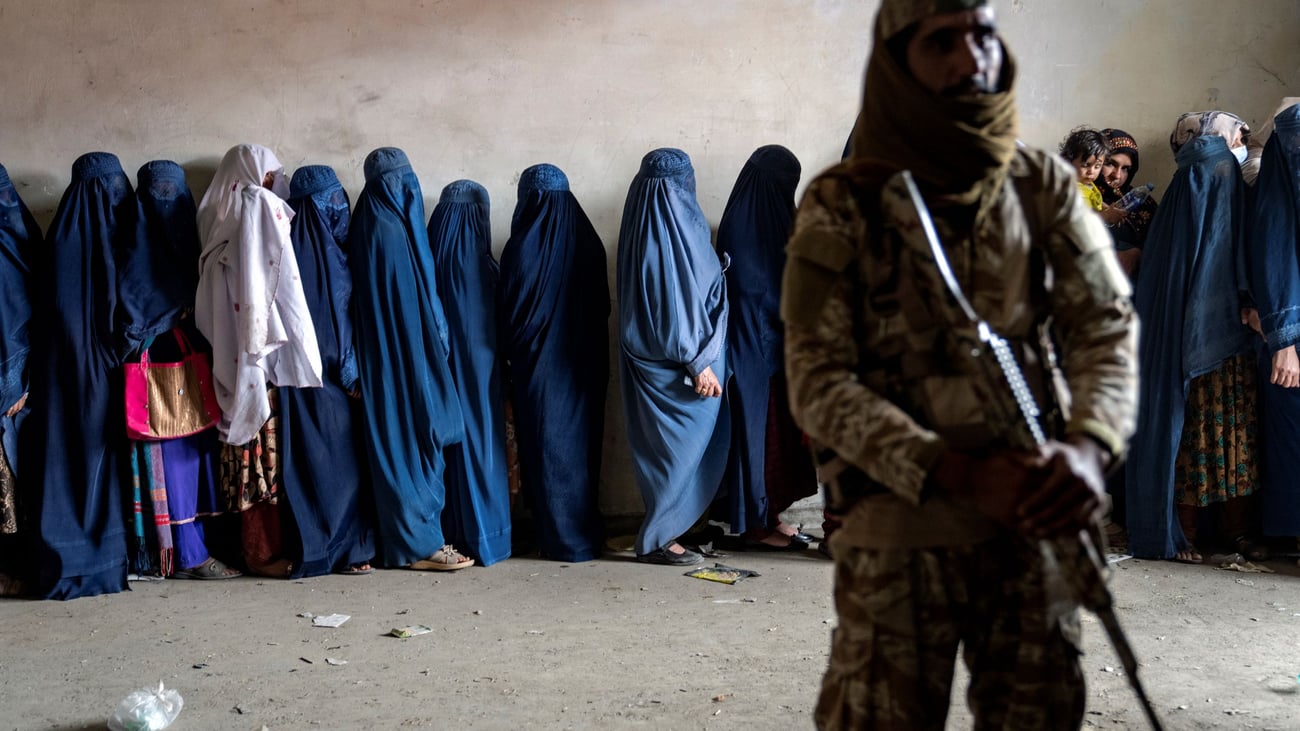
Newly unsealed warrants detail how school bans, mandatory male escorts and punishment for supporting women underpin cases against four Afghan officials.THE HAGUE, Netherlands (CN) — Four Taliban officials accused of shutting women out of classrooms, jobs and independent public life are named in arrest warrants newly unsealed by the International Criminal Court Monday.The ICC published redacted warrants against Taliban supreme leader Haibatullah Akhundzada, chief justice Abdul Hakim Haqqani, education minister Habibullah Agha and higher education minister Neda Mohammad Nadim. Prosecutors had sought their arrests for persecution as a crime against humanity.The first two warrants were announced in July 2025, but their contents remained sealed. Agha’s and Nadim’s were issued secretly that September. Monday’s ruling disclosed existing warrants, with judges saying publication could help prevent further crimes, inform victims and encourage international cooperation.Addressing the previously announced warrants, the court said, “the chamber considers that these warrants of arrest may be made public without undue impact on the prosecution’s ongoing investigations and the security of the witnesses and victims.”Judges found reasonable grounds to believe all four men ordered or encouraged persecution. Much of the evidence linking each suspect to specific acts remains blacked out. These were findings supporting arrest, not convictions.After regaining power in August 2021, two decades after its military defeat, the Taliban turned its ideology into government policy through decrees circulated nationwide, the court wrote in the warrants.Girls were barred from education beyond sixth grade, female secondary school teachers were replaced with men, and university access was restricted. Women needed male guardians to travel more than about 45 miles and to visit certain markets, shops and health facilities. Judges said the requirements effectively made escorts necessary in daily life.Beauty salons were closed, employment restricted and women’s voices suppressed in public. By August, the United Nations estimated that 2.4 million girls were excluded from secondary education.The warrants are for men shaping Taliban ideology to those overseeing education. Akhundzada held ultimate authority as the movement’s leader and chief ideologue. Haqqani, a veteran judicial official and former chief peace negotiator in Qatar, belonged to his inner circle.Agha, a former Kandahar court official appointed education minister in September 2022, was linked specifically to girls’ loss of education. Nadim, a former provincial governor appointed higher education minister the following month, was linked to women’s loss of education. Their warrants covered suspected crimes through at least March 6, 2025, while Akhundzada’s and Haqqani’s extended through at least Jan. 20, 2025.Judges read gender as more than biology. They wrote: “It requires acknowledging the socially constructed roles, behaviors, expectations and hierarchies traditionally associated with individuals on the basis of their sex.” They reasoned that discriminatory norms could constitute persecution when they severely violated fundamental rights, even if justified through religion or tradition.People whose sexuality or gender identity defied Taliban expectations were also targeted, judges found. The warrants connected gender persecution to murder, imprisonment, torture, sexual violence and enforced disappearance.Even supporting women could invite punishment. Judges described arrests of people distributing free books or criticizing education restrictions, along with vehicles driven into women’s rights protests. They classified persecution of perceived supporters as political because the Taliban treated them as opponents.The broader Afghanistan investigation was authorized in 2020 and resumed in 2022 after a suspension. The court prosecutes atrocities when national authorities cannot or will not genuinely act.Based in The Hague, Netherlands, the ICC puts individuals, including national leaders, in the dock over atrocities such as war crimes and genocide.Afghanistan joined its founding treaty in 2003, giving the court authority over crimes committed there. The United States never joined, but American personnel also fell within the Afghanistan investigation’s reach. Washington has hit court officials with asset freezes and U.S. entry bans over investigations into American personnel in Afghanistan and Israeli leaders over Gaza.Prosecutors have until Oct. 12 to submit public versions of five related filings or request their release. Appealing disclosure requires judicial permission and would not automatically suspend publication. The warrants remain effective, but countries must execute them: The court has no police force to bring the men in.Courthouse News reporter Eunseo Hong is based in the Netherlands.Subscribe to our free newslettersOur weekly newsletter Closing Arguments offers the latest about ongoing trials, major litigation and rulings in courthouses around the U.S. and the world, while the monthly Under the Lights dishes the legal dirt from Hollywood, sports, Big Tech and the arts.Additional Reads
ICC hits more Taliban officials with arrest warrants over persecution of women
Full Article
Original Source
Read the full article at Courthousenews →KhanList aggregates and links to publicly available news content. We do not host full articles from third-party sources. Always verify important information with original sources.