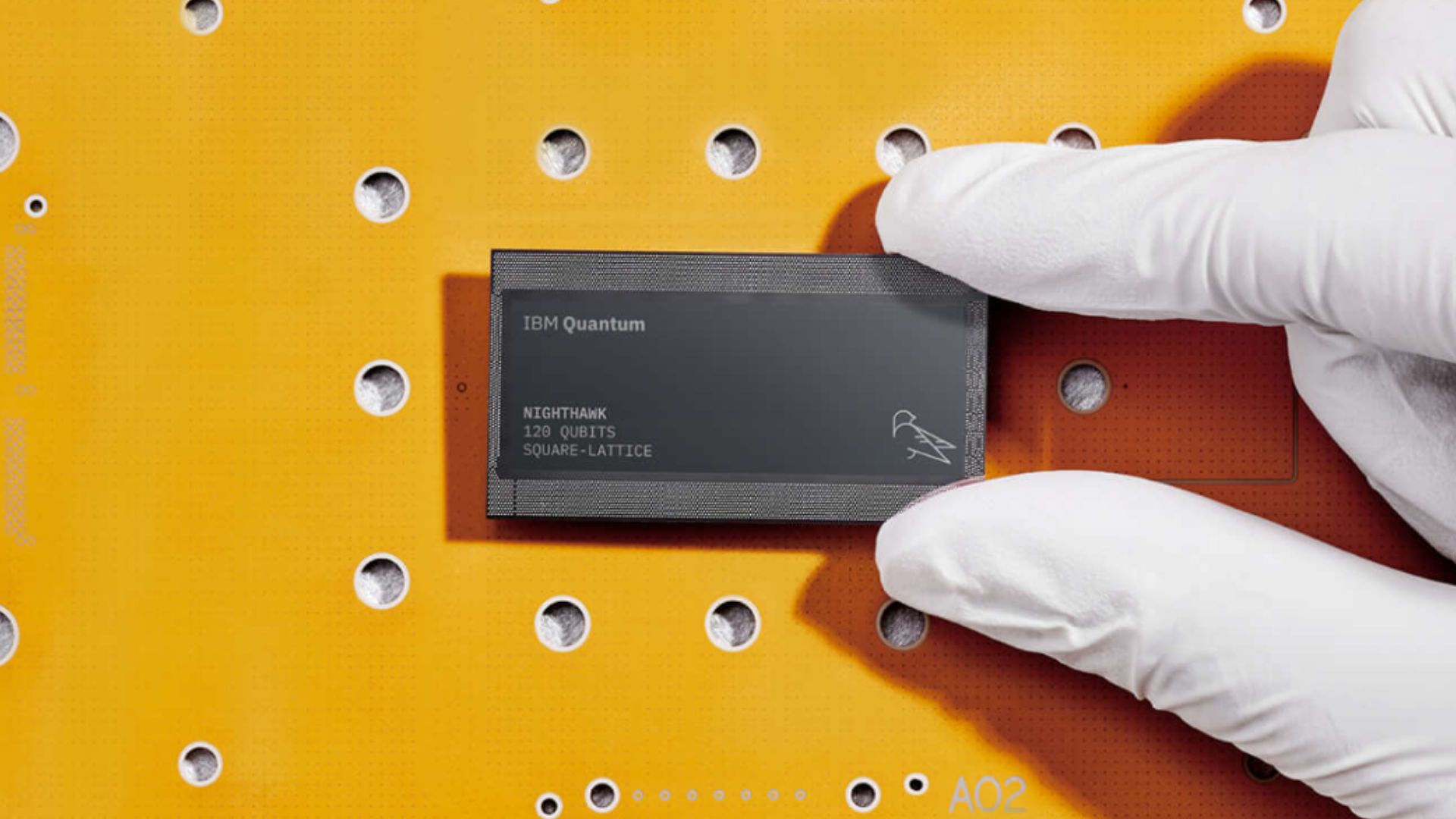
QC Ware, a California-based quantum computing software company, has combined conventional computing with a quantum processor to tackle a complex molecular chemistry calculation, demonstrating how the two approaches can work together in a single workflow. The firm used its Promethium platform alongside IBM’s 156-qubit Heron superconducting quantum processor. The demonstration calculated the electrostatic interaction energy of nitric oxide reductase, a chemically complex metalloenzyme system. The workflow combined GPU-accelerated molecular modeling and classical chemistry calculations with measurements performed on IBM’s quantum hardware. Electrostatic interaction energy is an important molecular property that can help researchers understand interactions between molecules, with applications in drug discovery, catalysis and materials science. QC Ware said the demonstration shows how quantum hardware can be added to existing computational chemistry workflows rather than replacing conventional computing altogether. However, the company stressed that the demonstration is not currently a fully integrated Promethium product capability. Quantum joins classical chemistry The calculation focused on nitric oxide reductase, making it a useful test case for advanced computational methods because of the complexity of its metal-containing molecular structure. Instead of assigning the entire calculation to the quantum processor, QC Ware split the workflow between classical and quantum systems. GPUs handled molecular modeling and other conventional chemistry calculations, while the IBM processor was used to perform quantum measurements. “This demonstration shows how classical and quantum computing can be combined to address meaningful computational chemistry problems,” said Dr. Kin-Joe Sham, Co-Founder and COO at QC Ware. “We believe Promethium delivers high-performance computational chemistry today while providing a foundation for exploring future hybrid workflows.” The approach reflects a growing effort to use quantum processors for specific parts of scientific calculations where they could eventually offer advantages, while relying on established computing hardware for the rest of the workload. For researchers, that could be more practical than waiting for quantum machines to handle entire scientific simulations. It also provides a way to test quantum hardware on real computational chemistry problems while existing GPU-based systems continue doing much of the work. Faster molecular modeling today QC Ware’s Promethium platform is designed to run quantum chemistry calculations on GPUs, allowing researchers to model larger molecular systems and more compounds. The company says selected workloads can run up to 20 times faster than leading conventional platforms, reducing some calculations from weeks to hours. The company sees that performance as a foundation for more advanced hybrid workflows that combine GPU computing, classical chemistry techniques and quantum processors. The latest demonstration also builds on QC Ware’s previous research into hybrid quantum-classical chemistry. Its broader applications include drug discovery, catalysis and materials science, where molecular-level calculations can help researchers evaluate potential compounds and materials before moving to physical experiments. The demonstration does not establish that the quantum processor delivered a speedup over conventional computing. Instead, it shows that a quantum processor can be incorporated into a computational chemistry workflow alongside established hardware and software.That distinction is important because current quantum systems remain limited in size and capability. QC Ware’s approach is therefore focused on combining available technologies rather than treating quantum hardware as a standalone replacement for classical computing.Recommended ArticlesGet the latest in engineering, tech, space & science - delivered daily to your inbox.With over a decade-long career in journalism, Neetika Walter has worked with The Economic Times, ANI, and Hindustan Times, covering politics, business, technology, and the clean energy sector. Passionate about contemporary culture, books, poetry, and storytelling, she brings depth and insight to her writing. When she isn’t chasing stories, she’s likely lost in a book or enjoying the company of her dogs.
IBM’s 156-qubit processor joins GPUs to calculate electrostatic energy in an enzyme
Full Article
Original Source
Read the full article at Interestingengineering →KhanList aggregates and links to publicly available news content. We do not host full articles from third-party sources. Always verify important information with original sources.