
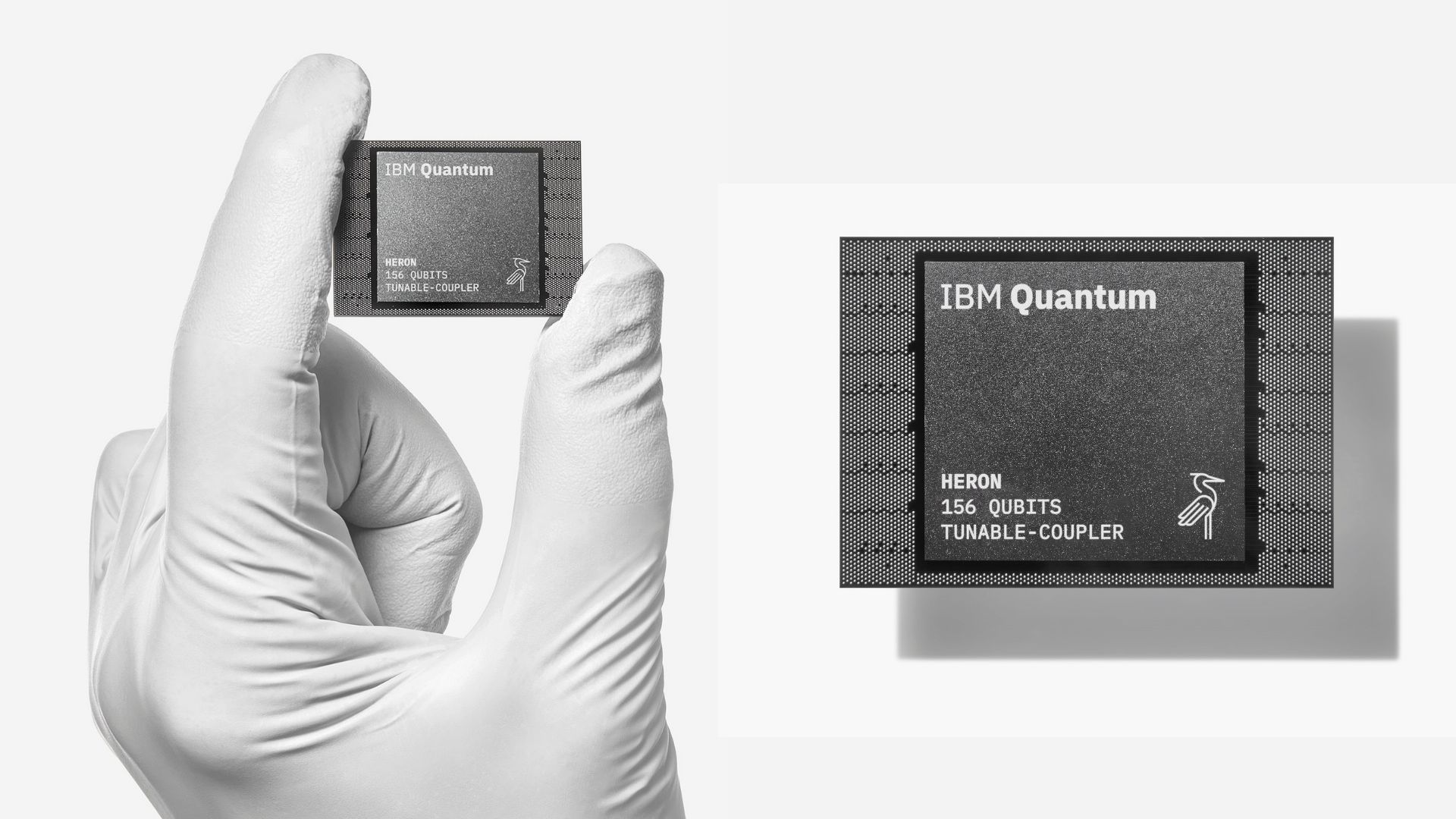
Researchers have demonstrated how a quantum computer can repeatedly measure and reset its qubits while calculations continue, helping tame chaotic behavior inside the processor. The experiment used up to 100 qubits and demonstrated a key technique for developing more reliable quantum machines. The team included scientists from Rutgers University, IBM, and several collaborating institutions. Their findings, published in Nature Physics, also revealed a sharp transition between chaotic and controlled quantum behavior. Resetting qubits to restore order Quantum computers process information differently from conventional machines. Their qubits can occupy superpositions of states, giving them capabilities that classical bits cannot directly replicate. However, these fragile states can deteriorate through interactions with the environment and imperfections in hardware. Errors can accumulate during calculations, eventually making results unreliable. Researchers must develop systems that detect and correct these errors while computations continue. This approach, known as quantum error correction, forms the foundation of fault-tolerant quantum computing. The team tested its approach using an IBM Quantum Heron processor with 156 qubits. Researchers selected a connected chain containing up to 100 qubits for the experiment. They alternated between two competing processes. One scrambled information across neighboring qubits, spreading disorder through the system. The other repeatedly measured individual qubits and reset them toward a predetermined state. The experiment involved nearly 5,000 two-qubit operations alongside almost 5,000 measurement-and-reset cycles. This allowed researchers to investigate how repeated interventions could counteract the scrambling process. Sharp shift from chaos The researchers adjusted how frequently each process occurred to determine which behavior dominated. When scrambling happened more frequently, the system remained chaotic. More frequent measurements and resets instead pushed it toward an orderly, controllable state. The most striking change occurred near a 50-50 balance between the two processes. A small adjustment in their relative frequency could trigger a dramatic shift across the system. Physicists call this phenomenon a phase transition. It describes a collective change in a system’s behavior, comparable to water freezing into ice. Justin Wilson, an associate professor of physics at Louisiana State University and a study coauthor, explained that random interventions could suppress otherwise unpredictable behavior. The researchers also found that the transition persisted in a quantum system, where its survival had remained uncertain. The findings matched theoretical predictions. The transition also became more clearly defined as researchers examined larger systems, suggesting the effect extended beyond small experimental circuits. Toward fault-tolerant computing Real-time feedback could help future quantum processors manage errors throughout extended calculations. Instead of performing a single correction, a fault-tolerant machine must repeat these operations many times without destroying the information it processes. IBM researcher Maika Takita said the experiment coordinated quantum operations, measurements, and resets thousands of times across a large system. She described this capability as an important step toward practical error correction. The team also tested systems larger than those it could simulate using conventional computers. That comparison strengthened confidence in the theoretical explanation. Researchers from the City College of New York, Iowa State University, Penn State, and other institutions also contributed to the work. The demonstration does not establish a fully fault-tolerant quantum computer. However, it shows that present-day hardware can repeatedly intervene in a quantum system while operations continue, bringing scalable quantum computing closer to a central engineering goal. Get the latest in engineering, tech, space & science - delivered daily to your inbox.Aamir is a seasoned tech journalist with experience at Exhibit Magazine, Republic World, and PR Newswire. With a deep love for all things tech and science, he has spent years decoding the latest innovations and exploring how they shape industries, lifestyles, and the future of humanity.
IBM’s 100-qubit chip advances self-correcting quantum computers with 5,000 operations
Full Article
Original Source
Read the full article at Interestingengineering →KhanList aggregates and links to publicly available news content. We do not host full articles from third-party sources. Always verify important information with original sources.