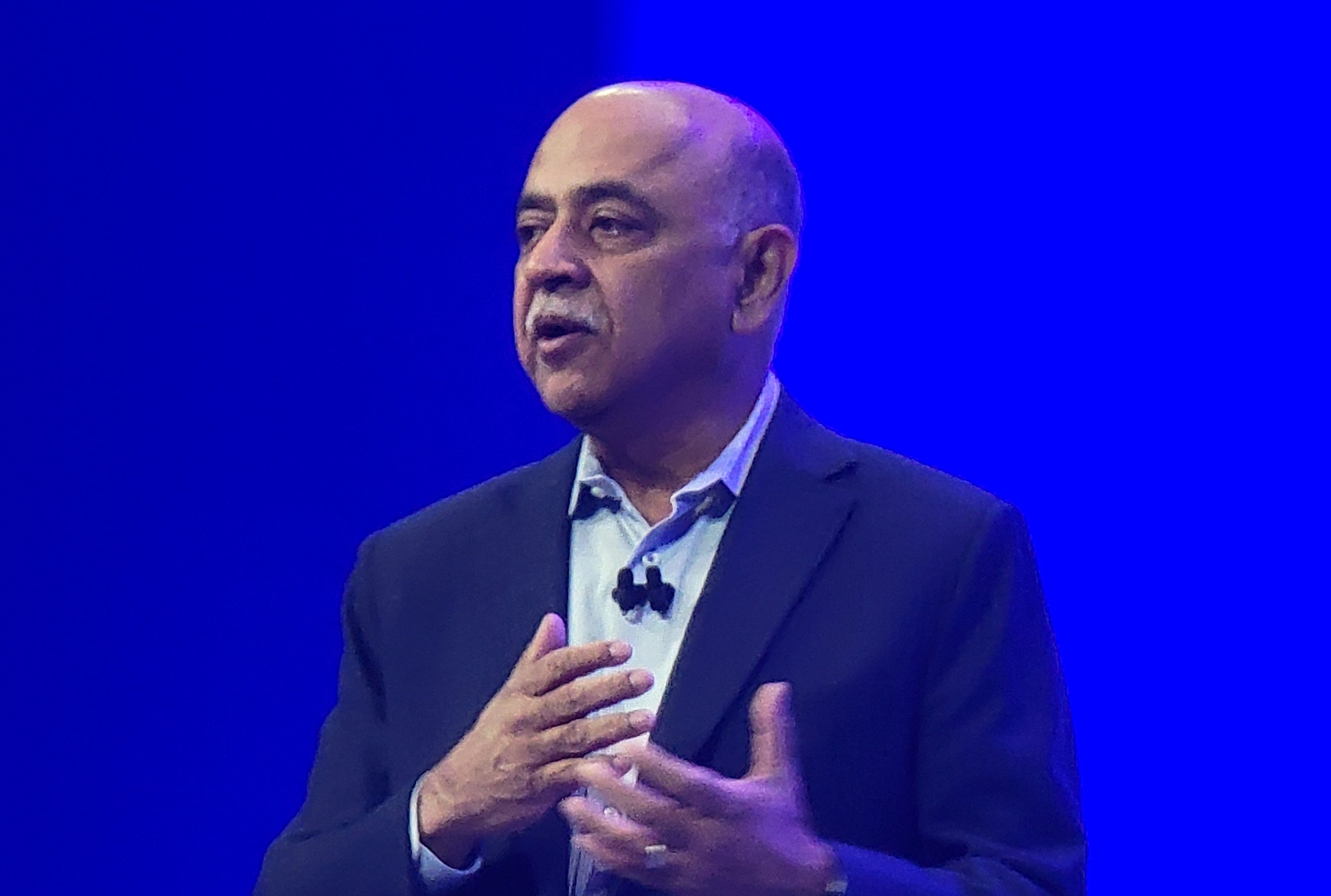
IBM cuts outlook as software and mainframe weakness weighs on results A week after shocking investors with a disappointing preliminary earnings forecast that missed estimates, IBM Corp. today reported financial results that missed estimates on both revenue and profit. The company also lowered its full-year revenue forecast, blaming customers’ shifting their spending on mainframes and software to artificial intelligence infrastructure. However, executives insisted the changes are only temporary and that the core mainframe market remains strong. The results confirmed weaknesses IBM disclosed last week, when Chief Executive Arvind Krishna (pictured) acknowledged that the company “faltered” in responding to an abrupt change in customer spending. IBM shares fell 25% following that warning, their biggest one-day decline in a century. The reversal was particularly striking in the wake of the company’s bullish comments three months ao after it exceeded revenue and earnings estimates in the first quarter, with software revenue growing 8% and infrastructure revenue rising 12% at constant currency. IBM now expects 2026 revenue to grow between 4% and 5% at constant currency, down from its previous forecast of more than 5%. Exchange rates are expected to bring actual growth closer to zero. It maintained its forecast that free cash flow will increase by about $1 billion this year. Revenue rose 1% from a year earlier, to $17.16 billion, below analysts’ consensus estimate of $17.58 billion. Adjusted earnings of $2.93 per share also missed the $2.97 consensus, while net income fell slightly to $2.17 billion. Investors appeared underwhelmed by IBM’s eplanation, sending shares three-quarters of a point lower in after-hours trading on top of a 2.25% drop earlier in the day. IBM shares, which stood at more than $306 on July 7, ended the day at $205.77. Flight to infrastructure IBM executives said many customers shifted capital budgets toward servers, storage and memory to secure scarce equipment before anticipated price increases. That caused what Krishna said were “tens of large transactions” to slip beyond the end of June. However, the CEO said about one-third of the delayed business had already closed in the first few weeks of the third quarter. “A lot of the demand is deferred, not destroyed,” Krishna said. Software revenue grew 5%, to $7.76 billion, led by 11% growth in hybrid cloud. Excluding acquisitions, software growth was flat. Transaction processing revenue dropped 9% at constant currency, reflecting delayed enterprise license agreements that typically bundle mainframe software with data and automation products. Data revenue grew 18% at constant currency, and sales of automation software increased 3%. IBM’s annual recurring software revenue rose 8%, to $24.6 billion. Infrastructure revenue dropped 7%, to $3.84 billion, as IBM Z mainframe sales plunged 42% against a difficult comparison with the year-earlier launch of the z17. IBM Chief Financial Officer James Kavanaugh told Reuters the “mainframe stack of hardware and transaction processing software impacted IBM’s growth by over five points in the quarter. We were only expecting about a point or two of an impact.” Distributed infrastructure revenue, including Power servers and storage, jumped 37% and accumulated a record backlog of nearly $500 million. Kavanaugh said the mainframe decline reflected purchasing cycles rather than customers abandoning the platform. Revenue from the first five quarters of the z17 cycle remains nearly 30% ahead of the comparable z16 period, he said. Mainframe resilience “We see no evidence of clients moving off the mainframe,” Kavanaugh said. In fact, he said mainframe customers continue to add capacity for AI, analytics and Linux workloads. Consulting revenue was up 1% at constant currency, to $5.3 billion. Signings rose 6%, with generative AI accounting for about half of quarterly signings and more than 30% of the consulting backlog. Executives spent much of the conference call with analysts explaining the dynamics of mainframe sales and usage patterns. “I’ve never seen the mainframe business talked about this much,” said Bola Rotibi, chief of enterprise research at CCS Insight Ltd. “That’s where they missed, but they laid out a really strong case for the mainframe business.” Analysts hammered Krishna and Kavanaugh with questions about the structural integrity of the mainframe market, but the executives remained cool under pressure, Rotibi said. “They came prepared to explain a lot of the numbers,” she said. Rotibi said the 25% stock-price decline following IBM’s preliminary report felt excessive, reflecting an unusually volatile market and uncertainty about how rapidly AI investments will produce returns. “This isn’t a bad business,” Rotibi said. CCS Insight research indicates that enterprises are becoming more selective about where workloads run but continue to grow mainframe processing. “The [millions of instructions per second] are growing, there’s high utilization and strong security,” she said. “The z15, 16 and 17 have been their fastest growing mainframe platforms.” IBM generated $2.5 billion in second-quarter free cash flow, down $300 million from a year earlier. Free cash flow for the first half was flat at $4.8 billion. The company ended June with $8.2 billion in cash and securities and $62 billion in debt after investing $10.5 billion in acquisitions this year. Photo: Paul Gillin/SiliconANGLE A message from John Furrier, co-founder of SiliconANGLE: Support our mission to keep content open and free by engaging with theCUBE community. Join theCUBE’s Alumni Trust Network, where technology leaders connect, share intelligence and create opportunities. 15M+ viewers of theCUBE videos, powering conversations across AI, cloud, cybersecurity and more 11.4k+ theCUBE alumni — Connect with more than 11,400 tech and business leaders shaping the future through a unique trusted-based network. Are you AWS customer? Support SiliconANGLE Financially by buying your AWS services from our Marketplace portal page and links. About SiliconANGLE Media SiliconANGLE Media is a recognized leader in digital media innovation, uniting breakthrough technology, strategic insights and real-time audience engagement. As the parent company of SiliconANGLE, theCUBE Network, theCUBE Research, CUBE365, theCUBE AI and theCUBE SuperStudios — with flagship locations in Silicon Valley and the New York Stock Exchange — SiliconANGLE Media operates at the intersection of media, technology and AI. Founded by tech visionaries John Furrier and Dave Vellante, SiliconANGLE Media has built a dynamic ecosystem of industry-leading digital media brands that reach 15+ million elite tech professionals. Our new proprietary theCUBE AI Video Cloud is breaking ground in audience interaction, leveraging theCUBEai.com neural network to help technology companies make data-driven decisions and stay at the forefront of industry conversations.
IBM cuts outlook as software and mainframe weakness weighs on results
Full Article
Original Source
Read the full article at Siliconangle →KhanList aggregates and links to publicly available news content. We do not host full articles from third-party sources. Always verify important information with original sources.