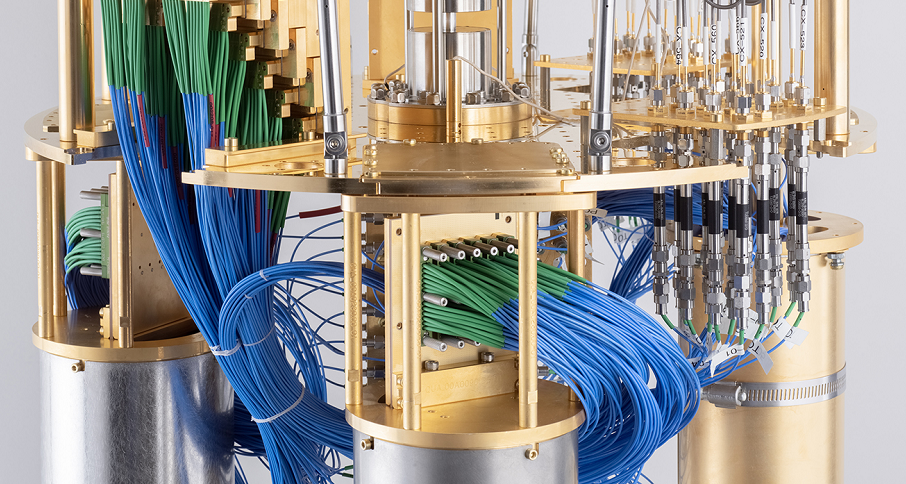
IBM acquires quantum computing research lab HRL IBM Corp. today announced plans to acquire quantum computing research company HRL Laboratories LLC. IBM is buying the lab from General Motors Co. and Boeing Co. It didn’t disclose the purchase price. The company expects to close the transaction by the end of the quarter. Malibu-based HRL launched more than 80 years ago. In that time frame, the lab’s researchers have made major contributions to fields such as optics, artificial intelligence and satellite propulsion. HRL also develops quantum processor designs, which is the main reason IBM has decided to swoop in. The technology giant is a major player in the quantum hardware market. Last year, it debuted a 120-qubit chip called Nighthawk that is 25,000 times faster than its previous-generation processors. IBM hopes to achieve even bigger performance gains over the next decade. In 2033, it plans to release a system called Blue Jay with 200,000 times the processing capacity of current hardware. IBM’s quantum roadmap revolves around a chip architecture called a superconducting qubit design. HRL, for its part, is pursuing a different approach known as spin qubit technology. IBM reportedly believes that the latter architecture could help unlock new performance gains after the 2033 release of its Blue Jay system. Superconducting and spin qubits are both made of silicon using standard chipmaking equipment. They also share certain other similarities, notably the need for cryogenic cooling. But the two technologies differ significantly in how they represent data. Superconducting qubits process data using specialized circuits called Josephson junctions. A Josephson junction comprises two superconducting structures separated by an insulator. By contrast, spin qubits encode data into electrons. Those electrons are kept in light-emitting nanocrystals called quantum dots that are also used to make high-end displays. Earlier this year, HRL debuted a quantum chip design with 18 spin qubits. The main innovation in the system is the management module that it uses to program qubits. Historically, management modules had to be linked to qubits using bulky wires that complicated system design. HRL has replaced the wires with a superconducting interconnect that it describes as being more efficient. As in traditional chips, shrinking a quantum processor’s circuits boosts its performance. In theory, spin qubits can be shrunk to smaller sizes than superconducting circuits. As a result, the technology that IBM is gaining as part of the HRL deal could simplify its long-term engineering roadmap. “Joining IBM is the natural next chapter for what we have built at HRL, where our team has dedicated years to exploring paths to how future quantum computers could be built at scales that today seem impossible,” said HRL Chief Executive Officer Rob Vasquez. The acquisition will also grow IBM’s presence in several other markets. HRL develops quantum sensors, devices that use quantum mechanical phenomena to make measurements. Additionally, it operates a fab that manufactures chips from a material called gallium nitride. Such chips are mainly used for power management tasks such as managing the current in chargers. The acquisition comes two months after IBM announced plans to build a quantum wafer fab. Initially, the facility will focus on the superconducting qubit technology used by the company’s current quantum chips. IBM plans to add support for other architectures down the line. Photo: IBM A message from John Furrier, co-founder of SiliconANGLE: Support our mission to keep content open and free by engaging with theCUBE community. Join theCUBE’s Alumni Trust Network, where technology leaders connect, share intelligence and create opportunities. 15M+ viewers of theCUBE videos, powering conversations across AI, cloud, cybersecurity and more 11.4k+ theCUBE alumni — Connect with more than 11,400 tech and business leaders shaping the future through a unique trusted-based network. Are you AWS customer? Support SiliconANGLE Financially by buying your AWS services from our Marketplace portal page and links. About SiliconANGLE Media SiliconANGLE Media is a recognized leader in digital media innovation, uniting breakthrough technology, strategic insights and real-time audience engagement. As the parent company of SiliconANGLE, theCUBE Network, theCUBE Research, CUBE365, theCUBE AI and theCUBE SuperStudios — with flagship locations in Silicon Valley and the New York Stock Exchange — SiliconANGLE Media operates at the intersection of media, technology and AI. Founded by tech visionaries John Furrier and Dave Vellante, SiliconANGLE Media has built a dynamic ecosystem of industry-leading digital media brands that reach 15+ million elite tech professionals. Our new proprietary theCUBE AI Video Cloud is breaking ground in audience interaction, leveraging theCUBEai.com neural network to help technology companies make data-driven decisions and stay at the forefront of industry conversations.
IBM acquires quantum computing research lab HRL
Full Article
Original Source
Read the full article at Siliconangle →KhanList aggregates and links to publicly available news content. We do not host full articles from third-party sources. Always verify important information with original sources.