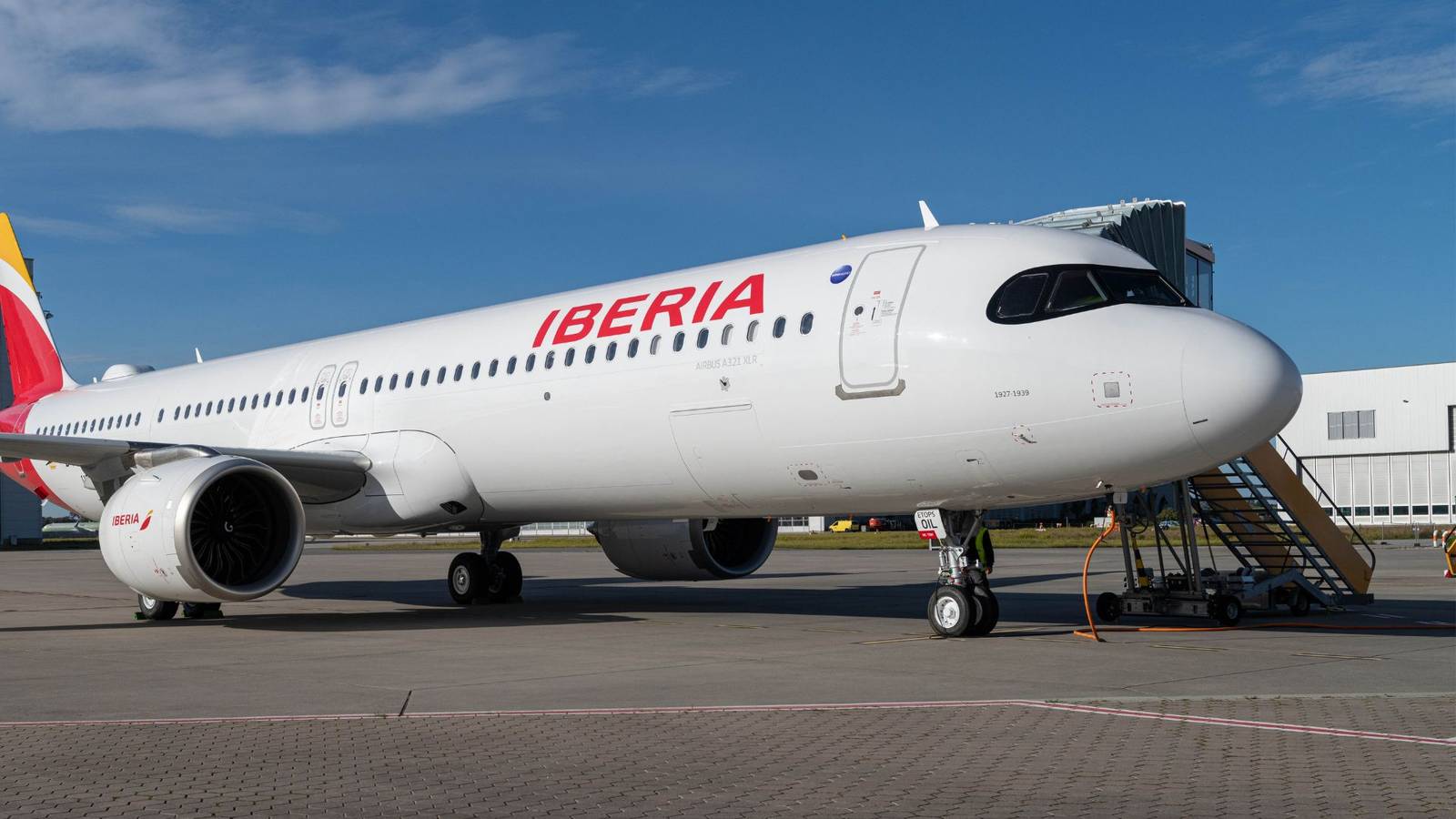
Published Jul 18, 2026, 2:47 PM EDT Jack comes to Simple Flying with a lifelong interest in all things aviation. He holds a degree in Aerospace Engineering from Georgia Tech, and is a certified private and remote pilot. Beyond these experiences, Jack previously worked for a corporate flight department where he gained first-hand experience in the world of business aviation. Currently, Jack works in the professional services industry and continues to build his flight hours outside of work. An IberiaAirbus A321XLR and an Air EuropaBoeing 787-9 narrowly avoided a midair collision over the Atlantic Ocean after their onboard Traffic Collision Avoidance System (TCAS) issued coordinated resolution advisories, prompting both flight crews to take immediate evasive action. The incident occurred on July 10 while the aircraft were cruising at 36,000 feet on the same oceanic airway near the West Saharan coast, traveling in opposite directions. According to initial reports, both aircraft had been cleared to maintain the same flight level, creating a potentially catastrophic conflict. The pilots followed TCAS instructions, restoring safe separation before continuing their respective flights without further incident. The aircraft involved were Iberia flight IB140 from Recife, Brazil, to Madrid (MAD) and Air Europa flight UX57 from Madrid to São Paulo (GRU). While no injuries or damage have been reported, the event has drawn significant attention because it illustrates how multiple layers of aviation safety, particularly TCAS, can prevent disasters even when air traffic separation breaks down. The circumstances that resulted in the conflicting clearances are expected to be examined by the appropriate investigative authorities. Aircraft Converged At Cruising Altitude Credit: Shutterstock According to aviation incident reports, the conflict developed at approximately 01:22 UTC as both aircraft flew along airway N857 between the ETIBA and BIPET reporting points. The Iberia A321XLR was operating northeast toward Spain while the Air Europa 787-9 was heading southwest toward Brazil. Both aircraft were maintaining Flight Level 360, placing them on a direct converging path. As the aircraft closed the distance between them, their independently operating TCAS equipment detected the collision risk and generated coordinated resolution advisories. Reports indicate the Iberia crew initiated a descent while the Air Europa crew climbed, creating the vertical separation necessary to avoid a collision. After the maneuver, both aircraft resumed normal flight profiles and landed safely at their destinations. TCAS Served As The Final Safety Barrier Credit: Shutterstock The incident highlights the importance of the modern traffic collision avoidance systems, technology designed to function independently of air traffic control. While controllers provide strategic separation between aircraft, TCAS continuously monitors nearby transponder-equipped aircraft and calculates whether a collision threat exists. If the system determines that aircraft are approaching one another too closely, it issues coordinated instructions to each flight crew, typically directing one aircraft to climb while the other descends. These advisories are synchronized between both aircraft to ensure the maneuvers complement rather than conflict with one another. International operating procedures require pilots to comply immediately with TCAS resolution advisories, even if they temporarily contradict an air traffic control instruction. The successful response during the Atlantic incident demonstrates why TCAS is widely regarded as aviation's final layer of defense. Although losses of separation remain rare in modern commercial aviation, the system has repeatedly proven to be capable of preventing accidents when human or procedural errors occur. Investigation Expected To Focus On Separation Failure Credit: Airbus Attention will now likely center on how two aircraft operating in opposite directions came to occupy the same altitude on an oceanic route. Unlike heavily radar-covered domestic airspace, portions of the North and South Atlantic rely on procedural separation, satellite surveillance, and coordinated position reporting to safely manage long-haul traffic. Maintaining assigned flight levels is a critical component of that system. At present, no official investigation has publicly determined whether the conflict resulted from an air traffic control error, a communication issue, or another operational factor. Aviation safety specialists typically conduct detailed reviews of radar or surveillance data, controller communications, flight data recorder information, and crew reports before establishing probable causes. While the underlying reason remains under investigation, the outcome reinforces the aviation industry's layered approach to safety. Even when one safeguard fails, independent systems such as TCAS are designed to intervene rapidly and reduce the likelihood of an accident. In this case, that redundancy ensured both aircraft and everyone on board completed their flights safely despite what appears to have been one of the more serious airborne conflicts reported over the Atlantic in recent months.
Iberia A321XLR & Air Europa 787 Take Evasive Action In Head-On Atlantic Near-Miss
Full Article
📰 Original Source
Read full article at Simpleflying →KhanList aggregates and links to publicly available news content. We do not host full articles from third-party sources. Always verify important information with original sources.