
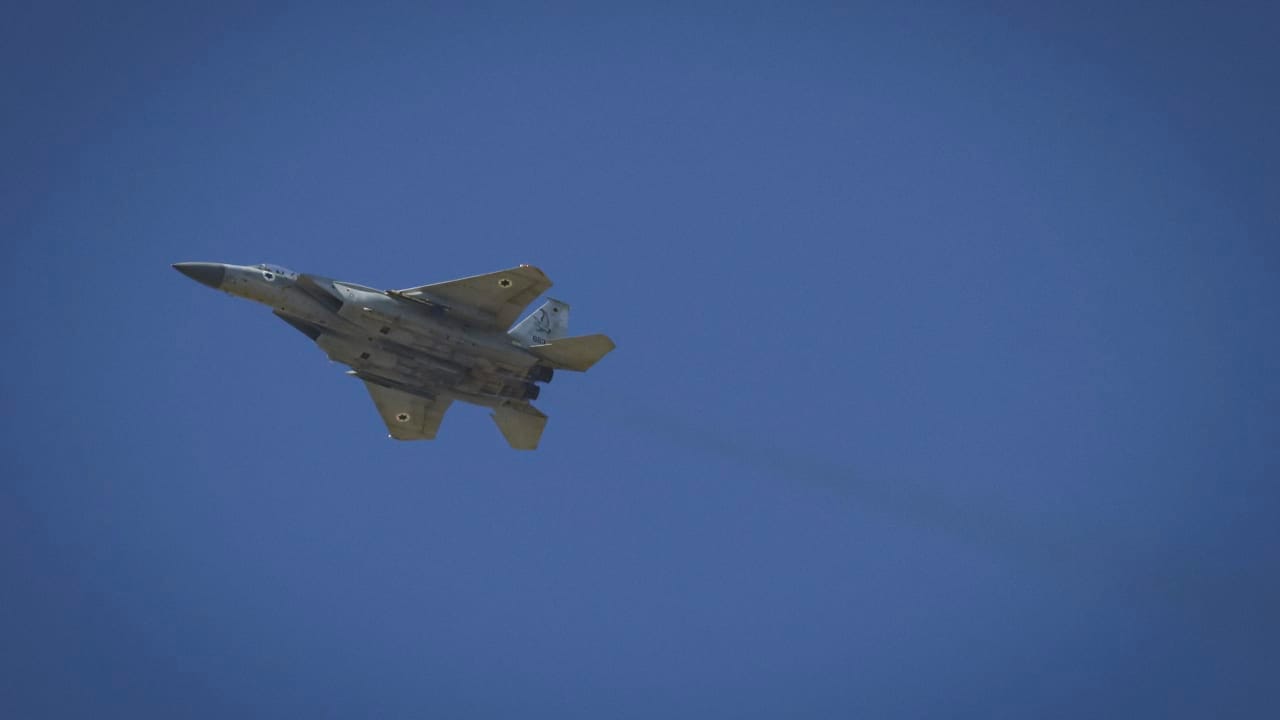
OCTOBER 5, 2026 18:06An Israel Air Force officer who first identified a distress signal from a flydubai aircraft last week said the situation initially appeared routine, but quickly escalated after a second signal indicated the plane may have been hijacked.Lt. N., an air force aerial image identification officer, was on duty at 8:30 a.m. when he detected the first distress signal from the aircraft.He told Walla that the initial alert did not immediately suggest a major emergency."It was an emergency signal transmitted by the aircraft. In retrospect, this was already after the drastic descent it had carried out," he said. "First, I was trying to understand why the aircraft was activating it, whether it was some kind of malfunction, perhaps a malfunction in our systems, or whether it was really a genuine signal, and I was trying to understand details about that flight. I wasn't alarmed at first, before I really understood what the incident was."N then checked the aircraft type and flight path and passed the information to other air force officials.Damage done to rudder of flydubai flight after suspected attempted hijacking, September 30, 2026. (credit: COURTESY)He said the situation still appeared consistent with a possible technical problem at that stage."When I understand that the aircraft is supposed to arrive in Israel, I alert the management position, and from there they really try to understand more details," said N. "From my perspective, it is a standard flight. There can be malfunctions during the procedures. It can be a procedure and a decision made inside the aircraft in order to make clear that there is something unusual here, but until that point, it was not something I had encountered before."Second aircraft distress signal indicated possible hijackingAs air force personnel waited for the results of additional checks, a second distress signal arrived from the aircraft. This time, the code indicated a possible hijacking.N said the second signal immediately changed the assessment."Another emergency signal, but it became the signal for a hijacked aircraft," he emphasized. "I tell myself, this is already something unusual. There is no way this is a malfunction, because it is not a coincidence, and there is a high probability that this really is a hijacked aircraft. And from there, we basically set the incident in motion in the air force."He said it was the first time he had encountered such a signal during a real incident."I'm not alarmed. A little stressed. It is the first time I have experienced a signal like this. I encountered something like this in the past, but it was due to a malfunction. Not a real incident. Since finishing the control course, it crosses your mind, but the chances are low," he continued. "This is not what an air traffic controller thinks about at night when he goes to sleep. Our world thinks more about UAVs and cruise missiles."Once N relayed the hijacked-aircraft code and issued the alert, the air force and senior command went on heightened alert.He said there was no room to dismiss the possibility that the aircraft had been hijacked, particularly with Israelis potentially on board."I'm not prepared to take the risk that someone really may have hijacked the aircraft, and there may be Israeli passengers on board, and there is no way we let something like this pass without a response," N said.Maj. D., a reservist who serves as head of national airspace defense in the Air Control Array, said the aircraft was first detected between Saudi Arabia and Jordan and appeared to be headed for Tel Aviv.According to D, the second signal prompted the air force to escalate its response within seconds and scramble fighter jets."We first detected the aircraft between Saudi Arabia and Jordan and saw that it was due to land in Tel Aviv," D noted. "It looked strange. When we received the second signal about a hijacking, we decided within a few seconds to escalate the report and scramble fighter jets. We moved to prepare a response for every scenario, while at the same time we worked to obtain more intelligence and information about the incident."Throughout the incident, there was a great deal of uncertainty, D continued. "It was not always clear to us whether the aircraft was in contact with another party, and during the incident a great deal of information flowed to us, some of it incorrect."The uncertainty increased further when the aircraft began turning away from Israel.D said the team spent roughly half an hour running through possible scenarios as information continued to come in."As we are identifying what is happening, the aircraft begins turning around and moving away from the country, which added even more uncertainty for us," he added. "Amid that uncertainty, we sat as a team and spent about half an hour running what were essentially war games. What happens in this situation... One of the scenarios is that it really reaches our territory with the distress signal, under the assumption that it has been hijacked."During the incident, you try to disconnect from emotion as much as possible," he continued. "Only after I came out of the incident did I think about the fact that my brother is abroad, and I wondered whether he could have been on the flight. We prepare for the most severe scenario that could happen, and we have very clear procedures for it."IAF tensions remained high amid Israeli media reports of pilot disputeAs the aircraft turned toward Saudi Arabia and Israeli media reports began circulating about a dispute between the pilots, tension remained high in the air force operations room.N said officials did not consider the incident over until they had confirmation that the aircraft had landed safely and that the Israeli passengers were no longer at risk."Until we receive information that the aircraft has actually landed safely and that the incident is really over, nothing is fine," N noted. "We don't listen to rumors. We understand that the aircraft is landing in Saudi Arabia. I'm concerned. Why? A civilian aircraft landing with Israelis in a Muslim country, and not at a civilian airport. Until they announced that the rescue flight had departed, or that the Israeli civilian passengers had boarded the rescue flight, I couldn't be calm."Capt. A., a reservist and air force air traffic manager, said his unit began clearing Israeli airspace once the incident was formally classified as unusual.The aircraft was still far from Israel at the time, but the air force needed to prepare the airspace for fighter jets that had been scrambled."I go into action after the incident is defined as unusual," said A. "At this stage, the aircraft is still very far from the country, so we act to clear the airspace in a way that meets the needs of the fighter jets being scrambled. The skies are crowded with crop-dusting aircraft, sports aviation, commercial flights to Eilat or eastward, air force training, drones and helicopters, and the clearance we carried out was immediate."We call it moving to sterile airspace because it is possible that it will reach us later, and we need to plan ahead and check what other takeoffs and what other flights are planned in the airspace," A continued. "It is very possible that if this incident gets closer to the country, we will have to stop takeoffs completely. I have been an air traffic controller for more than a decade, and I have never had to close the skies because of a significant incident."Asked about the possibility that the prime minister could soon be receiving updates from the IDF chief of staff and air force commander as officials prepared for the most extreme scenario, shooting down the aircraft, A said his unit remained focused on its defined responsibility."At the end of the day, we come to do the job according to the procedures we know. We are in the air traffic section, and our role is clear and defined: clearing the airspace. All those other things, as they say, are not with us..." the captain concluded.Follow us on Google
IAF soldiers reveal air force's initial response to flydubai attempted hijacking
Full Article
Original Source
Read the full article at Jpost →KhanList aggregates and links to publicly available news content. We do not host full articles from third-party sources. Always verify important information with original sources.