
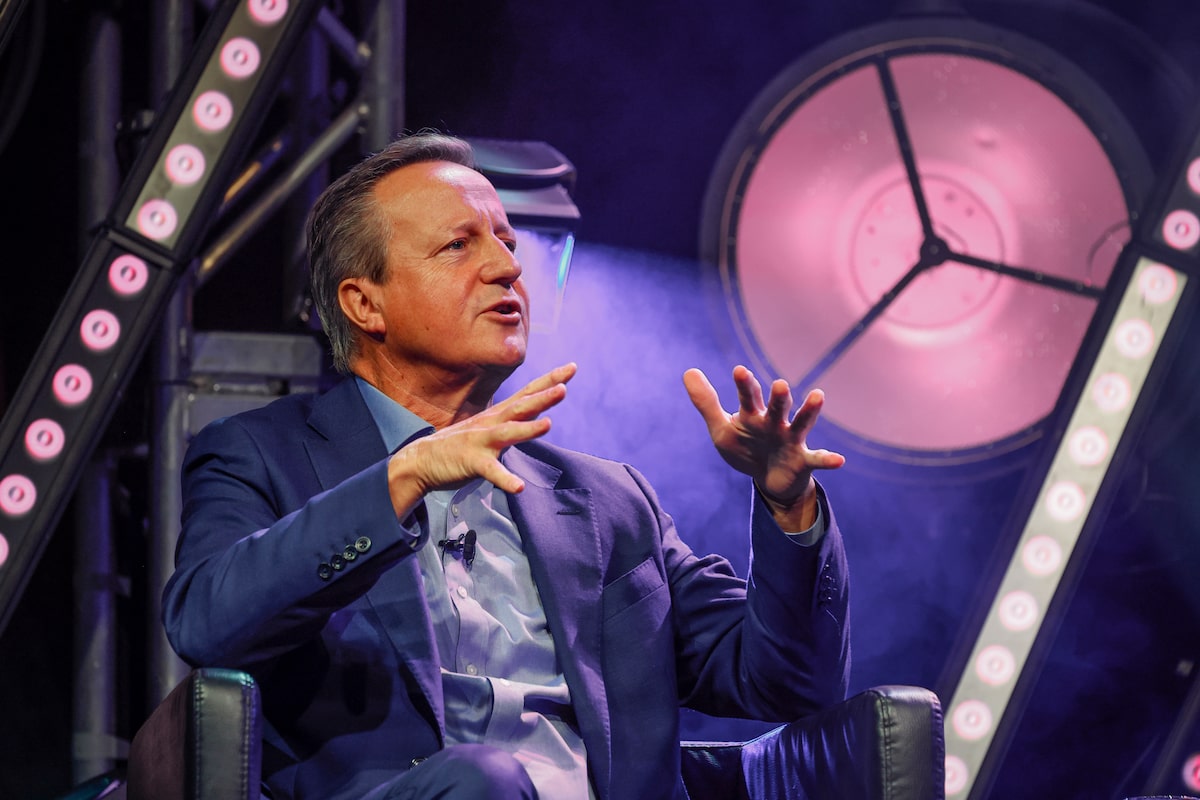
Open this photo in gallery:Former British prime minister David Cameron speaks at the Energy Disruptors: UNITE conference in Calgary on Monday.Jeff McIntosh/The Canadian PressFormer British prime minister David Cameron, who oversaw his country’s vote on Brexit as well as a referendum on Scottish independence, says he sees significant differences between those and Alberta’s coming vote on separation. Speaking at an energy conference in Calgary on Monday, Mr. Cameron said he wishes he had spent more time at the negotiating table before allowing a vote that took the outcome out of his hands.“I wouldn’t compare what you’re discussing here with the Brexit referendum,” he said.“Brexit was about whether we wanted to stay in a trade association with an element of political union. I mean, Canada is not a trade association with an element of political union. Canada is an amazing country with an incredible history.”Mr. Cameron, who resigned as prime minister in 2016 the day after Britain narrowly voted to leave the bloc, said he wishes he’d “pushed the pause button” and taken longer to negotiate with the European Union.He added that he failed to convince people to vote in favour of remaining in the EU, suggesting he didn’t campaign forcefully enough for that side.The former British prime minister made the comments exactly three weeks before Alberta voters will have their say on whether they want a second, binding secession referendum – a vote that frequently draws comparisons to Brexit.Poilievre to headline fundraiser for federalist efforts in AlbertaEchoes of Britain’s 2016 referendum on its membership in the EU have loomed large over Alberta’s separation debate. Prime Minister Mark Carney, who was governor of the Bank of England at the time of the British vote, has called Alberta’s plan a “dangerous bluff” and pointed to parallels between the two referendums.Mr. Cameron called the 2016 vote under pressure from segments of his party that were skeptical of the European Union. He campaigned to stay in the EU, but the loss led to more than four years of negotiations between Britain and the bloc.Alberta Premier Danielle Smith, meanwhile, has pointed to discontent in her province over Ottawa’s direction on energy policy under former prime minister Justin Trudeau as the impetus for the Oct. 19 referendum. In March, 2025, Ms. Smith threatened an “unprecedented national unity crisis” if Ottawa did not scrap laws she viewed as hostile toward Alberta’s energy industry. Mr. Carney has since eliminated many of those laws.While Ms. Smith has argued that she called the referendum because of public demand – notably in two competing petitions that garnered hundreds of thousands of signatures – her detractors have accused her of attempting to appease separatists who make up a substantial part of her political base, according to public opinion polling. The Premier has said she and her colleagues in the governing United Conservative Party favour remaining in Canada.Polling shows that roughly a quarter of Albertans would vote to hold a binding referendum on abandoning Canada. Before the British referendum, the remain side also led in the polls but ultimately lost with 48 per cent of the vote.Innocent Madawo: Immigrants aren’t a monolithic voting bloc in Alberta’s referendum on secessionMr. Cameron has argued since Brexit that warnings about the consequences of leaving the EU were drowned out by an emotionally charged leave campaign. “We wanted to remain a sovereign, independent United Kingdom, but part of this association. My regret is that I failed to convince people that that was the best answer,” he said Monday.Mr. Cameron said Scotland’s 2014 independence referendum worried him more than Brexit because it threatened to break up the U.K. “If you have a referendum, you can’t guarantee what the result is going to be,” he said.While polling suggests Alberta separatists will be defeated soundly next month, observers say voter turnout will play a major role in the result. Ms. Smith, who has spent the better part of her political career railing against what she views as an overstepping federal government, has also said she’s concerned voters may use the referendum to express their frustration with Ottawa. Indeed, some separatist groups are advertising the vote as a means to extract concessions from Mr. Carney and his Liberal government.On Monday, Ms. Smith argued the conditions in Alberta’s referendum are different from Brexit, contending that the EU didn’t work to solve the problems that she believes motivated Britain’s referendum.She contrasted that with Ottawa’s approach under Mr. Carney.“I see a major reach-out on the part of Ottawa to not only acknowledge but also address in a very serious way the issues that caused the tension in the first place,” Ms. Smith said. “I hope it has an impact on election day.”Doug Ford commits to footing part of the bill for proposed Alberta-Ontario pipelineRandall Hansen, a political science professor at the University of Toronto’s Munk School of Global Affairs and Public Policy, said Brexit and Alberta’s referendum have numerous parallels between them, but that doesn’t mean Alberta will immediately march down the same path as Britain.What happens after the referendum will matter more, he said, pointing to Britain’s earliest rumblings of discontent in the 1980s over its relationship with Europe.“The Alberta conservatives … cannot make the mistake the Tories made in the 80s, which is continually delegitimize the federation,” Prof. Hansen said.“That two-thirds can become 50 per cent, and the next time around you might end up in a situation that everyone would regret on both sides, which is Alberta leaving the federation.”
‘I wouldn’t compare’ Alberta secession vote to Brexit, says Former British PM David Cameron
Full Article
Original Source
Read the full article at Theglobeandmail →KhanList aggregates and links to publicly available news content. We do not host full articles from third-party sources. Always verify important information with original sources.