
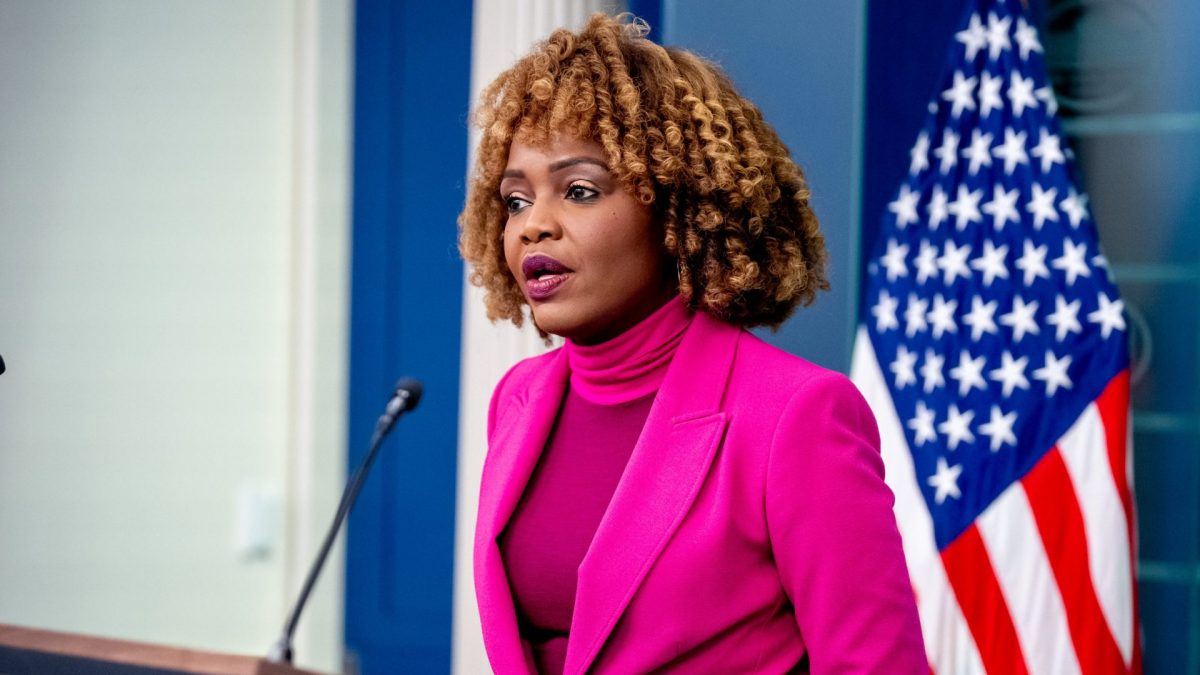
There is a moment that comes after every difficult midterm election when the campaign rhetoric ends and the reality of governing begins. I know because I lived it. When Republicans took control of the House of Representatives during President Joe Biden’s administration, the challenge facing the White House changed overnight. Every legislative priority became harder to advance. Every funding deadline became a negotiation. Every decision carried the added complication of navigating an opposition-controlled chamber determined to scrutinise and challenge the administration at every turn. That is the reality of a divided government. Campaigns run on promises. Governing runs on arithmetic. If Democrats take control of the House, Donald Trump will soon discover what presidents of both parties have learned throughout modern American history: a president does not lose power when Congress changes hands, but he does lose freedom of action. Trump will still have options: he’ll retain authority over foreign policy, immigration enforcement, executive actions and the vast machinery of the federal government. But a divided government imposes limits. Committee chairs gain subpoena power. Oversight investigations intensify. Political capital becomes harder to spend. This means Trump could face a steady stream of House investigations into federal agencies, administration officials and major policy decisions. Democrats would be able to hold hearings, compel testimony and shine a public spotlight on controversies that might otherwise remain out of view. At the same time, advancing major legislative priorities, whether on tax policy, federal spending or new domestic programmes, would become significantly more difficult without House co-operation.When Republicans took the House during the Biden administration, we saw first-hand how quickly Washington’s priorities change when the focus shifts from expanding an agenda to defending one. The conventional assumption is that a president faced with those constraints looks for compromise. History suggests that is often the most effective path. The American constitutional system was designed to force competing political interests to work through disagreement rather than around it. But Trump has never been a conventional president. Based on his first term and his presidency today, it is far more probable that he will respond to congressional constraints by relying even more heavily on executive power. Rather than persuading Congress, he will seek ways to circumvent it. One of the main ways presidents do this is through executive orders and other executive actions. These allow a president to direct how federal agencies carry out policy without needing Congress to pass a new law. For example, Trump could order federal agencies to increase immigration enforcement, ease certain regulations on energy production or change how existing government programmes are run. He cannot create entirely new laws or approve new spending on his own, but he can still have a significant impact on how the government operates. ‘We don’t have to rely on speculation to see how Trump reacts when voters impose limits on his power. Witness the January 6 riots,’ writes Karine (Photo: Leah Millis/Reuters) Treating divided government as an obstacle standing in the way of his agenda may prove politically effective with his supporters. It allows him to project strength and maintain the political style that has defined his career. But it also carries risks. Executive actions are vulnerable to court challenges. Congress can also pass laws that limit or undo executive actions, although this usually requires enough votes in both the House and Senate, and can face a presidential veto. They can be reversed by future administrations. The deeper question is how Trump will react when voters impose limits on his power. Here, we do not have to rely on speculation. After the 2020 election, rather than accept defeat, Trump spent months promoting false claims about election fraud and helped create the conditions that culminated in the January 6 attack on the US Capitol. We know how he responds when democratic processes produce an outcome he does not like. The challenge facing the country over the next two years may therefore be larger than the familiar spectacle of Washington gridlock. It will be a test of America’s institutional fabric. Congress has every right to investigate the president and their cabinet. The courts have a responsibility to serve as a check on presidential authority. Trump can expect every decision to be more difficult, every accomplishment to require more compromise and every setback to be more public. Having served in a White House navigating divided government, I know how frustrating that can be. We do not have to guess how Trump views limits on his power. He has spent years advancing an expansive vision of presidential authority, and he has openly embraced the Supreme Court’s ruling that presidents have broad criminal immunity as validation of that view. He does not see congressional constraints as safeguards, but as obstacles to challenge, circumvent or discredit. Trump’s political career has repeatedly showed that he favours confrontation. From his refusal to accept the 2020 election results to his portrayal of political opponents as enemies rather than rivals, the pattern is well-established. The next chapter of his presidency is unlikely to be defined by accommodation with those opponents. It will be defined by his battle to test the boundaries of presidential power against the institutions designed to limit it. Critics already fear that the administration is laying the groundwork to challenge or delegitimise electoral outcomes that do not favour Republicans. Whether those concerns prove justified or not, they reflect a deeper erosion of trust that has become one of the defining features of American politics in the Trump era. That is why the central question of the next two years is not whether Trump will test the limits of presidential power. He almost certainly will. The real question is whether Congress, the courts and other democratic institutions remain willing and able to enforce those limits when he does. The answer will help determine not only the final years of Trump’s presidency, but the resilience of American democracy itself.
I worked in the White House. Trump is about to see what a midterms disaster means
Full Article
Original Source
Read the full article at Inews →KhanList aggregates and links to publicly available news content. We do not host full articles from third-party sources. Always verify important information with original sources.