
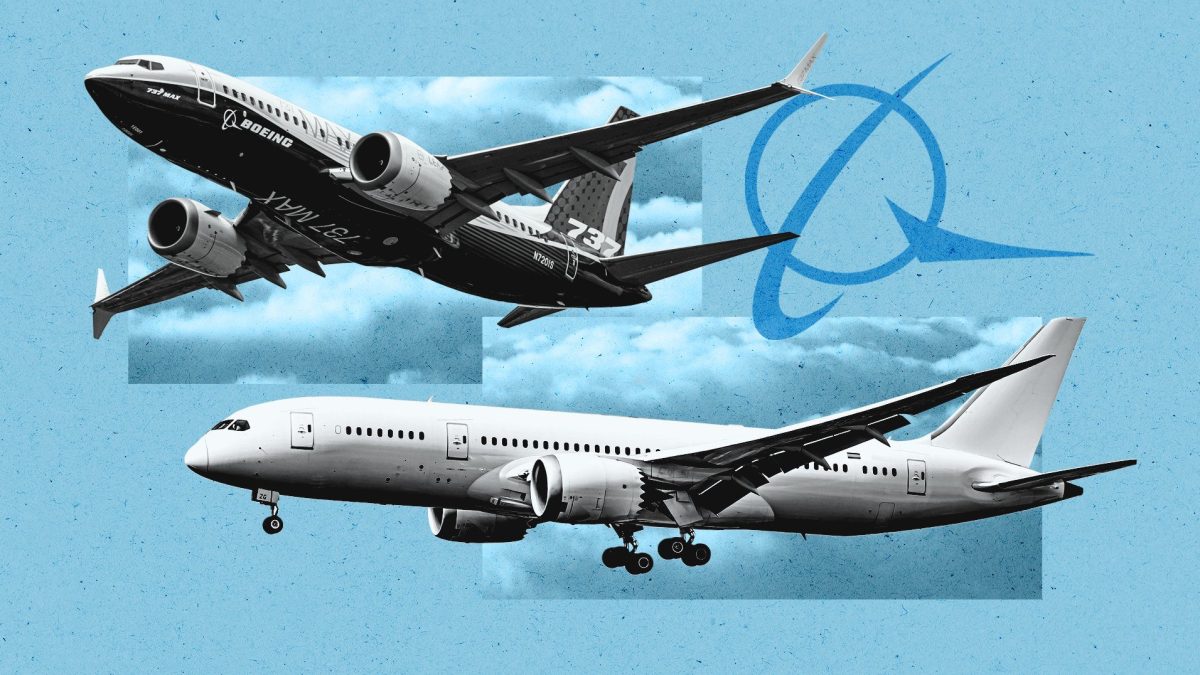
Before booking a flight from Seattle to New York this week, Merle Meyers checked what type of airliner he would be flying on – because there are two he won’t risk boarding. After working at Boeing for 31 years, Meyers claims to have uncovered dangerous practices on the company’s production lines – including faulty components allegedly being used on new aircraft – which left him with deep concerns about the company’s 787 Dreamliner. Factory staff who struggled to meet deadlines were “raiding the scrap area” to use items that were “supposed to be destroyed”, he claims. “They were getting bootleg parts, bad parts with no traceability, and putting them on airplanes.” He doesn’t trust the 737 Max either, following two crashes in 2018 and 2019 which killed a total of 346 people. So what would he do if an airline switched planes and he realised he was booked on a Max or a Dreamliner? “I wouldn’t fly,” says the 67-year-old. “I would decline that flight.” Other whistleblowers agree. Shorts Boeing says it has been putting into action “a comprehensive plan across the company to deliver safety and quality at every step” since 2024, with its CEO Kelly Ortberg having introduced “new values and behaviours that are strengthening our culture”, in line with feedback from staff. “Boeing employees are holding themselves and others accountable to keeping people safe, speaking up, and doing the right thing,” says a spokesperson. Industry experts underline that statistics show flying Boeing aircraft remains extremely safe. Indeed, its 747 “Jumbo Jet” is widely regarded as one of the most reliable airliners in history. Problems with computer software were blamed for the two Max disasters. Boeing fixed this, but its record was questioned again after a panel dropped from one of the aircraft shortly after take off in 2024, leaving a hole in the side of the plane. It later emerged that key bolts appeared to be missing. Ryanair is one of its biggest users, flying about 200 Max jets with another 300 on order. Its CEO, Michael O’Leary, has said the “very proud to fly them”, insisting: “Boeing make great aircraft.” Other customers include American Airlines, Air Canada, United Airlines, Turkish Airlines and Icelandair. Last year came another catastrophe: a Dreamliner crashed in India with 19 fatalities on the ground and 241 on the plane, including 53 British passengers. It was flown by Air India, but other users include British Airways, Virgin Atlantic, Etihad, Nippon Airways and Singapore Airlines. People are able to check which type of aircraft will be used on specific flights through websites such as FlightRadar24 or Google Flights. Merle Meyers, pictured, says Boeing factory staff ‘were getting bootleg parts, bad parts with no traceability, and putting them on airplanes’ (Photos: Merle Meyers; Getty) ‘Stealing plane parts’ A preliminary report on the India crash suggested one of the pilots may have turned off the engines. Full investigation findings are not expected until October, but Meyers suspects the calamity may have been down to issues with the aircraft. “They always start with pilot blaming,” he says. “I would start looking at electrical systems.” The Foundation for Aviation Safety, a US campaign group run by former Boeing manager Ed Pierson, has revealed that the aeroplane (registration VT-ANB) suffered an in-flight fire in 2022. In fact, Pierson found, the plane had a record of “engineering, manufacturing, quality, and maintenance problems” since its first flight. Boeing has always maintained that the 787 is a safe aircraft with a strong record, and before the India crash, it had operated for nearly a decade and a half without a single fatality. Meyers says this “very difficult plane” was made by a team he oversaw at the huge factory in Everett, near Seattle. He tells The i Paper that company pressure for Dreamliner workers to meet targets led to internal rivalries, with managers “stealing parts off each other’s airplanes”. Some aircraft were also “cannibalised” to supply components for others without records being kept. Meyers, who remains in touch with Boeing workers, heard that some managers logged on to computer systems after the Air India crash to check if they were responsible for any parts used on the plane. “That’s a guilty conscience,” he believes. Meyers tried alerting management about poor standards, but says he faced retaliation and was forced out in 2023. He went public with his concerns the following year. Now he’s appearing alongside other veterans from the firm in a new Netflix documentary, Freefall: A Reckoning for Boeing, which details just how worrying the situation has become – and how one whistleblower paid with his life. ‘Standards were just terrible’ Meyers joined Boeing in 1979. His mother had worked for the company, as did his wife’s father and grandfather. The firm was like a second family. He left the company a couple of times before a solid stint from 2005 onwards, working in quality control – and remembers hearing on his first day back how badly standards had slipped. He says that one of his team claimed that procurement and production managers wanted them to overlook inspection requirements and pressured them “for not breaking the rules fast enough”. He realised that pieces of machinery were being used without safety checks being logged. “I counted about 50,000 parts and assemblies – like flaps, rudders, electrical systems, many of them flight-critical – that had escaped into the fleet. That really was a big shock,” he says. “The closer you get to the airplane, the bigger the chicanery, the cutting of corners. It was a real eye-opener.” He claims that staff would “falsify records” on usage of parts through “all sorts of little tricks” in paperwork, such as smearing the ink of inspection stamps so they couldn’t be read. Like many experienced staff at Boeing, he felt the safety culture declined after the company merged with McDonnell Douglas, leading bosses to focus on profits. “Standards were just terrible compared to what we expected,” he says. To reduce costs, the company outsourced Dreamliner production to other firms around the world, with parts being flown to the US for final assembly. As the documentary shows, sometimes huge sections made by different suppliers wouldn’t fit together. It also moved Dreamliner operations from the state of Washington to a new factory in South Carolina to avoid union agreements. A total of 260 people died when a Boeing 787 Dreamliner crashed in India last year. Meyers suspects the calamity may have been down to issues with the aircraft (Photo: Raju Shinde/Getty) One of Meyers’ friends in quality control, John Barnett, worked at the new plant and alerted managers to safety risks, such as metal shavings on the aircraft that could damage wires and cause short circuits. Barnett believed he was demoted for slowing down production by raising problems like this. He retired in 2017 and sued Boeing using legislation to protect whistleblowers. Becoming deeply depressed about how the company ignored his warnings and dismissed his arguments, however, he killed himself in 2024. His suicide note said: “F**k Boeing!!!” Barnett’s lawyer, Brian Knowles, told The i Paper a few months after his client’s death that the tragedy “emboldened people to speak out” on other failings within the firm, because they “didn’t want his death to be in vain”. Meyers is one of them. He hopes the new documentary, which tells Barnett’s full story, will finally lead to reforms. “He wanted to make a difference,” he says of his late friend – a “great guy” who was very “passenger-safety conscious”. An image of John Barnett was displayed at a congressional hearing during testimony from Boeing’s CEO Kelly Ortberg last year (Photo: Brendan Smialowski/AFP) ‘They got tired of me’ Meyers says he suffered mentally from the “anger and frustration” of worrying that lives were at risk. He provided managers with “reams of evidence” about problems but these were “brushed under the carpet”, he claims. A colleague warned he would be “singled out” if he continued fighting – and sure enough, he says, “they got tired of me”. He claims he was reprimanded for “misuse of company time and resources for doing my job” and was told he would be fired if he didn’t agree a severance package. “So that’s what I did. I knew quality would not be taking the lead again anytime soon.” Asked about Meyers’ comments, a Boeing spokesperson says allegations made by him and other whistleblowers in the Netflix film “have been widely reported over the years”. “Some remain unfounded claims to this day while others are issues that Boeing thoroughly addressed or continues to improve upon under the rigorous oversight of our regulators,” they said. “Today, we are grateful that customers, industry experts, policymakers, and our employees are seeing improvements in how we work together and deliver quality products. Our team is working every day to meet our commitments and earn the trust of those who depend on us.” But last month’s life-threatening incident on a Boeing 737-800 owned by Ryanair raised further safety concerns, when a cabin window was smashed by broken engine fragments, seriously injuring a passenger whose head was sucked through the hole. Separately, the Federal Aviation Administration in the US has found cracks in the fuselage of Max jets and demanded checks on hundreds of others. Crash victims’ families continue their fight for justice meanwhile, arguing that the company and senior executives who previously ran it – earning hundreds of millions of dollars each – should face criminal charges. The whistleblower thinks the company has an “incestuous relationship” with the US government because it’s such a major employer and important supplier of military hardware. Given the government’s reluctance to launch criminal proceedings against Boeing, he fears genuine action may only come “after the next crash”. ‘Freefall: A Reckoning for Boeing‘ is available to stream on Netflix now
I worked at Boeing for 30 years – I would never travel on these two planes
Full Article
Original Source
Read the full article at Inews →KhanList aggregates and links to publicly available news content. We do not host full articles from third-party sources. Always verify important information with original sources.