
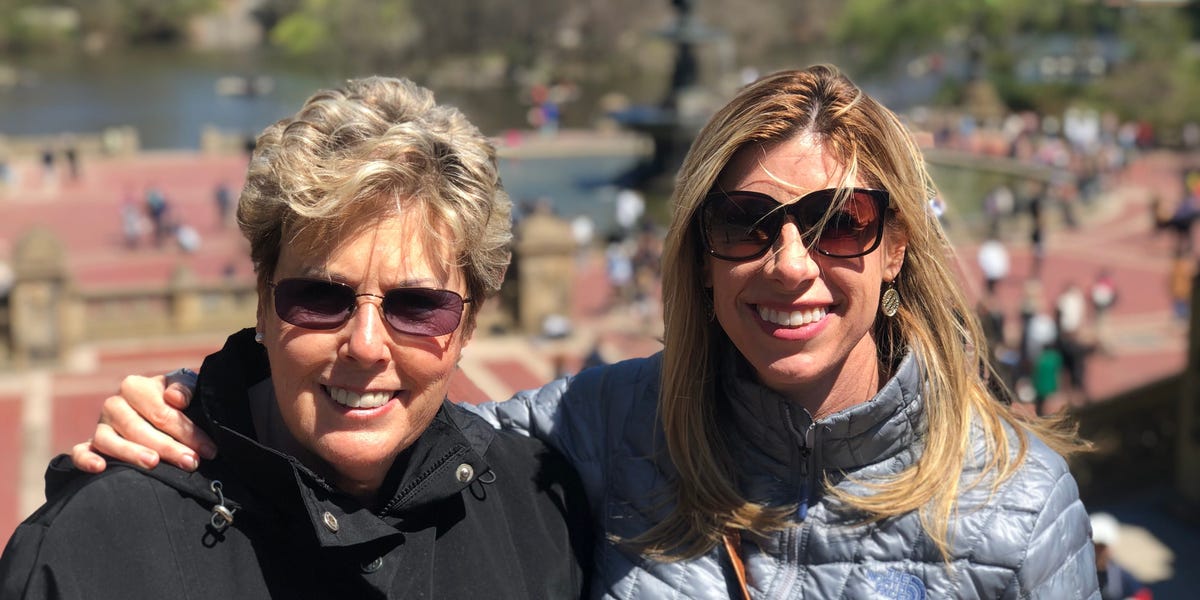
I work in cybersecurity, but my mom lost 3,000 to online scams. Now, I do 3 things to keep her safe. Jen Eaves works in cybersecurity and her mom still lost thousands to scams. Courtesy of Jen Eaves This as-told-to essay is based on a conversation with Jen Eaves, Digital Caregiving & Elder Fraud Advocate at Aura. It has been edited for length and clarity.It's an odd shift in dynamic when you start caring for the people who always cared for you. My mother is 79, and lives with my brother, who handles most of her day-to-day physical care. I'm the one who handles the administrative side of care, like scheduling doctor appointments and keeping her safe online.About six years ago, my mom had a stroke, and while she recovered fairly well, she wasn't the same cognitively as she had been before. Around that time, I began noticing her falling for scams online.Once, she ordered a cure for diabetes, which she has. The product was supposedly being sold by a famous TV doctor. When she showed me the video ad, I could see it was badly done AI, with the supposed doctor's lips not matching his words.There have been other scams and pitfalls, too: online orders that never arrive, or even a legitimate credit card that my mom opened without realizing what she was doing. All in all, she's lost about $3,000 to scams, though I've been able to recover most of it through her bank.I've realized that I need to take a more proactive approach to digital caregiving to protect my mom's finances. Here's what I'm doing.Approaching from a place of help and dignityAfter my brother and I had taken my mom's keys away, her phone became her connection to the world. I wanted to respect that. While some people have to restrict their older parents' access to phones, that didn't feel right in my case.It was critical to me that my mom kept her dignity and as much independence as possible. At the same time, I saw there was an emotional side to falling for a scam: she would feel frustrated and confused when it happened, and I wanted to spare her those negative emotions.I never want my mom to feel like I'm parenting her. Instead, I pointed out the patterns I was seeing and emphasized I'm here to help if she's willing to let me be involved. The choice, ultimately, is hers. This would be a lot harder if she wasn't willing. Talk about scamsMy mom wasn't particularly tech savvy, even before her stroke. I've had to educate her about what scams look like. When she shared the famous doctor video, I pointed out the aspects that seemed AI-generated to me. I remind her that if it sounds too good to be true, it probably is. I emphasize that urgency is a big sign of a scam. The bank, I tell her, is never going to call you.Once, she had a scam caller claiming to be Apple support. They asked for her Apple ID and password, which would have given them access to pretty much everything she has online.Because of our conversations, my mom hesitated. She patched me into the call and asked the scammer to explain the situation to me. I was very proud that she recognized the scam and knew to ask me for help.I monitor my mom's accountsI worked in cybersecurity at Aura, which offers a lot of great products for keeping kids safe online. But my experience with my mom made me realize we were missing a whole vulnerable population: older adults.I helped develop Trusted Family Access, which allows family members like me to see alerts from their loved ones' accounts, with permission. This gives me peace of mind that I can catch any issues quickly. It's also made other aspects of caregiving easier, like handling medical appointments, because I have access to all my mom's information in one place.When my mom was scammed, it felt like I was a victim too. I spent hours calling her bank and credit cards to get her money back. If she were to lose her savings, it would impact the whole family. I'm grateful we've found a solution that empowers both of us to keep her finances safe. Read next Business Insider tells the innovative stories you want to know Business Insider tells the innovative stories you want to know Business Insider tells the innovative stories you want to know Business Insider tells the innovative stories you want to know Kelly Burch has been writing about personal finance for more than a decade.She's particularly interested in how finances impact the most intimate parts of a person’s life, from educational and reproductive choices to love, immigration, or estate planning. Kelly has written about these topics personally and explored them with experts, including entrepreneurs, multi-millionaires, financial planners, and more.Kelly is a first-generation college graduate and homeowner who integrates her personal experience creating financial stability into her reporting. She’s a career journalist, with work appearing in “The Washington Post,” “The Chicago Tribune,” “Boston Magazine” and more.Kelly lives in rural New Hampshire with her husband, two children, and two dogs. When she’s not behind her desk, she can be found getting lost in the mountains and lakes around her home.Follow her on Facebook or Twitter, or learn more here. as told to Careers Cybersecurity More
I work in cybersecurity, but my mom lost 3,000 to online scams. Now, I do 3 things to keep her safe.
Full Article
Original Source
Read the full article at Businessinsider →KhanList aggregates and links to publicly available news content. We do not host full articles from third-party sources. Always verify important information with original sources.