
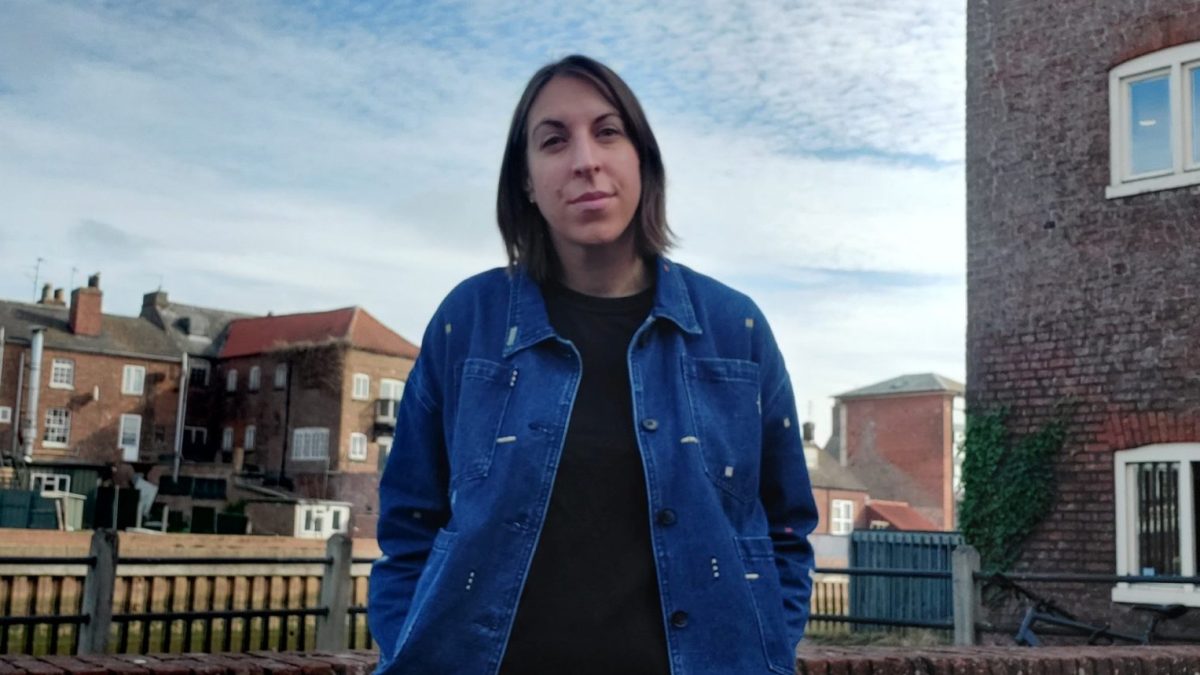
It’s midday at the Moon Under Water pub in Boston, Lincolnshire, and locals are busy tucking into cups of tea, fry-ups and pints. This popular Wetherspoons is in the centre of town, and the pub chain’s founder Sir Tim Martin is known to the locals for his 2016 visits to Boston, during which he argued that leaving the EU would be good for British business. The tycoon donated £20,000 to the Leave campaign, to help make Brexit happen – and he got his wish. Through the pub window, just opposite, I spy a European supermarket. Inside, the aisles are full of Polish sausage, Latvian crisps and Lithuanian cake. You can, of course, find a Wetherspoons right by a Polish shop in plenty of towns or cities across the country, but here, their proximity sums up the complicated relationship this East Midlands market town has with Europe. Boston has gone down in history as “the Brexit capital of Britain”. In the 2016 EU referendum this inland port recorded the highest majority of Leave voters in the country, with more than 75 per cent of voters choosing to quit the EU. One of the main reasons cited was the town’s high immigration – the 2011 census found Boston had the highest population of Eastern European residents of anywhere in the UK – and perceived impact on public services. After the 2004 expansion of the European Union (to include Romania and Bulgaria), EU workers had flocked to south Lincolnshire to work in the – often seasonal, and low-paid – agriculture and food production industries. Between 2004 and 2014, Boston’s European-born population grew by 460 per cent. Shorts Now, more than a decade after the Brexit vote, Andy Burnham has said it is “possible” a future Labour election manifesto could promise a new referendum on the EU. The Prime Minister says our departure from the union “has done more harm than good” and has pledged to launch a review of the country’s relationship to Europe. That relationship remains complicated. If many Boston residents voted to leave the EU in the hope that Brexit would curb migration, then many will feel this has not been achieved. Immigration has continued to rise, year on year. In Boston, the proportion of EU citizens born outside the UK, grew from 0.7 per cent in 2001, to 20 per cent in 2021, according to census data from Nomis. Boston continues to have one of the highest proportions of non-British and EU passport holders of any local authority outside of London. Immigration, then, continued to grow post-Brexit, but the landscape shifted. No longer did EU residents have a right to work in the UK, but had to instead seek permission to do so. Highly skilled work was prioritised, and foreigners had to adhere to a points-based system. Immediately after Brexit, there was huge drop in EU workers which meant that Boston – which had long relied heavily on foreign labour – had to urgently recruit more workers from abroad. Many Boston workers now come over from EU and non-EU countries on seasonal work visas, which allow foreign workers to carry out temporary work such as harvesting crops. In fact, research shows that many Leave-voting areas actually saw faster relative growth in foreign workers post-Brexit due to labour shortages in key industries such as agriculture and social care. In post-Brexit Boston, the biggest non-EU group are now agricultural workers from Kyrgyzstan, and another wave of migrants has come from East Africa (93 per cent of new registrations come from Kenyan nationals), largely on longer-term skilled worker or family visas, filling critical gaps in nursing and social care. Once a wealthy medieval port, Boston has for many years been dealing with a collapsing retail sector, low-wage employment, overstretched infrastructure (Photo: Kasia Delgado/The i Paper) Another major reason cited for the high Leave vote was the locals’ deep desire to fight against decades-long economic decline. Since Brexit, employment rates have continued to decline. The Big Issue reported that Boston lost roughly one in six town centre jobs between 2015 and 2023. And according to the Office for National Statistics, the average hourly wage in Boston in 2015 was reported at £14.19 – one of the lowest rates in the UK. For all the town’s impressive history, the beautiful, medieval St Botolph’s church, and a few independent business success stories, the signs of struggle are there. As I wander through the centre, there are lots of empty shops – some boarded up, or with “to let” signs in the windows. The M&S closed down in 2019, and Oldrids, a department store which had been there for 216 years, is gone. Once a wealthy medieval port, Boston has for many years been dealing with a collapsing retail sector, low-wage employment, overstretched infrastructure. Half of all the town’s neighbourhoods are among the UK’s top 20 per cent most deprived areas, according to 2025 government figures. One in every five homes here is considered a “non-decent dwelling”, and one in 20 people in Boston say they are living with poor health. In 2017, Boston was given £1.4m to deal with issues including antisocial behaviour, the provision of English lessons and rogue, exploitative landlords. Kasia outside a local pub. A walk through the town centre reveals lots of empty shops – some boarded up, or with ‘to let’ signs in the windows (Photo: Kasia Delgado/The i Paper) How do the people of Boston feel about their Prime Minister potentially putting Brexit back on the table? I have lunch at Churches, a beloved local English cafe and restaurant, and David Wilson, the proprietor, tells me why he voted Leave. “My father and my grandfather fought for sovereignty, for our country back, to not be ruled by another country. That’s why I voted. I didn’t vote because of migration, I’m fine with that, we’ve long been a multicultural country. Although what people round here don’t like is the way some of them hang around in groups on the street. But that’s just what some nationalities are probably used to in their home countries, so people here will have to get used to that.” Does Wilson feel that Brexit has worked out as he hoped? “Yes, it’s been alright,” he says. “We’re a poorer country than we would have been if we’d stayed in, but we have been getting poorer since post-war years, our economy hasn’t boomed, it’s got more stagnant. So that was happening already.” Boston has a significiantly higher proportion of its population claiming benefits than the UK average, and in 2025, 11 per cent of the working-age population (about one in nine people) were actively working and also claiming universal credit to make ends meet. Does David regret his vote? “No. But we we do need politicians with some vision.” Who might they be? “There aren’t any,” he says, shaking his head with a weary smile. The MP for Boston and Skegness is Richard Tice, the deputy leader of Reform UK, who splits his time between nearby Skegness, and Dubai. He said in a BBC interview in June that Boston would vote the same way again, if another referendum was held today. “Boston would vote with me [to leave], but I don’t think there’s appetite for another referendum.” When asked whether Brexit is seen as a success by Bostonians, he said: “People are just grumpy now. I’m grumpy that it hasn’t been taken advantage of. It hasn’t been done properly.” He added, with a grin; “We’ve won the war but we haven’t taken advantage of the peace.” On a nearby parked car, a St George’s flag flutters in the wind. A community space for Poles. Between 2004 and 2014, the town’s European-born population grew by 460 per cent (Photo: Kasia Delgado) For Ian, 58, who used to be a window cleaner but is now not physically able to work, the reality of Brexit has been a disappointment. “I don’t mind the Poles who came here, they breathed some life into our small shops, and they’ve integrated, married, had kids, settled down here, paid their taxes and all that. Some farmers round here have relied on the immigrants who have come over. They’ve not really taken our jobs, or anything. But what I don’t like is now, even with us being out of the EU…how can I say this without getting in trouble…we’ve got more big groups of people in a different ‘class’ who don’t learn English, who are sponging off our NHS, our systems. Groups of men not working, standing around smoking in our square. If you want to help build our town back, please come. But if you want to just take from us, don’t come.” Would Ian vote Leave again if he had the chance? “I don’t know, because it’s made no difference, has it? I was very happy when I woke up in 2016 and heard that we were leaving the union. But if anything, things have got worse haven’t they? I voted to get control back of our town, of our country, [but] we have the same problems we had then. I still can’t get a GP appointment. There are still not many jobs for people round here. The politicians in charge, they never really cared whether Brexit happened or not. I don’t want another vote, I just want things to be done properly.” Half of all Boston’s neighbourhoods are among the UK’s top 20 per cent most deprived areas, according to 2025 government figures (Photo: Kasia Delgado/The i Paper) A Polish customer in Korzinka Taste of Europe – a supermarket so popular with both Eastern European and English locals, it has two branches in town – tells me she came to Boston 18 years ago. She married a Lincolnshire local, and they have two children at local schools. “I don’t want to give my name because it is a sensitive subject and it can cause us to be divided from each other in our Boston community,” she says. She and her husband voted Remain, but says she understands why many voted to go. “I can understand why English people are upset about foreigners who come and go on benefits and don’t try to learn English. There are people who don’t try hard enough and who don’t respect the English ways. I have never had benefits, I have always worked, and I pay my taxes and contribute to this town. But it is also the truth that some people here don’t like outsiders, and they have prejudice that all foreign people are bad. Many people who come here for a better life are very hard-working, and England needs them to do many jobs.”How has Brexit impacted the mood of Boston? “Many people were relieved and they wanted everything to get better, to have some change, more money and support for the town. I hoped after the vote maybe some good change would come for the town, because so many people wanted it, but I am not so sure it has come. It is still a difficult topic now because there is anger and disappointment – we don’t talk about it as much now, but these feeling are still here, and it has not gone away, just like that.” Back at the Moon Under Water pub, I ask a table of older men having a chat if they’d be interested in another EU referendum one day. “Another Brexit?” says Rod Pike, 68, a former fork-lift handler, rolling his eyes at me. “We’ve not even had the first one yet, it’s barely bloody happened.” He adds, pointing out of the window: “Have you been to our church? You know, there’s more to this place than this Brexit nonsense.” As I head back through this pretty town, and walk back past St Botolph’s, its spires glittering in the autumn sunlight, I am sure Rod is right. Yet, whether he likes it or not, this town has gone down in history for its 2016 vote – so if Burnham does wade into Brexit waters again, all eyes will be back on the people of Boston.
I went to the town where 75 per cent voted for Brexit – life hasn’t got better
Full Article
Original Source
Read the full article at Inews →KhanList aggregates and links to publicly available news content. We do not host full articles from third-party sources. Always verify important information with original sources.