
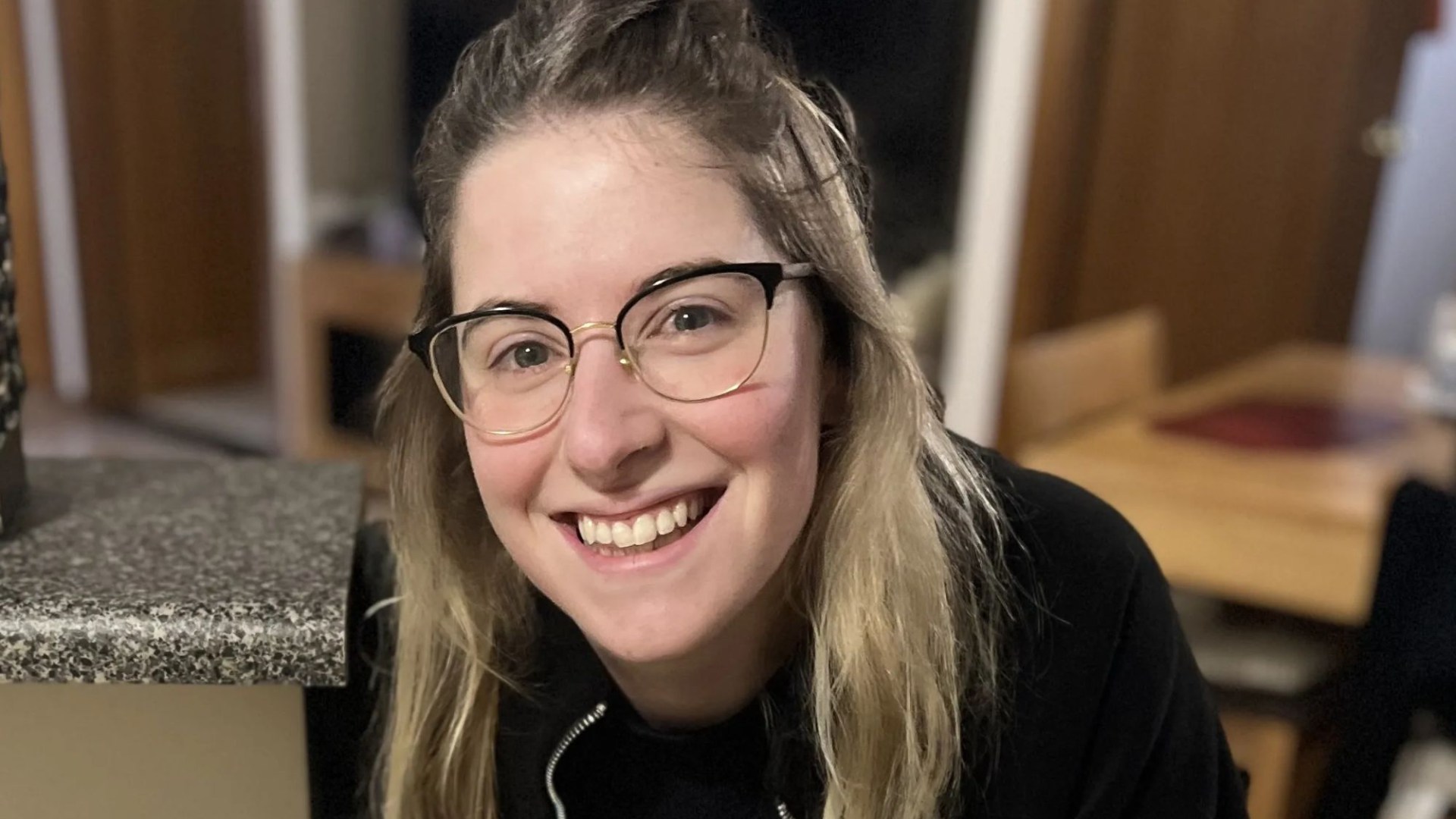
A PARAMEDIC who ignored strange noises in her ear for years was left stunned when doctors discovered a huge brain tumour. Paige Footner, 31, had suffered with tinnitus for three years, brushing it off as stress from her busy life as a part-time medic and circus performer. Paige Footner, 31, had suffered with tinnitus for three years Credit: Jam Press When she finally saw someone about it, it led to the diagnosis of a 4cm growth on her brain, in June 2025. “Time instantly froze and my life flashed before my eyes like a TV show,” Paige, from Adelaide, Australia, told Sun Health. Sign up for the Health newsletter Thank you! “As a paramedic, we get a front row seat into other people’s lives and decisions, as well as their regrets before they die. “In that moment I realised I had failed. I was 30 and I’d never experienced love. I’d never had a boyfriend, never even had a fling or a romantic kiss. I was literally a virgin.” READ MORE ON BRAIN TUMOURS She was shocked to discover she had a 4cm growth on her brain Credit: Jam Press The tumour was considered to have atypical findings, so they couldn’t diagnose it without surgery Credit: Jam Press Speaking of her symptoms, Paige says: “I had pulsatile tinnitus in one of my ears for three years. “I thought it was maybe stress-related, but after a year or two it started to get worse and was there all the time.” Paige does not believe her tinnitus was caused by the tumour, though she is grateful it led her to a diagnosis. “They actually think the tumour was an incidental finding and it wasn’t causing the tinnitus,” she says. Most read in Health “I was just super lucky they found it.” The only other symptoms she had were “just headaches and personality differences like being unable to regulate my emotions”. She put her headaches down to shift work, and and assumed her struggles with focus were part of her ADHD, which she had been formally diagnosed with as an adult. “I was very scatter-brained, hyperactive and would always forget and lose things,” she says. “I would jump around in conversations and not be able to concentrate on conversations or tasks – I was also asking patients the same questions again. “My personal life was super disorganised too.” While Paige already had her ADHD diagnosis, her neurosurgeon later explained that the 4cm tumor was sitting directly in her frontal lobe, which is the brain’s control centre for focus and emotion. The immense pressure from the growth may have mimicked or worsened her symptoms. “My neurosurgeon said let’s just get through the brain recovery first and once it’s settled, then we can reassess the ADHD, which we haven’t done yet,” says Paige. When Paige eventually went to her GP with tinnitus, she “wasn’t overly stressed about it”. “My GP said it could be a sign of something sinister and referred me to an ENT specialist,” she says. “But because I go away a lot for the circus, it took me over a year to properly follow up.” Eventually, when she saw the specialist, they said the hearing loss could have a benign cause, like an infection or past trauma. “I hit my head a lot doing circus, so it made sense,” Paige says. “He said to get an MRI just in case, but it would likely be fine.” Paige’s MRI revealed a very significant brain tumour and she was told it could be cancer. After surgery, doctors discovered Paige had a stage one meningioma Credit: Jam Press Paige does not believe her tinnitus was caused by the tumour Credit: Jam Press The tumour was considered to have atypical findings, so they couldn’t diagnose it without surgery. Paige says: “Unfortunately, that scan did not show the typical features of a benign tumour, it showed some concerning findings that meant it could be a cancerous tumour or lymphoma.” With the surgery now urgent, Paige had to cancel her performing work, which she said was “a huge financial and mental blow”. She had the surgery on July 11, saying: “I must admit, the thought of your brain and skull being cut open is rather scary and intimidating”. But she was “immensely blessed” with good news. Paige said: “It ended up being a grade one meningioma, which is benign. “Unfortunately, the tumour does have a high proliferative score, though, which means it can be more aggressive than a grade one and has a higher chance of returning. “But they will just monitor it closely and do surgery again rather than radiotherapy.” More than 12,000 people are diagnosed with a brain tumour in the UK each year, of which about half are cancerous. The cause of most brain tumours is unknown, but there are several risk factors that may increase your chances, including age, exposure to radiation and family history. According to the NHS, roughly 17 out of every 100 people with a cancerous brain tumour will survive for 5 years or more after being diagnosed. Paige said the diagnosis eight months ago forced her to reassess her life. What is a meningioma brain tumour? A meningioma (pronounced men-in-gee-oh-ma) is a tumour that grows in the set of three membranes just inside the skull, called the meninges. The function of these membranes is to cover and protect the brain and spinal cord. Meningiomas can be grades 1, 2 or 3, but there are no grade 4 meningiomas. They are usually: Low grade tumours Slow growing Unlikely to spread However, some types of meningiomas don’t behave as expected and can grow quicker than others. What are the symptoms of meningioma? Meningiomas can often be present in the brain without causing any symptoms for many years. Symptoms usually begin gradually, as they gently push and compress brain tissue, rather than invading it. As with other brain tumours, the symptoms will depend on which part of the brain is affected. But generally, people might experience: headaches, changes in vision, memory loss, hearing loss, loss of smell, seizures, and feeling weak in the limbs. How are meningiomas treated? Meningiomas are normally treated according to their grade, but their location, size, and the symptoms you’re having will also affect which treatment you’re offered. People who are diagnosed with a grade 1 meningioma are often put on active monitoring treatment, with surgery and radiotherapy offered at a later date, if needed. Grade 2 and 3 meningiomas usually have surgery, then radiotherapy. Source: The Brain Tumour Charity Pictured, the 4cm tumour sitting directly in her frontal lobe Credit: Jam Press “The pain of missing out on love was indescribable,” she says. “I also regretted hustling so much at work, missing my friends’ events and not putting them first. “I had money in the bank rather than spending it making memories.” In the weeks after her surgery recovery, Paige struggled to get back on her feet. She says: “The recovery did not go as expected, unfortunately. “I initially was doing well and then suddenly went downhill. I couldn’t walk without falling over, couldn’t even eat or lift my head off the pillow, I couldn’t move my left arm very well, couldn’t toilet myself. “At times, I’d have episodes where I couldn’t talk, couldn’t respond even though I could see and hear. “I went from being an acrobat to losing complete control of my body, I’ve never been so scared. “The memories of being stuck in a body that’s about to fall over but can’t talk or movestill haunts me. “One of the doctors said, ‘We don’t know if you’re ever going to make it back to acrobatics and paramedics,’ which was a very confronting and not at all helpful thing to say. “My neurosurgeon, thankfully, was far more reassuring and turned over every stone to figure out what was causing it [her poor recovery]. “It ended up being a multitude of factors, but one of them was seizures, which can happen from the swelling.” Paige now has a goal of going on 50 dates to find love. Credit: Jam Press Pictured, Paige with actor Daniel Radcliffe Credit: Jam Press Paige has lost her driving license as a result of her condition, and she could not work or drive for a year. She is now on anti-seizure medication. Paige says of her recovery: “You feel as though you have no purpose. I had to learn to find joy in small things and create new purposes. “But I also looked back on my life and smiled. I’d performed in the circus all over the world, achieved what I never thought I could, and made incredible friends that held my heart and became family.” Paige has a goal of going on 50 dates to find love. “One boy told me ‘It’s way too much pressure on me to be your first for everything’ – even though I’m pretty sure that’s the opposite because I have no one to compare it to. “The dates are not off to a good start but I’m not giving up.” And inspired by her neurosurgeon, Paige is now hoping to go to medical school. “My biggest advice would be to chase that dream, do the thing, start the hobby, tell the boy you like him,” she says. “The pain of dying with regret is far, far, far worse than the pain of any rejection, failure or embarrassment.” Comment now
I went to the GP with tinnitus I’d ignored for years and left with a brain tumour – a virgin at 30, I had so much regret
Full Article
Original Source
Read the full article at Thesun →KhanList aggregates and links to publicly available news content. We do not host full articles from third-party sources. Always verify important information with original sources.