
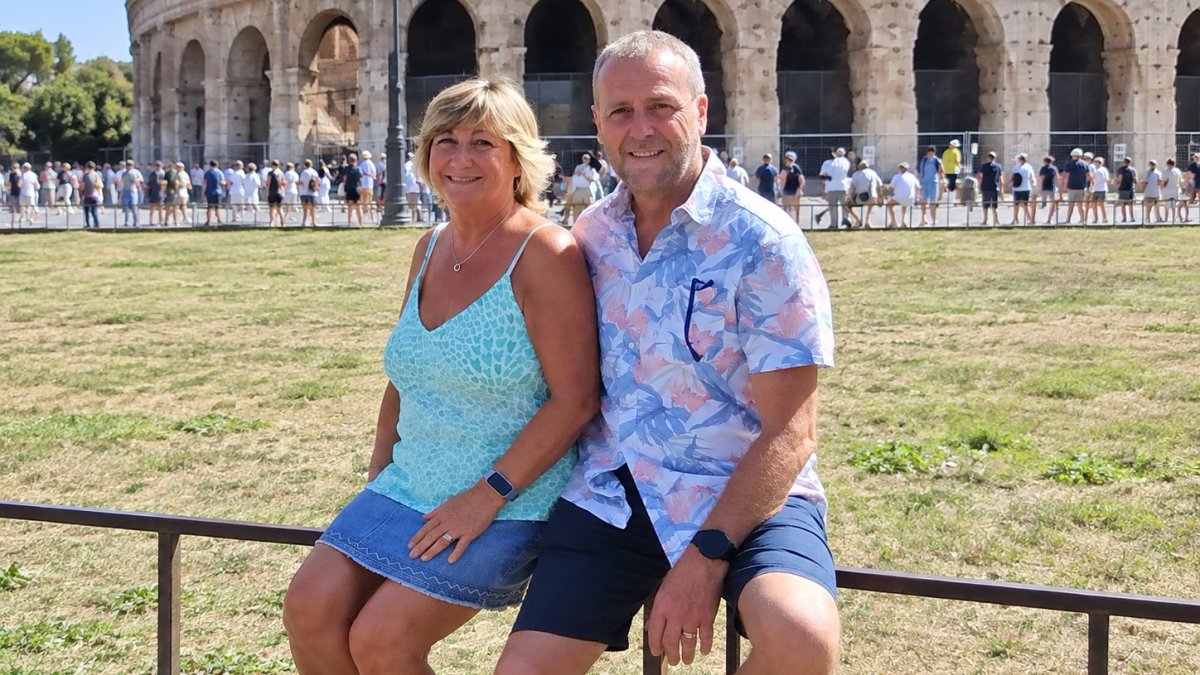
Around half a million people leave the UK to live abroad each year. A survey by the British Council showed 72 per cent of 18- to 30-year-olds would consider living and working overseas, with cold weather, the high cost of living, extortionate childcare, a lack of work-life balance and even poor romantic prospects among their motivations for leaving the country. The i Paper’s Expat Files follows Britons who have taken the leap and settled elsewhere, detailing the ups and downs of their journeys.Chris and Becky Yates, both 60, grew up near Huddersfield, West Yorkshire. After they married, they relocated to Gloucestershire, where Chris built a successful surveying and construction company. But when the business collapsed and Becky was forced to retire because of fibromyalgia, they decided to reinvent themselves in rural Spain. I ran a successful surveying and building company specialising in the restoration of listed houses. There were plenty of those in that part of the country, and for some years the business did very well. One of our clients was an A-list actress and a genuine household name. Life was good and we enjoyed a comfortable, privileged lifestyle. Becky had also taken a local job as a civilian employee with the police force. But around 2015, the property and construction market slowed and the business began to struggle. The downturn eventually torpedoed the company and forced us into bankruptcy. We were approaching 50 and suddenly the rug was pulled completely from under us. After years of working hard and believing that our future was secure, we found ourselves having to contemplate starting again from nothing.At around the same time, Becky developed fibromyalgia, a long-term condition that causes widespread pain and extreme fatigue. It became so debilitating that she often needed crutches and was eventually forced to retire from the police on medical grounds. This was pre-Brexit, so moving was much easier. We have full residency and have no restrictions. We have friends who bought houses here but have to return to the UK for 90 days every 90 days, and that would be chaos, especially with the dogs. We are well established here and could not bear to be uprooted like that. We came out for a holiday and explored the countryside about an hour west of Valencia, between the towns of Torrent and Turís. It is an area of small, traditional towns surrounded by mountains, farmland and orange groves. It feels very different from the busy resorts and heavily developed parts of the Spanish coast. It was the old-fashioned Spain we had hoped to find, with independent shops and bars where people remember your name and their faces light up when you walk through the door. We quickly fell in love with the area. We returned to Britain and began disposing of almost everything we owned. We sold our house, sold some possessions, gave others away and arranged to have the things we wanted to keep sent to Spain. On Christmas Day, 10 years ago, we were sitting in an almost completely bare house with little more than an old television. From the sale of our house we had a small nest egg to start our new life in Spain. There was no turning back. We made the journey to Spain by ferry and car with our Newfoundland dogs – no easy undertaking when an adult Newfoundland can weigh as much as 80kg. Since arriving in Spain, we have completely rebuilt our lives. Becky’s medical pension from the police provides our only guaranteed income and is worth about £1,700 a month. I supplement that by helping local people with odd jobs, including light building work, swimming-pool repairs, patios and fitting bathrooms and kitchens. Becky cuts friends’ hair and dog-sits for people in the community. We have picked up conversational Spanish and chat happily with our Spanish friends in the village and at the bar. We also breed Newfoundland dogs and have owned as many as five at once. When one of them has a litter, the puppies can sell for as much as €3,000 (£2,500) each. However, we only breed a litter about once every two years, and the income has to be set against veterinary bills, food and the other considerable costs of responsible breeding. Breeding is much more of a passion and a hobby than a serious pursuit of income. People are often surprised that we manage to feed ourselves and four very large dogs while spending approximately €100 (£83) a week at the supermarket. We buy large sacks of the supermarket’s own-brand dried dog food and have also discovered remarkably cheap pouches of wet food at Aldi. We are not living in luxury, but we have a very good life. We can afford to visit local bars, meet friends and have a few drinks. A beer and a glass of wine together cost approximately €4, or about £3. That means we can still afford a social life, even while watching our money. Going out for a drink doesn’t have to become an expensive occasion involving taxis, reservations and a frightening bill at the end. We rent a three-bedroom, two-bathroom house with a swimming pool in the countryside for €1,100 (£917) a month. Three small towns are close by, so we have peace and space without being isolated. The property is off-grid and powered by solar panels, which means we have no monthly electricity bill. We estimate that saves us around €150 (£125) a month. Our Spanish landlord and landlady, José and Mar, occasionally come over and cook paella on the terrace. They are lovely people who have made us feel incredibly welcome and part of their extended family. The warmer weather and our more relaxed, outdoor lifestyle have also made an enormous difference to Becky. In Britain, her fibromyalgia often left her dependent on crutches. She still has the condition, but in Spain she is far more active and thriving. We cannot prove that sunshine is a medical treatment, but the combination of the climate, reduced stress and being able to spend much more time outdoors has unquestionably helped her. We now have a wide network of friends, including other British expatriates, Dutch people and, of course, Spanish neighbours. Last Christmas, we had 24 people staying or visiting over several days. We ate together, drank together and watched films in a big group. It felt like a proper family Christmas and reminded us that moving abroad does not necessarily mean leaving everything familiar behind. We don’t live like kings and still have to budget carefully. The pension covers our basic life, while the building work, haircuts, dog-sitting and occasional litter of puppies give us some breathing room. But we have a comfortable home, a pool, good friends, welcoming neighbours, our dogs and a social life we can afford. A decade ago, we were sitting in an empty house in Gloucestershire after bankruptcy and illness had dismantled the life we thought we would have. Today, we feel we have the best of both worlds. We have no intention of returning.
I went bankrupt and moved to Spain – now we live comfortably with my wife’s pension
Full Article
Original Source
Read the full article at Inews →KhanList aggregates and links to publicly available news content. We do not host full articles from third-party sources. Always verify important information with original sources.