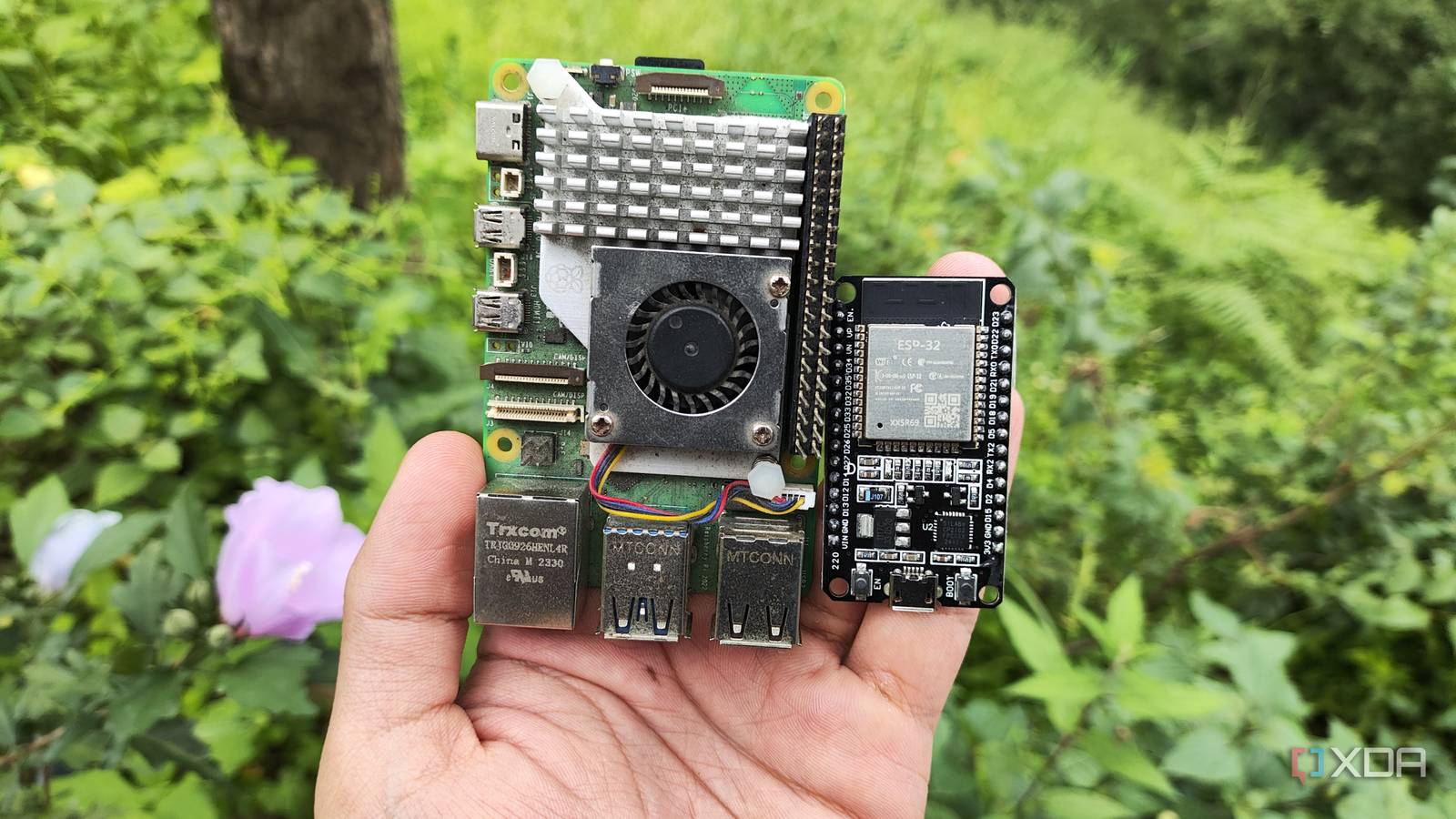
Published Jul 27, 2026, 2:00 PM EDT Ayush Pande is a PC hardware and gaming writer. When he's not working on a new article, you can find him with his head stuck inside a PC or tinkering with a server operating system. Besides computing, his interests include spending hours in long RPGs, yelling at his friends in co-op games, and practicing guitar. Up until a few years ago, the Raspberry Pi used to be the most recommended option for building DIY projects, and for good reason. The older Raspberry Pi single-board computers combined inexpensive price tags with surprisingly capable hardware, solid OS support, and a fun ecosystem of accessories. But with modern RPi SBCs costing an arm and a leg just for weak hardware, plenty of other alternatives have stepped up to the plate. Take the ESP32 series, for example. On paper, they’re extremely different from conventional Raspberry Pi boards, especially if you’re attempting to run complex Linux distros. But when it comes to makeshift IoT gadgets, home automation, or anything involving low-level access to sensors or circuitry components, I wish I’d started my tinkering journey with ESP32 boards instead of wasting extra money on the Raspberry Pi family. Let me be clear: Raspberry Pi SBCs and ESP32 boards are entirely different products One’s a single-board computer, the other’s a microcontroller Before you call me out for comparing the Raspberry Pi and ESP32 boards, I’ll admit that there are several differences between the two. Leaving aside the Pico microcontroller lineup, Raspberry Pi units have enough CPU and RAM prowess to support Linux operating systems. So, they can double as general-purpose computers (albeit extremely weak ones) for DIY projects and experiments where you need a proper desktop-like environment. Combine that with their GPIO pins, and these pint-sized boards are quite versatile in their use-cases. The ESP32 lineup, on the other hand, caters more toward specialized tasks. Instead of running FOSS apps within Linux distros, these microcontrollers rely on FreeRTOS or other embedded firmware to perform simple tasks. From this angle, you’d think SBCs are better for building projects. And sure enough, I can’t really expect my ESP32 to run dozens of Docker containers or drive a home server-centric platform the same way my Raspberry Pi 5 can. But despite their differences, there’s a lot of overlap between Raspberry Pi and ESP32 projects, especially when it comes to anything involving sensor modules. ESP32s are unmatched when it comes to automation and IoT projects Even though they technically have weaker specs than a conventional Raspberry Pi SBC Anecdote time: Building a weather station that connects to a BME280 sensor and prints the temperature, humidity, and pressure values of my surroundings was one of the first IoT-related projects I’d ever worked on. But it wasn’t until I switched from a Raspberry Pi board to an ESP32 that I realized that the latter was significantly better for projects of this caliber. Instead of spending hours trying to find the right drivers to pair my environmental sensor with my Raspberry Pi, I didn’t have to worry about the extra OS layers on my ESP32. Heck, I was able to use a simple YAML file containing the right code to send the stats to my Home Assistant server with my ESP32, while building this project on my Raspberry Pi involved multiple visits to a handful of GitHub repos (and a fair amount of troubleshooting). Likewise, if all I wanted to do was build an inexpensive time-lapse camera that snapped low-resolution images of a single object over long periods of time, grabbing an ESP32-CAM – or even pairing one of the inexpensive ESP32 boards with a decent camera module – would be a lot cheaper than investing in a full-on Raspberry Pi SBC. The same applies to Bluetooth proxies, matrix LED display dashboards, presence detection pipelines, and cool automation workflows. Then there’s the fact that I don’t have to spend hundreds of dollars if I break an ESP32 system. Raspberry Pis have gotten extremely pricey in this day and age, so it’s hard to justify working on projects involving permanently soldered sensors or experiments where I could potentially brick the SBC. In contrast, the dirt-cheap prices of ESP32 boards is the reason I can go full throttle with my automation ideas. Even if we were to pit the somewhat affordable Raspberry Pi Zero lineup against the ESP32, I could buy at least three of these microcontrollers for the price of a first-gen RPi Zero. ESPHome makes ESP32 experiments quite beginner-friendly It helped me overcome my fear of programming microcontrollers Unlike the convenient distributions on SBCs, microcontrollers like the ESP32 need to be programmed before I can use them in my projects. Until a few years ago, I hadn’t worked a lot with programs involving low-level hardware access to MCUs, and the complexity of these projects would scale up the more sensors, circuit components, and random accessories I’d attach to my ESP32 boards. But thanks to ESPHome, I didn’t have to go all-out on learning how to code ESP32 units just to build automation workflows. If you haven’t heard of it, ESPHome is a FOSS tool that lets me flash custom code on my ESP32 (and even Raspberry Pi Pico) boards. But instead of forcing me to create long C++ functions, it uses simple YAML syntax to design DIY smart gadgets. Combine that with its automatic integration with Home Assistant and wireless update functionality, and you can see how it helped me get accustomed to tinkering with ESP32 boards. Meanwhile, x86 systems are better for hardcore home lab projects Although my ESP32 units have replaced my Raspberry Pi for simple experiments, there’s no denying that these microcontrollers can’t hold a candle to SBCs when it comes to computing ideas. But with modern Raspberry Pi boards packing underpowered hardware and costing a fortune, I’ve started using mini-PCs and thin clients as their replacements for anything requiring more processing oomph. Brand AITRIP Connectivity Features UART, USB The ESP32 is a fantastic development board that combines solid specs with an affordable price. Despite being cheaper than Arduino and Raspberry Pi Pico, it outperforms most of its rivals. Plus, the ESP32 even has Wi-Fi and Bluetooth functionality built into every board, making it great for projects where you can't physically keep the microcontroller connected to your PC at all times.
I wasted money on a Raspberry Pi when an $8 ESP32 could run half my DIY projects
Full Article
Original Source
Read the full article at Xda-developers →KhanList aggregates and links to publicly available news content. We do not host full articles from third-party sources. Always verify important information with original sources.