
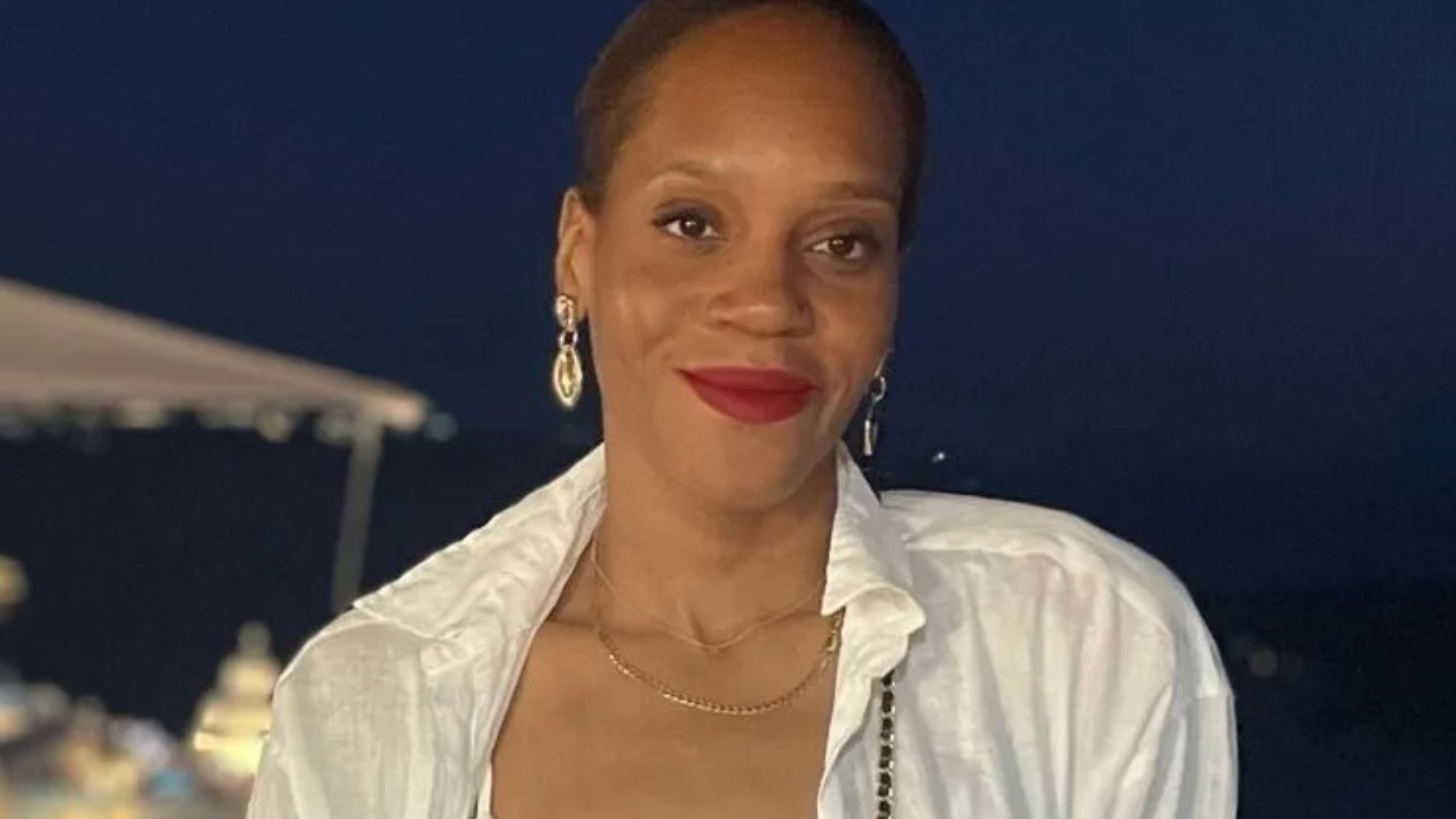
FOR months, Kara Miller believed her symptoms were just down to piles. But after seeing Sun columnist Dame Deborah James on morning TV, she booked an appointment with her GP, fearing she too could have bowel cancer. Yet still, doctors dismissed her, telling her she was ‘too young’ to have the disease. Kara was spurred on to visit her GP after seeing the late Dame Deborah James on the TV Credit: SWNS Deborah, a deputy headteacher and mum-of-two, had made it her mission to raise awareness of symptoms in the five years before her death, aged 40, in June 2022. And it was on one of her many morning TV appearances in September 2021 that Dame Debs’ words – urging anyone with bleeding from their back passage – resonated with Kara, who was watching, worried. Sign up for the Health newsletter Thank you! Now 41, Kara says: “She emphasised it so much. She was so convincing.” Kara called her GP and was reassured that the bleeding she had been experiencing was likely haemorrhoids (piles), which she had suffered previously. READ MORE ON BOWEL CANCER Only seven months later, Kara, from south London, was told she had stage three bowel cancer, aged 36. The disease is more common in older age, with over 40 per cent of cases in people aged 75 and over, peaking in the late 80s. But around one in 20 bowel cancer cases occur under the age of 50, and crucially, rates of early-onset bowel cancer have been increasing in the UK and worldwide in recent decades. Most young people do not think about bowel cancer and the possibility of it affecting them, especially as screening for it doesn’t start until middle age. Most read in Health It’s why Dame Debs fought so hard to raise awareness of symptoms, and helped spearhead The Sun’s No Time To Lose campaign, calling on the Government to lower the bowel cancer screening age from 60 to 50 in England. Kara says: “Every single person from when I called the GP after seeing Dame Deborah said I was young, fit, and it shouldn’t be anything but haemorrhoids. “The GP said I was young and the gastroenterologist said I was young as well. “I spoke on the phone with someone at my GP surgery and they told me it was haemorrhoids and it was fine. Kara called her GP and was reassured that the bleeding she had been experiencing was likely haemorrhoids Credit: SWNS Only seven months later, Kara, 36 was being told she had stage three bowel cancer Credit: SWNS “I always look back on that moment – and it was only a few months before I was diagnosed, but for some people it takes them years to be believed. “One thing I’ve noticed and realised is you have to self-advocate. “Being aware of cancer symptoms and how they present is really important because it could effectively save your life.” After being told initially that Kara had piles, in September 2021, she carried on as normal, her mind overtaken by a family bereavement, despite symptoms not “going away”. It was months later, in February 2022, that Kara began to feel “really unwell”. She was recovering from a bout of Covid but went on to experience gastrointestinal issues, such as bloating, diarrhoea and was unable to eat. Her GP believed she had food poisoning during the two-week illness. But eventually, she was offered a FIT test, which tests for blood in stool. Kara initially was recovering from a bout of Covid but went on to experience bloating, diarrhoea and was unable to eat Credit: SWNS After being told initially that Kara had piles, in September 2021, she carried on as normal, her mind overtaken by a family bereavement, despite symptoms not going away. It was months later, in February 2022, that Kara began to feel really unwell, , “I didn’t push but they eventually offered it to me after me saying there was still something wrong,” says Kara, who was working as a programme director at the time of her diagnosis. “It was only after I said ‘no, I’m still sick this is not food poisoning’, they said ‘well have a FIT test’. “I didn’t really know what a FIT test was at that point.” The faecal immunochemical test (FIT) is a poo sample that patients take at home and post to an NHS lab to check for invisible blood that could be a sign of cancer. It is sent free to all 50 to 74-year-olds in England to try to catch tumours before symptoms start, when survival chances are best. Kara’s results came back positive, but before the NHS had got back to her, she was already seeing a private gastroenterologist. She says: “The private gastroenterologist had access to the FIT test and had seen the numbers and he said to me, ‘I can actually see the FIT test and there’s a significant amount of blood in your stool, but it still could be something else, you’re so young’. “I was aware it could be cancer, but it just seemed so far-fetched to me. It was surreal.” The NHS then put Kara on the two-week cancer pathway, and she underwent a colonoscopy in March 2022. She was able to witness the moment her tumour appeared on the screen whilst undergoing the procedure. “The doctor said I’m going to take a biopsy of this,” Kara says. “I said ‘Is it cancer?’ I remember him holding my hand and slightly nodding. Sun Columnist Dame Deborah James was diagnosed in 2016 at the age of just 35, after initially being told her symptoms were likely due to IBS or stress Credit: Stewart Williams The NHS put Kara on the two-week cancer pathway, and she underwent a colonoscopy in March 2022 Credit: SWNS “From that moment I went into total shock – I couldn’t believe it, it was an out-of-body experience”. Kara awaited further tests to confirm her suspected diagnosis, and doctors told her on April 5, 2022, she had stage three cancer that had spread to her lymph nodes. She had a 6cm tumour that was obstructing half her rectum, which would explain the symptoms that masked as piles. After five weeks of chemoradiotherapy to shrink the tumour, Kara’s margins for surgery “weren’t clear” and she needed another 12 weeks of treatment. Kara says: “When you have advanced cancer, it starts to infiltrate the walls of the bowel and you have a thing called margins. “It’s the certain degree of clearance to cut around the tumour and ensure they are not leaving anything behind. “The team at the hospital decided to push through with surgery anyway – after the 12 weeks of chemotherapy.” After the six-hour-long surgery, doctors managed to remove all of Kara’s tumour and she was fitted with a temporary ileostomy bag before more chemo. Kara spent Christmas in hospital, before undergoing a further 12 weeks of chemotherapy. After nine months of her bowel being “switched off”, Kara underwent reversal surgery for her ileostomy in August 2023. Kara says: “In 2024, I started this new normal. “Whilst I was physically fit, I played netball internationally and I was quite strong, I would say the mental aspect after treatment and everything finished was by far harder for me than physical treatment.” After five weeks of chemoradiotherapy to shrink the tumour, Kara’s margins for surgery “weren’t clear” and she needed another 12 Credit: SWNS Now three years in remission, she is sharing her story and urging people to “advocate” for themselves Credit: SWNS Kara trained as an exercise referral specialist in cancer rehabilitation. Now three years in remission, she is sharing her story and urging people to “advocate” when it comes to receiving a diagnosis. She says: “Now I work with a charity helping individuals who have gone through long-term health conditions and cancer. “It’s the first time in a long while, the most rewarding thing I’ve ever done.” Kara started sharing her story on social media a month ago. “I’m in awe of people going through treatment now who can document their story, I didn’t have the capacity in me to do that at the time,” she says. “Sharing your story is vulnerable, especially on social media”. You can follow Kara on TikTok @rehabbykara. Comment now
I was told I had piles & was ‘too young’ for cancer at 36…doctors even blamed a food bug – the one test you must ask for
Full Article
Original Source
Read the full article at Thesun →KhanList aggregates and links to publicly available news content. We do not host full articles from third-party sources. Always verify important information with original sources.