
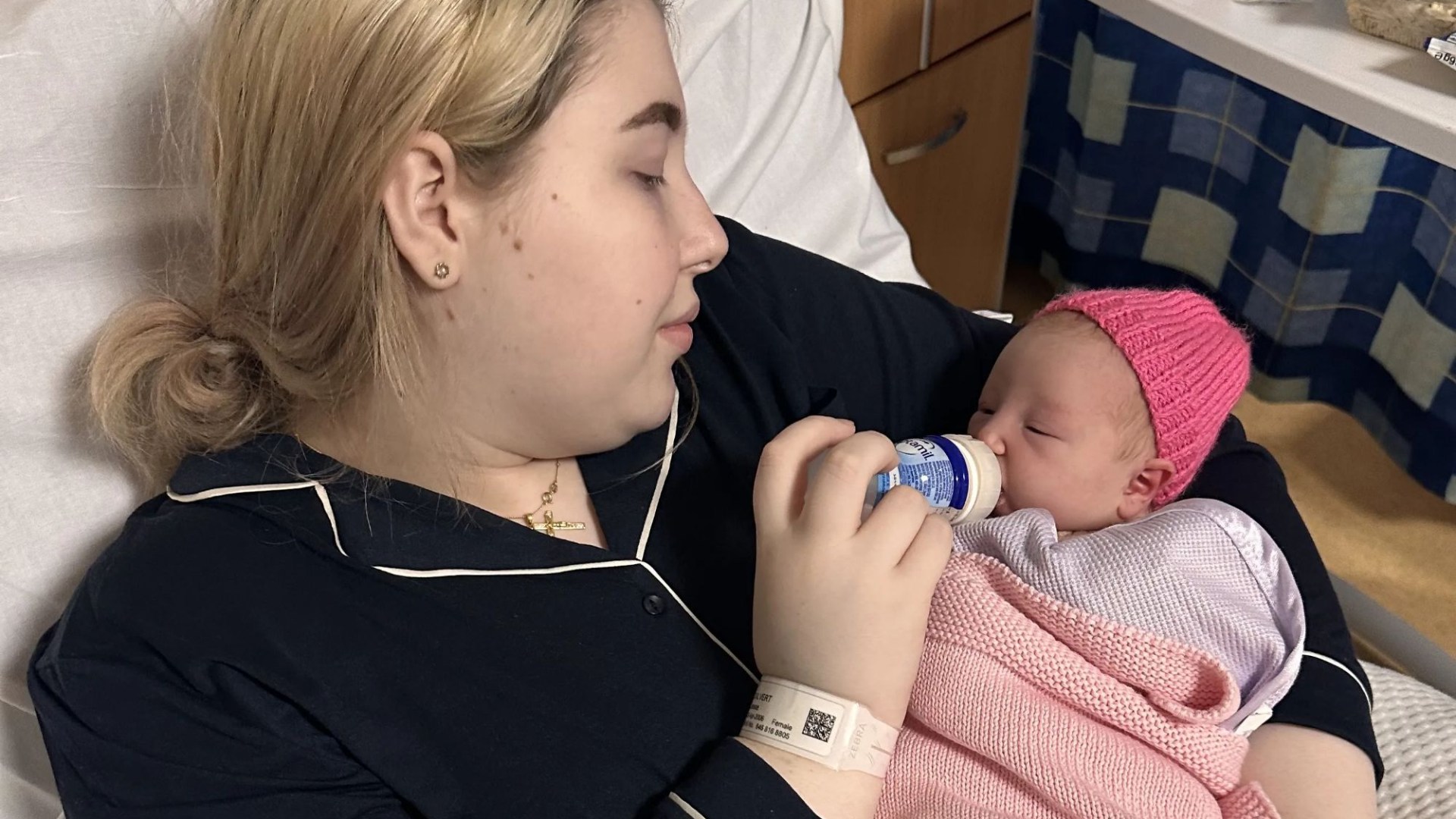
NEW mum Jessie Calvert was haunted by terrifying hallucinations that made her believe she’d find her baby daughter dead in her cot – and left her battling suicidal thoughts for a year. The 20-year-old’s year-long ordeal began in the months after she gave birth to her daughter Matilda Eve Dent, after being induced. Jessie Calvert became terrified she’d find her baby daughter dead Credit: Jam Press She became plagued by delusions and hallucinations about the tot that left her suicidal Credit: Jam Press Jessie suffered a life-threatening postpartum haemorrhage shortly after giving birth and was in constant pain, repeatedly returning to hospital for seven months. Over that time, her mental health began to deteriorate. Sign up for the Health newsletter Thank you! The first warning signs were intrusive thoughts that something terrible would happen to her baby. Jessie, from Stockton-on-Tees, County Durham, said: “I was doing everything in my power to prevent something bad from happening. Read more on mental health Jessie found out she was pregnant at 18 Credit: Jam Press Matilda in hospital after she was born Credit: Jam Press “I was moving furniture around in my room and I was sleeping on top of the duvet. I knew that this wasn’t normal. “Then I had intrusive thoughts about my baby coming to harm and I could hear voices telling me that if I didn’t do something they wanted me to do then Matilda would be hurt. “The voices got louder and more frequent. I also started seeing visual disturbances such as people standing in my room near my baby. “I saw my baby not alive in her crib even though she was alive and breathing. Most read in Health “I saw Matilda with monster-like features. I stopped leaving the house because the visual and audio hallucinations became more frequent. “I was so sleep deprived from not wanting to sleep as I was scared my baby would stop breathing or get hurt.” The voices eventually told her to harm herself, telling her that doing so would keep Matilda safe. Jessie had discovered she was pregnant on the morning of her 18th birthday and she says her pregnancy was filled with happy memories. Jessie was diagnosed with postnatal depression and postnatal psychosis Credit: Jam Press Signs of postnatal psychosis The symptoms of postnatal or postpartum psychosis can be distressing and scary. It is most common for them to begin in the first two weeks after birth, often in the first few days after having your baby. Symptoms can also start later, several weeks after the baby is born. This is more rare. They may include delusions – strong beliefs that others do not share. For example, you might believe: You are being followed Your thoughts are being read You are very powerful and can’t be harmed, Your baby is connected to God or the devil in some way That someone is trying to control or harm you or your baby (this can be very scary and is sometimes called paranoia) You have special insight and can receive messages from things around you like colours, everyday events or stories on the TV You may also experience hallucinations – when you hear, see, feel or smell things that are not there, or that others cannot. This can include hearing voices that could be nice or nasty, feeling things crawling on your skin or seeing things other people don’t. Mania, when you’re excited, elated or active in a way that’s not usual for you, can be common with the condition. So is confusion. Your thoughts might feel as if they are going so fast they are out of control. You may also feel that your mind is moving very quickly from one idea to the next, making links and connections that other people don’t see. Source: Action For Postpartum Psychosis She said: “I was shocked and surprised but I was so happy I was going to be a mum. “I just wanted everything to be okay. There were so many happy moments while I was pregnant, like the 4D scan and our gender reveal.” But she said she has little memory of Matilda’s first year because she was simply trying to survive. She said: “I was in a state of survival mode. I can’t remember her first laugh, smile, first bath or bringing her home from hospital. “This affected my bond with Matilda as I thought that she wouldn’t remember that I was her mum.” Stay-at-home mum Jessie was eventually admitted to a mother and baby unit in November 2025 for six weeks – 10 months after welcoming the tot. She was diagnosed with postnatal depression and postnatal psychosis in November 2025. Postnatal or postpartum depression is a very common mental health condition that can strike mums after they give birth. Jessie and Matilda now have a very strong bond Credit: Jam Press Jessie urged other mums to speak up if they’re experiencing similar symptoms Credit: Jam Press It can cause symptoms of low mood, anxiety or hopelessness and difficulty bonding with your baby. Postnatal psychosis is rarer. It’s a serious mental illness that can affect one in 1,000 mums, whether or not they have a history of mental illness. Symptoms are much more severe, and can include hallucinations, delusions, paranoia, signs of depression and manic behaviour. It can develop quickly or gradually, beginning in the days or weeks after giving birth. It should be treated as a medical emergency. Most mums with postnatal psychosis recover fully with treatment. Jessie said: “My lowest point was planning out and thinking about how I was going to end my life. “I remember thinking that my daughter had so much female influence around her that she wouldn’t remember me as her mum and that my family would do a better job at raising her than I ever would. “I didn’t want to be admitted [to the mother and baby unit] but I was scared that if I didn’t go things would only end up worse and that my daughter would end up without a mum. “I was so scared and lonely at first. I was miles away from my family but I soon met the most amazing group of mums; they were all supportive of each other. “We all made strong connections; even with our babies being at different ages, we all seemed to give advice and help each other out as much as we possibly could. “The staff were absolutely amazing; I’ve never felt so looked after and safe. “They reassured me and my daughter that everything was going to be okay.” Jessie says taking medication to help with sleep deprivation and to stabilise her moods in May this year really helped with her recovery. She is now undergoing cognitive behavioural therapy and continues to receive support from specialist perinatal mental health services. Jessie said: “I couldn’t thank my family enough for everything they’ve supported me through. “My mum, dad and family friends have all been so amazing. “They are all so special to me and my little girl and if it wasn’t for them helping me speak up, then this story might’ve ended very differently.” Today, she says she and Matilda share an incredibly close bond. She added: “She is my whole world and I’ve never been prouder to call her my daughter. “I want people to know that as scary as it is talking about this, it’s so important to tell someone how you feel. “It’s going to be scary but it’s a rollercoaster and the light at the end of the tunnel is so bright that it makes you forget about the dark passages.” Comment now
I was so scared I’d find my baby not breathing that my mind began playing tricks – I became suicidal in year-long terror
Full Article
Original Source
Read the full article at Thesun →KhanList aggregates and links to publicly available news content. We do not host full articles from third-party sources. Always verify important information with original sources.